The reason low-sodium cooking fails for most people isn’t willpower — it’s a misunderstanding about where sodium actually comes from.
Only a small share of the sodium in a typical diet comes from the salt shaker. The majority is already in packaged and restaurant food before it reaches your kitchen. Which means the highest-leverage change isn’t seasoning less at the table; it’s cooking from basic ingredients, where you control the sodium from the start.
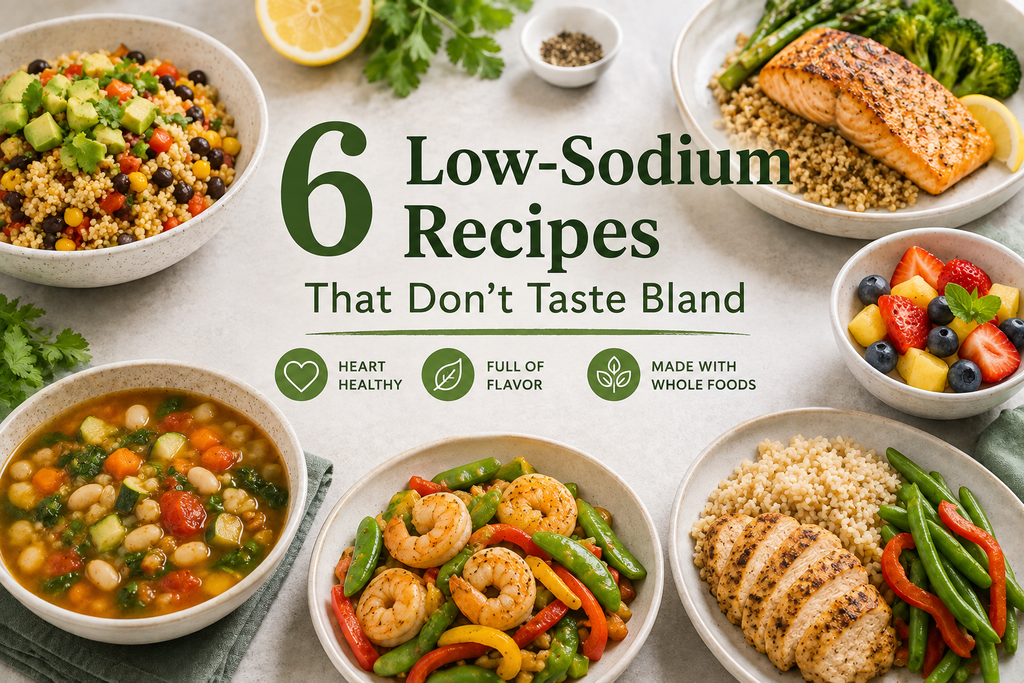
These six recipes are built that way, with approximate sodium counts per serving so you can see where each one lands.
Quick Fact: In the landmark DASH-Sodium trial, reducing sodium from high to low intake lowered systolic blood pressure by 4.6 mm Hg on a typical American diet — and combining sodium reduction with the DASH eating pattern produced substantially larger drops, particularly in people whose starting blood pressure was highest.
Know Your Target First
Two numbers matter:
- 2,300 mg/day — the standard DASH limit, roughly one teaspoon of table salt
- 1,500 mg/day — the lower-sodium DASH target, which research shows lowers blood pressure further
Most people with high blood pressure are advised to land somewhere in that range. Multiple studies have found DASH lowers blood pressure noticeably within about two weeks, which is unusually fast feedback for a dietary change.
1. Lemon-Herb Roasted Chicken and Vegetables
Roughly 120 mg sodium per serving
Ingredients (serves 4):
- 4 chicken thighs, skin removed
- 4 cups mixed vegetables (carrots, zucchini, red onion, bell pepper)
- 2 lemons (juice and zest), 4 cloves garlic, minced
- 2 tbsp olive oil, 1 tbsp fresh rosemary, 1 tsp black pepper
Instructions: Toss chicken and vegetables with olive oil, garlic, lemon zest, rosemary, and pepper. Roast at 425°F (220°C) for 35-40 minutes. Finish with fresh lemon juice off the heat.
Why it works: Acid is the single most effective salt substitute. Lemon juice added at the end — not during cooking — hits the palate the way salt does.
2. Smoky Black Bean Soup
Roughly 180 mg sodium per serving
Ingredients (serves 4):
- 2 cans no-salt-added black beans, drained
- 1 onion, 3 cloves garlic, 1 red bell pepper, diced
- 4 cups no-salt-added vegetable broth
- 2 tsp smoked paprika, 1 tsp cumin, 1/4 tsp cayenne
- 1 lime, 1 tbsp olive oil
Instructions: Sauté onion, garlic, and pepper in olive oil. Add spices and toast for 30 seconds until fragrant. Add beans and broth, simmer 25 minutes. Blend partially, finish with lime juice.
Why it works: Smoked paprika delivers the savory depth people associate with salt-cured foods. Toasting spices before adding liquid roughly doubles their aromatic impact.
3. Garlic-Ginger Stir-Fry with Brown Rice
Roughly 200 mg sodium per serving
Ingredients (serves 2):
- 8 oz chicken breast or firm tofu, sliced
- 3 cups mixed vegetables (broccoli, snap peas, carrots)
- 2 tbsp fresh ginger, 4 cloves garlic, minced
- 1 tbsp low-sodium tamari, 1 tsp sesame oil, rice vinegar
- 1 cup cooked brown rice
Instructions: Sear protein in sesame oil, remove. Stir-fry ginger and garlic 30 seconds, add vegetables until crisp-tender. Return protein, add tamari and a splash of rice vinegar.
Why it works: Standard soy sauce carries roughly 900+ mg sodium per tablespoon. Low-sodium tamari used sparingly, backed by aggressive ginger and garlic, gets you most of the flavor at a fraction of the sodium.
4. Mediterranean Lentil Salad
Roughly 90 mg sodium per serving
Ingredients (serves 3):
- 1.5 cups cooked green lentils (cooked without salt)
- 1 cucumber, 1 cup cherry tomatoes, 1/2 red onion, diced
- 1/4 cup fresh parsley and mint, chopped
- 3 tbsp olive oil, 2 tbsp red wine vinegar, 1 tsp dried oregano
Instructions: Combine lentils and chopped vegetables. Whisk oil, vinegar, and oregano, toss through. Rest 15 minutes before serving.
Why it works: Fresh herbs in quantity — not as a garnish — carry the dish. The resting period lets the acid penetrate, which amplifies perceived flavor considerably.
5. Baked Salmon with Dill and Mustard
Roughly 150 mg sodium per serving
Ingredients (serves 2):
- 2 salmon fillets
- 1 tbsp Dijon mustard, 2 tbsp fresh dill, chopped
- 1 lemon, 1 tbsp olive oil, black pepper
Instructions: Whisk mustard, dill, olive oil, and lemon zest. Spread over salmon and bake at 400°F (200°C) for 12-15 minutes. Serve with lemon wedges.
Why it works: Mustard provides sharpness and umami with modest sodium. Salmon’s natural richness means it needs less seasoning than leaner proteins to taste complete.
6. Spiced Chickpea and Sweet Potato Bowl
Roughly 140 mg sodium per serving
Ingredients (serves 3):
- 1 can no-salt-added chickpeas, drained and dried
- 2 sweet potatoes, cubed
- 2 tsp cumin, 1 tsp coriander, 1 tsp turmeric, 1/2 tsp cinnamon
- 2 tbsp olive oil, plain yogurt and lemon to serve
Instructions: Toss chickpeas and sweet potato with oil and spices. Roast at 425°F (220°C) for 30 minutes until crisp at the edges. Serve with a spoonful of yogurt and lemon.
Why it works: The cinnamon is doing quiet work here — a small amount of sweet spice makes savory dishes register as more complex, which compensates for reduced salt.
Quick Reference: Sodium by Recipe
| Recipe | Sodium per Serving | Flavor Strategy |
|---|---|---|
| Lemon-Herb Chicken | ~120 mg | Acid + fresh herbs |
| Smoky Black Bean Soup | ~180 mg | Toasted smoked spices |
| Garlic-Ginger Stir-Fry | ~200 mg | Aromatics + minimal tamari |
| Mediterranean Lentil Salad | ~90 mg | Vinegar + abundant fresh herbs |
| Baked Salmon with Dill | ~150 mg | Mustard + citrus |
| Spiced Chickpea Bowl | ~140 mg | Warm spice blend |
Your Palate Actually Adapts
This is the part worth knowing before you start, because it explains why the first week is the hardest.
Salt preference isn’t fixed — it recalibrates. Food that tastes noticeably flat during the first week or two tends to taste normal by week three or four, and heavily salted food often starts tasting unpleasantly salty afterward.
The most common report from people who reduce sodium successfully isn’t that they learned to tolerate bland food. It’s that restaurant meals and packaged snacks started tasting oversalted — which is the palate adaptation working in reverse.
The practical implication: judging low-sodium cooking after three days is judging it during the worst possible window.
Common Mistakes
Focusing on the salt shaker. Most dietary sodium is already in packaged and restaurant food. Cutting table salt while still eating canned soup, deli meat, and bread changes very little.
Removing salt without replacing the function. Salt does two jobs: it adds flavor and it amplifies other flavors. Cutting it without adding acid, aromatics, and herbs leaves an actual gap. Lemon, vinegar, garlic, and fresh herbs fill it.
Buying regular canned beans and broth. These are among the largest hidden sodium sources in home cooking. No-salt-added versions of both are widely available and make a substantial difference.
Adding acid too early. Lemon juice and vinegar lose brightness with heat. Adding them at the end preserves the sharp note that most effectively substitutes for salt.
Not draining and rinsing canned goods. If you only have regular canned beans, draining and rinsing removes a meaningful portion of the sodium.
Overlooking bread and condiments. Bread is a leading sodium contributor in many diets precisely because it doesn’t taste salty. Ketchup, salad dressing, and marinades are similar quiet contributors.
Practical Tips
- Toast dried spices in oil for 30 seconds before adding liquid — it noticeably increases their aromatic impact without adding sodium.
- Keep no-salt-added canned beans, tomatoes, and broth stocked; these three swaps alone reshape your sodium baseline.
- Use fresh herbs in quantity rather than as garnish — a quarter cup of parsley is a flavor component, not a decoration.
- Add acid (lemon, lime, vinegar) off the heat, right before serving.
- Give it three to four weeks before evaluating; palate adaptation takes that long.
If you’re working on blood pressure more broadly, it’s worth pairing these recipes with our guides on foods that naturally lower blood pressure and how to measure blood pressure at home, since diet changes are easiest to sustain when you can see them working.
When Should You See a Doctor?
Talk to your doctor before making significant sodium reductions if you take diuretics or blood pressure medication, since sodium changes can affect how those medications work. People with kidney disease, heart failure, or those on potassium-restricted diets should get personalized targets rather than following general guidance — and should be cautious with potassium-based salt substitutes, which aren’t appropriate for everyone.
Frequently Asked Questions
How much sodium should I actually eat per day? The standard DASH limit is 2,300 mg daily, with a lower-sodium version targeting 1,500 mg. Most people with high blood pressure are advised to fall within that range, though individual targets should come from a doctor.
How long until reducing sodium lowers blood pressure? Research on the DASH approach has found measurable blood pressure reductions in as little as two weeks, with effects continuing to develop over subsequent weeks.
Where does most dietary sodium come from? Packaged, processed, and restaurant foods — not the salt shaker. This is why cooking from basic ingredients has far more impact than seasoning less at the table.
Are salt substitutes safe to use? Many are potassium-based, which is beneficial for some people but genuinely risky for those with kidney disease or on certain medications. Check with a doctor before using them regularly.
The Bottom Line
Low-sodium cooking gets a reputation for blandness because people remove salt without replacing what it was doing. Acid, aromatics, toasted spices, and fresh herbs in real quantity cover most of the gap — and the palate adapts within a few weeks anyway. The bigger lever isn’t the recipes at all; it’s that cooking from basic ingredients puts you in control of the majority of sodium that would otherwise arrive pre-loaded in packaged food.
References
- NHLBI (National Institutes of Health) — DASH Eating Plan
- New England Journal of Medicine — Effects on Blood Pressure of Reduced Dietary Sodium and the DASH Diet
- CDC — Tips for Reducing Sodium Intake