Skipping breakfast might seem like an easy way to cut calories, but research points the other way — people who regularly skip breakfast are about 48% more likely to be overweight or obese and tend to have less stable blood sugar throughout the day. Here are seven healthy breakfast recipes, each built around the fiber, protein, and healthy fat combination that actually supports steady energy.
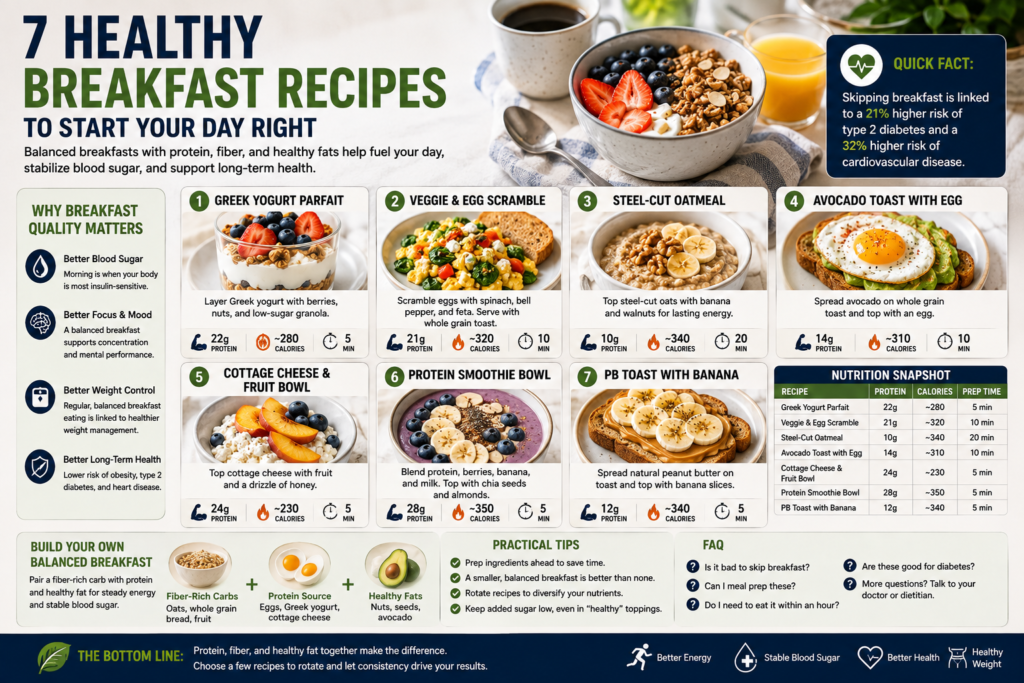
Quick Fact: A large study found that skipping breakfast is linked to a 21% higher risk of developing type 2 diabetes and a 32% higher risk of cardiovascular disease, largely tied to how it affects insulin sensitivity and blood sugar stability.
Why Breakfast Quality Actually Matters
Morning is when your body tends to be most insulin-sensitive, meaning the carbohydrates and fiber you eat are used more efficiently than later in the day. Research also links regular, balanced breakfast eating to better nutrient intake overall, improved concentration and mood, and — contrary to the “skip it to lose weight” instinct — better long-term weight management. The key word is balanced: a sugary pastry and a protein-rich bowl both count as “breakfast,” but they affect your body very differently.
1. Greek Yogurt Parfait
Layer plain Greek yogurt with fresh berries, a sprinkle of chopped nuts, and a small handful of low-sugar granola. The protein and fat slow digestion, while the berries add fiber and antioxidants without the sugar spike of standard granola alone.
Approximate nutrition per serving: ~280 calories, 22g protein, 9g fat, 30g carbs
2. Veggie and Egg Scramble
Whisk 2-3 eggs and scramble with a handful of spinach, diced bell pepper, and a sprinkle of feta. Serve with a slice of whole grain toast. Eggs provide high-quality protein, while the vegetables add fiber and micronutrients with minimal added calories.
Approximate nutrition per serving: ~320 calories, 21g protein, 18g fat, 18g carbs
3. Steel-Cut Oatmeal with Banana and Walnuts
Cook steel-cut oats with milk or a dairy-free alternative, then top with sliced banana and chopped walnuts. The complex carbohydrates in oats digest slowly, providing more sustained energy than instant oatmeal or sugary cereal.
Approximate nutrition per serving: ~340 calories, 10g protein, 12g fat, 48g carbs
4. Avocado Toast with Egg
Spread half an avocado on whole-grain toast and top with a fried or poached egg. The fiber in the avocado and whole grain bread helps regulate digestion, while the egg rounds out the protein content.
Approximate nutrition per serving: ~310 calories, 14g protein, 19g fat, 24g carbs
5. Cottage Cheese and Fruit Bowl
Top cottage cheese with sliced peaches or berries and a drizzle of honey. Cottage cheese is unusually high in protein for a dairy product, making this a quick, no-cook option that still keeps you full.
Approximate nutrition per serving: ~230 calories, 24g protein, 5g fat, 22g carbs
6. Protein Smoothie Bowl
Blend a scoop of protein powder, frozen berries, a banana, and a splash of milk until thick, then top with chia seeds and sliced almonds. This works well for people who struggle to eat much first thing in the morning but still want a protein-forward start.
Approximate nutrition per serving: ~350 calories, 28g protein, 10g fat, 40g carbs
7. Whole Grain Toast with Peanut Butter and Banana
A simple, no-cook option: spread natural peanut butter on whole grain toast and top with banana slices. The combination of protein, fiber, and healthy fat makes this more blood-sugar-friendly than toast with jam or sugary spreads alone.
Approximate nutrition per serving: ~340 calories, 12g protein, 16g fat, 38g carbs
Quick Reference: Nutrition Snapshot
| Recipe | Protein | Calories | Prep Time |
|---|---|---|---|
| Greek Yogurt Parfait | 22g | ~280 | 5 min |
| Veggie and Egg Scramble | 21g | ~320 | 10 min |
| Steel-Cut Oatmeal | 10g | ~340 | 20 min |
| Avocado Toast with Egg | 14g | ~310 | 10 min |
| Cottage Cheese and Fruit Bowl | 24g | ~230 | 5 min |
| Protein Smoothie Bowl | 28g | ~350 | 5 min |
| PB Toast with Banana | 12g | ~340 | 5 min |
How to Build Your Own Blood-Sugar-Friendly Breakfast
If none of these fit your morning, use this general formula: pair a fiber-rich carbohydrate (whole grains, fruit) with a protein source (eggs, yogurt, cottage cheese) and a source of healthy fat (nuts, seeds, avocado). This combination consistently shows up in the research as more effective for stable energy and blood sugar than carbohydrates alone.
Practical Tips
- Prep components ahead — hard-boiled eggs, portioned oats, or pre-washed berries can turn any of these into a 5-minute morning.
- If you’re not hungry early, a smaller version of any of these still beats skipping breakfast entirely for blood sugar stability.
- Rotate a few of these rather than eating the same one daily — it’s an easy way to naturally diversify your nutrient intake.
- Keep added sugar in check even with “healthy” toppings like granola or honey — a light hand goes a long way.
If you’re building a broader nutrition routine, it’s worth pairing these with our guides on how much protein you need per day and morning habits that boost metabolism, since breakfast composition is one piece of a larger morning routine.
Frequently Asked Questions
Is it bad to skip breakfast if I’m not hungry? Individual hunger cues vary, and some people do well with intermittent fasting approaches. That said, research consistently links regular breakfast eating to better long-term weight and blood sugar outcomes on average, so “never hungry in the morning” is worth examining rather than assuming it’s simply your normal pattern.
Can I meal prep these breakfasts in advance? Yes — the oatmeal, egg scramble, and parfait components all hold up well prepped a day or two ahead, making busy mornings easier without defaulting to less balanced options.
Do I need to eat breakfast within an hour of waking? There’s no strict window that applies to everyone. The bigger factor is breakfast quality and consistency, not the exact timing after waking.
Are these recipes suitable for diabetes management? The fiber-protein-fat combination in each recipe is generally considered blood-sugar-friendly, but individual response varies — check with a doctor or dietitian for guidance specific to your situation.
The Bottom Line
A good breakfast doesn’t need to be elaborate — the research points to a simple formula: protein, fiber, and healthy fat together, rather than refined carbs alone. Pick two or three of these recipes to rotate through your week, and let consistency do more of the work than any single “perfect” breakfast.
References
- American Diabetes Association — Best Breakfast for Diabetes
- Journal of the American College of Cardiology — Breakfast Skipping and Cardiovascular Risk
- National Institutes of Health (NIH) — Breakfast and Metabolic Health Research