Three of the fifteen foods on this list have strong blood-pressure evidence behind them. Garlic, oily fish and beetroot are not padding — each has randomised trials and a measurable effect in millimetres of mercury.
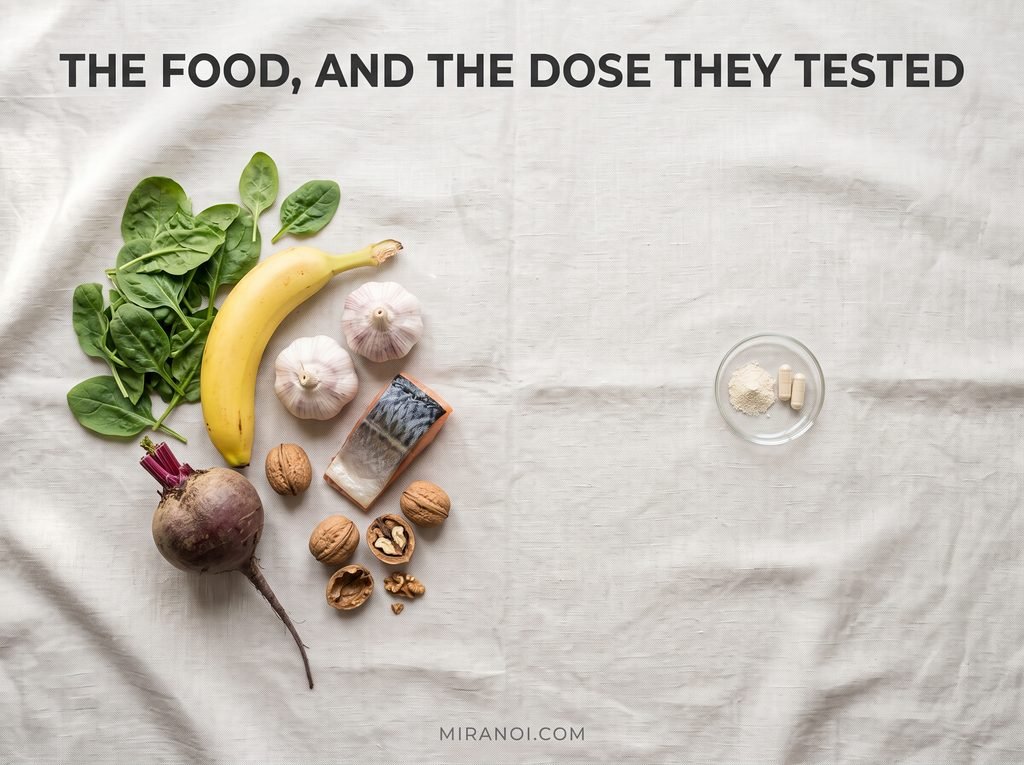
None of those trials used food.
The garlic evidence comes from 600 to 900 mg a day of standardised garlic powder, mostly one commercial preparation, taken for twelve to twenty-three weeks. The omega-3 evidence comes from 2 to 3 grams a day of EPA and DHA, which in the trials meant capsules; the researchers noted that most studies used fish oil supplements rather than fish. The beetroot evidence comes from 300 to 500 mg a day of concentrated dietary nitrate, which is a measured dose of juice or concentrate, not a beetroot in a salad.
So the numbers are real and they were collected on a different thing than the list describes. That is not a reason to stop eating any of them. It is a reason to know what the figures mean before you build a week around them.
And there is a second finding that makes the first one bearable. The largest blood-pressure reduction ever measured from eating — 11.4 mmHg systolic in people who had hypertension — came from a trial in which no supplement was given, no single food was emphasised, and sodium was deliberately held constant so it could not take any credit. What changed was the whole pattern of the plate.
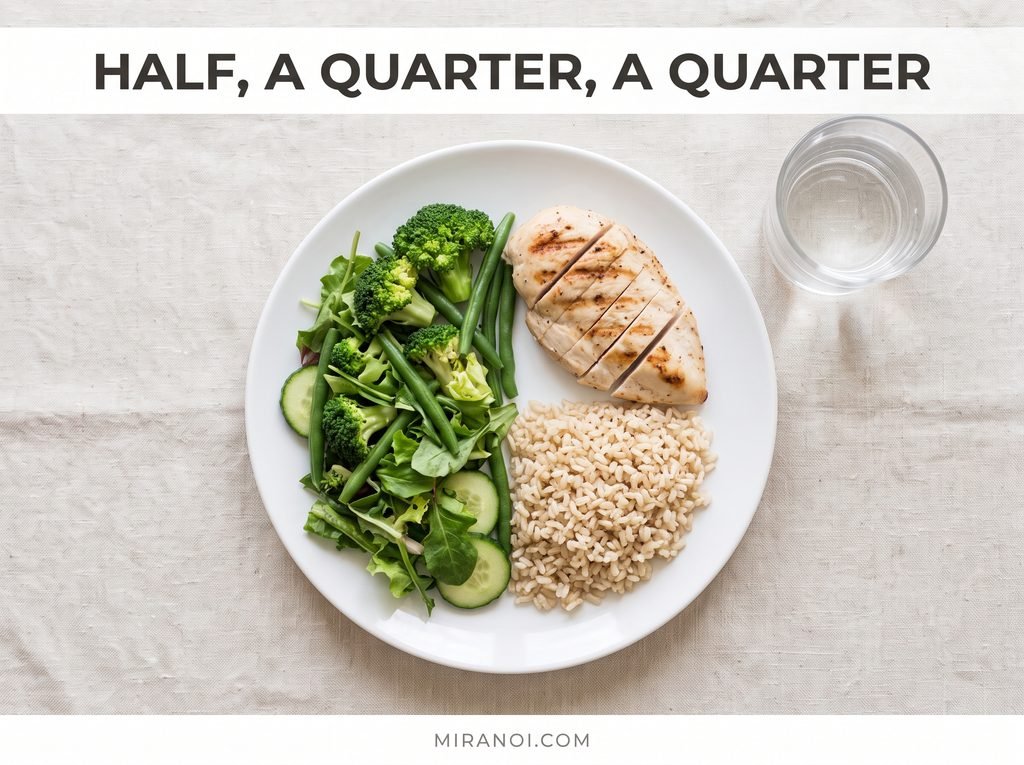
That is the shape of this subject. Individual foods are worth one to four millimetres each, measured mostly as pills. The pattern they belong to is worth about eleven, measured as meals. This rebuild keeps all fifteen foods, attaches the real number and the real tested dose to each, names the four that have no blood-pressure claim at all, and then spends the rest of its length on the thing that actually produced eleven.
The Fifteen, With What Each One Has Actually Produced
Every row below carries three things: the measured effect, the form that was given in the trials, and whether that form is something you eat. The third column is the one most lists omit.
| Food | Measured effect on blood pressure | What was actually tested | Food or supplement? |
|---|---|---|---|
| Garlic | −4.56 mmHg systolic overall; −8.38 / −7.27 in people hypertensive at baseline | 600–900 mg/day standardised garlic powder, 12–23 weeks | Supplement |
| Beetroot | About −4.4 / −1.1 mmHg; not significant in people with normal pressure | 300–500 mg/day concentrated dietary nitrate | Concentrate |
| Oily fish | About −2 / −2 mmHg at 2–3 g/day; −4.5 systolic at 3 g/day in people with hypertension | 2–3 g/day EPA + DHA, mostly as fish-oil capsules | Supplement |
| Dark chocolate | −1.76 / −1.76 mmHg | Cocoa products, 2–18 weeks, mainly healthy adults | Food, but see the funding note below |
| Leafy greens | No separate trial figure; acts through potassium (−4.25 / −2.53 for potassium itself) | Potassium trials used supplements, not greens | Food — mechanism inferred |
| Bananas | Same — potassium mechanism, no banana-specific trial | — | Food — mechanism inferred |
| Beans and lentils | Same — potassium, magnesium, fiber; no legume-specific BP trial cited here | — | Food — mechanism inferred |
| Yogurt | No separate trial figure | — | Food — mechanism inferred |
| Nuts | No separate trial figure | — | Food — mechanism inferred |
| Berries | No separate trial figure in this review | — | Food — mechanism inferred |
| Olive oil | No separate trial figure; evidence is for the Mediterranean pattern it belongs to | — | Food — part of a pattern |
| Oats | No blood-pressure claim | — | — |
| Avocados | No blood-pressure claim | — | — |
| Seeds | No blood-pressure claim | — | — |
| Tomatoes | No blood-pressure trial figure; linked to heart health generally | — | Food — mechanism inferred |
| The DASH pattern (all of the above, arranged) | −5.5 / −3.0 overall; −11.4 / −5.5 in people with hypertension | Whole diet, 8 weeks, all food provided, sodium held constant | Food |
Read the last row against every row above it. The pattern produced more than double the best single-food figure, and it did so as actual meals with no supplement and no sodium reduction helping it.
That is not an argument against the fifteen foods. They are what the pattern is made of. It is an argument against treating them as fifteen separate interventions you can add one at a time — which is exactly how a list invites you to read it.
What “Backed by Science” Can Mean — Five Different Things
The title of this article says the fifteen are backed by science, and they are. But that phrase covers five quite different situations, and the difference between them is larger than the difference between any two foods on the list.
| Tier of evidence | What it means | Which of the fifteen |
|---|---|---|
| 1. Tested as whole food, as a pattern | A randomised trial fed people the arrangement and measured their blood pressure | The DASH pattern — which is all fifteen, arranged |
| 2. Tested, but as an extracted dose | Randomised trials exist and are good, but what was given was a powder, capsule or concentrate | Garlic, oily fish, beetroot |
| 3. Tested as the food, small effect | Randomised trials on the food itself, with a modest result | Dark chocolate and cocoa (−2 mmHg) |
| 4. Mechanism only | A plausible and well-described nutrient pathway — usually potassium — but no trial of that food against blood pressure | Leafy greens, bananas, beans and lentils, yogurt, nuts, berries, tomatoes, olive oil |
| 5. No blood-pressure claim at all | The food is good for other reasons, and no blood-pressure effect was ever claimed for it | Oats, avocados, seeds |
Tier 4 is the honest home of more than half the list, and it is worth being clear that tier 4 is not a criticism. Potassium’s blood-pressure effect is well established, leafy greens and bananas genuinely contain potassium, and eating them genuinely raises your intake. What is missing is a trial that handed people spinach and measured the result — so nobody can tell you what a serving of spinach is worth in millimetres, and any page that gives you a number for it has made the number up.
Tier 5 is more interesting, because those three were in the previous version of this list with no blood-pressure claim attached even there. Oats, avocados and seeds appeared with notes about soluble fiber, monounsaturated fats and minerals — all true, none of it about blood pressure. The list was already honest about them; it just did not say so. Naming them is what turns a list of fifteen into a ranking, and a ranking is more use to a reader than a tie.
The practical consequence: if you are choosing where to start, start in tier 1. The others are its ingredients.
The Trial That Produced Eleven Millimetres
DASH stands for Dietary Approaches to Stop Hypertension, and it is the reason every reputable guideline recommends a pattern rather than a food.
| The design and the result | |
|---|---|
| Participants | 459 adults |
| Arms | Control diet · more fruit and vegetables · the combination diet (fruit, vegetables, low-fat dairy, less saturated and total fat) |
| Duration | 3-week run-in on the control diet, then 8 weeks on the assigned diet |
| Sodium | Held constant at 3 g across all three arms |
| Result, all participants | −5.5 mmHg systolic (97.5% CI −7.4 to −3.7) and −3.0 diastolic (−4.3 to −1.6), both P<0.001 |
| Result, people with hypertension | −11.4 mmHg systolic and −5.5 diastolic, both P<0.001 |
| Design note | Non-blinded, parallel-group, analysed by intention to treat |
Three things about that table matter more than the headline.
Sodium was held constant. This is the detail that makes DASH remarkable and the one most often lost. The eleven millimetres were not bought by cutting salt — salt was identical in every arm by design. Rearranging the plate did it alone. Cutting sodium is a separate, additional lever, which is why the current guideline recommends both.
The large number belongs to people who had high blood pressure. Overall the effect was 5.5 mmHg; in the hypertensive subgroup it was 11.4. If your blood pressure is normal, the honest figure for you is the smaller one. This pattern holds across almost every entry on this page — garlic, beetroot and omega-3 all showed larger effects in hypertensive participants and little or nothing in people with normal readings.
And the hypertensive figure is a subgroup result. The source reporting it gives no confidence interval, and subgroup analyses are weaker than the trial’s main finding by construction. Eleven millimetres is the right number to quote and it deserves the word “about” in front of it.
Eight weeks is also short. What DASH shows is that the pattern works quickly; it does not by itself show that people keep eating that way for years, and in the trial all the food was provided.
Potassium: One Mechanism Standing in for Eight Foods
Eight of the fifteen foods are on the list because of potassium. Leafy greens, bananas, beans and lentils, yogurt, nuts, tomatoes and the rest are potassium sources, and raising potassium is a real, graded, well-evidenced way to lower blood pressure. So it is worth knowing what potassium itself is worth, because that figure is the ceiling for all eight of them together.
| Potassium supplementation | |
|---|---|
| Trials pooled | 23 randomised placebo-controlled trials (9 parallel, 14 crossover) |
| Participants | 1,213 |
| Systolic | −4.25 mmHg (95% CI −5.96 to −2.53), I² = 41% |
| Diastolic | −2.53 mmHg (95% CI −4.05 to −1.02), I² = 65% |
| Dose-response | The authors report one, grouping trials as low (<50 mmol/day), moderate (50–99) and high (≥100) — but the per-group figures are in a figure, not the text |
| Not examined | Effect by medication status, and effect by baseline sodium intake. Neither was analysed |
| Guideline position | Moderate supplementation, ideally from food, under 80 mmol/day — Class 1, Level A |
Four millimetres. That is what the potassium mechanism is worth in trials, and it is the honest ceiling for the eight foods that are on this list because they contain it. Spread across eight entries, it is why no page can tell you what a banana does.
Note the form again: these were supplementation trials. The guideline’s own wording is “ideally from food,” which is a recommendation rather than a finding — the trials behind the number used potassium preparations. Food-based potassium is reasonable to prefer for every other reason, and the trial evidence is not what establishes it.
There is also a far more interesting instruction in the 2025 guideline that this list did not mention at all, and it is the most actionable thing on this page.
Potassium-based salt substitutes carry a Class 2a, Level A recommendation — described as useful especially when salt is mostly added during home cooking. That is a single swap at the stove that works on both levers at once: less sodium in, more potassium in. For a page about food and blood pressure, a salt substitute is a stronger piece of advice than any of the fifteen entries, and it is one line long.
It also comes with a condition that belongs in the same breath, covered in the safety section below: if you have chronic kidney disease or take a potassium-retaining medication, both the salt substitute and the potassium increase need medical supervision, not a recipe.
The Three With Real Trials, and What Was in the Bottle
Garlic, oily fish and beetroot deserve a section of their own, because they have the best single-food evidence on the list and because what was administered in those trials is not what the list implies.
| Garlic | Oily fish (omega-3) | Beetroot (nitrate) | |
|---|---|---|---|
| What was given | Standardised garlic powder, mostly one commercial brand | EPA + DHA, mostly fish-oil capsules | Concentrated dietary nitrate |
| Dose | 600–900 mg/day | 2–3 g/day | 300–500 mg/day |
| Duration | 12–23 weeks | About 10 weeks typically | Varies; mostly short |
| Everyone | −4.56 systolic (−7.36 to −1.77); diastolic −2.44 not significant (p=0.06) | About −2 systolic and −2 diastolic | About −4.4 systolic, −1.1 diastolic |
| People with hypertension | −8.38 systolic (−11.13 to −5.62) and −7.27 diastolic (−8.77 to −5.76) | −4.5 systolic at 3 g/day | Larger; not significant in normotensive people |
| People with normal BP | No significant effect | About −2, and under −1 at 5 g/day | No significant effect |
| Evidence base | 11 trials, roughly 500–565 participants | 71 trials, nearly 5,000 adults, 1987–2020 | 16 trials, about 254 participants |
| The weak spot | The hypertensive subgroups rest on only 3–4 trials | The FDA considers the evidence inconclusive for a health claim, and the lead author agreed it does not meet that threshold | Small total sample, and one evidence appraisal rates this indication as contradictory |
Garlic’s hypertensive figure is the largest single-food number on this page, and it is worth noting carefully: eight millimetres is a real effect if it holds, and it rests on three or four trials of a specific powdered preparation. That is promising rather than established, and the honest version of the advice is that garlic in cooking is good food with a plausible mechanism, while the eight millimetres belongs to a supplement regimen you would discuss with a doctor.
Omega-3’s pattern is the clearest illustration of a rule that runs through everything here. At 3 g a day it moved systolic pressure 4.5 mmHg in people with hypertension and 2 mmHg in people without. At 5 g a day it moved it nearly 4 mmHg in hypertensive people and less than 1 mmHg in everyone else. More was not better, and the effect was concentrated in people who had something to correct.
Beetroot has the smallest evidence base of the three — about 254 participants in total — and the most marketing around it. Four millimetres from a concentrated dose is a fair summary, with nothing significant demonstrated in people whose pressure is already normal.
And for all three: these are the doses that produced the numbers. Cooking with garlic, eating fish twice a week and putting beetroot in a salad are all good things to do. They are not these trials.
Dark Chocolate: Two Millimetres, and Who Paid for the Trials
Dark chocolate is the entry most likely to be the reason someone shares a list like this one, so it is worth giving its evidence properly. It is the best-studied actual food on the list, and the number is small.
| Cocoa and blood pressure | |
|---|---|
| Evidence | 35 studies, 40 treatment comparisons |
| Participants | 1,804, mainly healthy adults |
| Systolic | −1.76 mmHg (95% CI −3.09 to −0.43), P = 0.009 |
| Diastolic | −1.76 mmHg (95% CI −2.57 to −0.94), P < 0.001 |
| Duration | 2 to 18 weeks, mean about 9 weeks |
| Certainty | Moderate — downgraded from high because of unexplained heterogeneity between trials |
| Funding note | Industry-funded trials showed slightly larger effects, which the reviewers flagged as possible bias |
| Authors’ own summary | A “small (2 mmHg) blood pressure-lowering effect in mainly healthy adults in the short term” |
Two millimetres, in mostly healthy people, over a few weeks, with the better-funded trials finding more than the others. That is the honest entry for dark chocolate, and it is a good deal more useful than “flavonoids may improve blood vessel function” — which is what the previous version of this page said and which could describe an effect of any size, including none.
The practical reading is not that chocolate is worthless. Two millimetres is a real pooled effect with a confidence interval that excludes zero. It is that two millimetres is the entire prize, and it comes in a food that is energy-dense enough to work against the weight-loss lever, which the guideline grades Class 1, Level A at 5% of body weight. If a square of 70% chocolate makes the rest of the pattern easier to live with, it has earned its place. If it is being eaten as a blood-pressure treatment, the arithmetic does not favour it.
The same “small but real” verdict covers berries, nuts, olive oil, yogurt and tomatoes, with one difference: for those, nobody has produced even a two-millimetre figure specific to the food. They sit in tier 4 — good foods, sound mechanisms, no number.
What the 2025 Guideline Actually Grades
In 2025 the American College of Cardiology and the American Heart Association, with eleven other organisations, issued a new guideline for high blood pressure. Each recommendation carries a class of recommendation and a level of evidence, which is the fastest way to see what is well established and what is reasonable but unproven. Not one of the fifteen foods appears individually. These do.
| Recommendation | What it says | Class | Evidence |
|---|---|---|---|
| Sodium | Reduce to under 2,300 mg/day, moving toward an ideal limit of under 1,500 mg/day | 1 | A |
| DASH or heart-healthy eating pattern | Recommended, with or without hypertension | 1 | A |
| Dietary potassium | Moderate supplementation, ideally from food, under 80 mmol/day | 1 | A |
| Weight loss | At least 5% of body weight for people with overweight or obesity | 1 | A |
| Physical activity | A structured programme with aerobic exercise and/or resistance training | 1 | A |
| Alcohol | Abstinence preferred; otherwise at most 1 drink/day for women, 2 for men | 1 | A |
| Potassium-based salt substitutes | Can be useful, especially where salt is mainly added during home cooking | 2a | A |
| Transcendental meditation | May be reasonable as an adjunct | 2b | B-R |
| Other stress management (breathing techniques, yoga) | May be reasonable as an adjunct | 2b | B-R |
The guideline defines one standard drink as 12 oz of beer at 5%, 5 oz of wine at 12%, or 1.5 oz of spirits at 40%.
Three observations about that table in relation to a page titled “15 foods.”
Sodium is the food recommendation with the strongest grade, and it is about removal. A list of foods to add cannot reach it. The previous version of this page gave the 2,300 mg figure correctly, but buried it in a quick-fact box and a FAQ while fifteen headings went to foods. The ideal limit of 1,500 mg was not there at all.
Alcohol carries Class 1, Level A — the same grade as the eating pattern. It was absent from the previous version entirely. For many readers it is the largest single available change on the list, and a food article that omits it is not giving a complete answer to its own question.
And the two levers with Class 1 Level A grades that are not about food at all — weight and activity — outrank every entry on the list. That is not a reason to skip the foods. It is the reason this page should not be read on its own: home blood pressure monitoring tells you whether any of it is working, and the daily habits that protect your heart covers the non-dietary levers properly.
Safety: Eating More Potassium Is Not Safe for Everyone
This is the section a list of potassium-rich foods most needs and least often has. Potassium lowers blood pressure because your kidneys handle it; if they cannot, the same intake becomes a problem rather than a benefit. The guideline attaches the warning directly to both of its potassium recommendations, and so does this page.
| If this applies to you | What it affects | What to do |
|---|---|---|
| Chronic kidney disease | Both increased dietary potassium and potassium-based salt substitutes | Serum potassium needs monitoring. Do not raise potassium intake or switch to a salt substitute without medical advice |
| Potassium-retaining medication — including ACE inhibitors, ARBs, and potassium-sparing diuretics | The same | The same. These drugs already raise potassium; adding more can push it too high |
| Severe, symptomatic orthostatic hypotension | Sodium reduction | The guideline notes that cutting sodium may be contraindicated here |
| Readings consistently at or above 130/80 | Everything on this page | This is a conversation with a doctor, not a shopping list. Food is an adjunct to treatment at this level, not a substitute for it |
| A reading of 180/120 or higher | — | Urgent medical attention. Nothing on this page applies to that situation |
| Already taking blood-pressure medication | Garlic supplements, fish-oil supplements, beetroot concentrate | Tell your doctor before starting any of them. These have measurable effects, which is the point — and measurable effects can stack with a drug |
That last row is the practical consequence of the whole article. The three foods with the best numbers have those numbers because they were given as concentrated doses with real pharmacological effects. A supplement that can lower your systolic pressure by eight millimetres is doing something, and something that works can interact with something else that works. Deciding to take it is a medical decision, however natural the source.
None of this applies to eating ordinary amounts of the fifteen foods as food. Spinach in a salad, a banana, garlic in a pan, fish twice a week — for most people these need no permission and carry no risk. The caution is about supplement doses and about kidney function, and the line between the two is exactly the line this page has been drawing throughout.
Frequently Asked Questions
Which single food lowers blood pressure most? Garlic, in people who already have hypertension — about 8 mmHg systolic. But that figure comes from 600 to 900 mg a day of standardised garlic powder across three or four trials, not from cooking with garlic. If you want the largest effect from eating rather than supplementing, it is not a food at all: it is the whole DASH pattern, at about 11 mmHg in people with hypertension.
How fast does food lower blood pressure? The DASH trial measured its effect over eight weeks, and most single-food trials ran two to twenty-three weeks. So weeks, not days — and the measurements were taken while people were still eating that way. Nothing here banks a result.
Do these foods work if my blood pressure is normal? Mostly no, or much less. Garlic showed no significant effect in normotensive participants. Beetroot showed none. Omega-3 moved systolic pressure about 2 mmHg in people without hypertension against 4.5 in those with it. DASH produced 5.5 mmHg overall against 11.4 in the hypertensive subgroup. These are corrections, and there is less to correct.
Should I take a garlic, fish-oil or beetroot supplement? That is a question for your doctor, especially if you take blood-pressure medication, because the supplement doses have real effects that can add to a drug’s. The evidence is genuine and modest, the FDA regards the omega-3 blood-pressure evidence as inconclusive for a health claim, and beetroot’s total evidence base is about 254 participants.
How much sodium should I aim for? Under 2,300 mg a day, moving toward an ideal of under 1,500 mg — Class 1, Level A in the 2025 guideline. This is the strongest-graded dietary recommendation there is for blood pressure, and it is about removal rather than addition. One exception: the guideline notes sodium reduction may be contraindicated in severe symptomatic orthostatic hypotension.
Is a salt substitute a good idea? For many people, yes — potassium-based salt substitutes carry a Class 2a, Level A recommendation, especially where most of your salt is added during home cooking, because one swap lowers sodium and raises potassium at once. Not if you have chronic kidney disease or take a potassium-retaining medication without medical advice.
Can I stop my blood-pressure medication if I eat this way? Not on your own decision. The largest dietary effect on this page is about 11 mmHg in a trial where all food was provided; most medications do more, and stopping one is a clinical decision with a clinical process. Diet is an adjunct at treatment-level readings, and the guideline treats it as one.
What about oats, avocados and seeds? Good foods, with no blood-pressure claim attached — not in the evidence and, notably, not in the previous version of this page either. Oats are there for soluble fiber, avocados for monounsaturated fat, seeds for minerals and fat. Keep eating them for those reasons.
The Bottom Line: Look Back at Last Week
There is a test that settles whether a page like this one has done you any good, and it does not involve reading further. Think about the last seven days of your actual eating and answer one question: did you add foods, or did you change a pattern?
| What you did last week | What the evidence says that is worth | Where that puts you |
|---|---|---|
| Added a few of the fifteen on top of how you already eat | About 2–4 mmHg, if the food you added is one of the tested ones, in the tested form | The bottom of the range. Not nothing, and not what the page promised |
| Swapped: those foods replaced what you used to eat, across most meals | Approaching the DASH figure — 5.5 mmHg overall, about 11 in people with hypertension | The top of the range, from food alone |
| Also used a potassium salt substitute at the stove | Sodium down and potassium up with one change — Class 2a, Level A | Both graded levers at once |
| Also cut sodium toward 1,500 mg | Class 1, Level A, and it stacks with the pattern, since DASH held sodium constant | The strongest dietary position available |
| Added a garlic, fish-oil or beetroot supplement | 4–8 mmHg if you have hypertension — and a decision your doctor should know about | Effective, and no longer just food |
| Nothing changed, but you now know more about beetroot | Zero | Where most readers of articles like this one end the week |
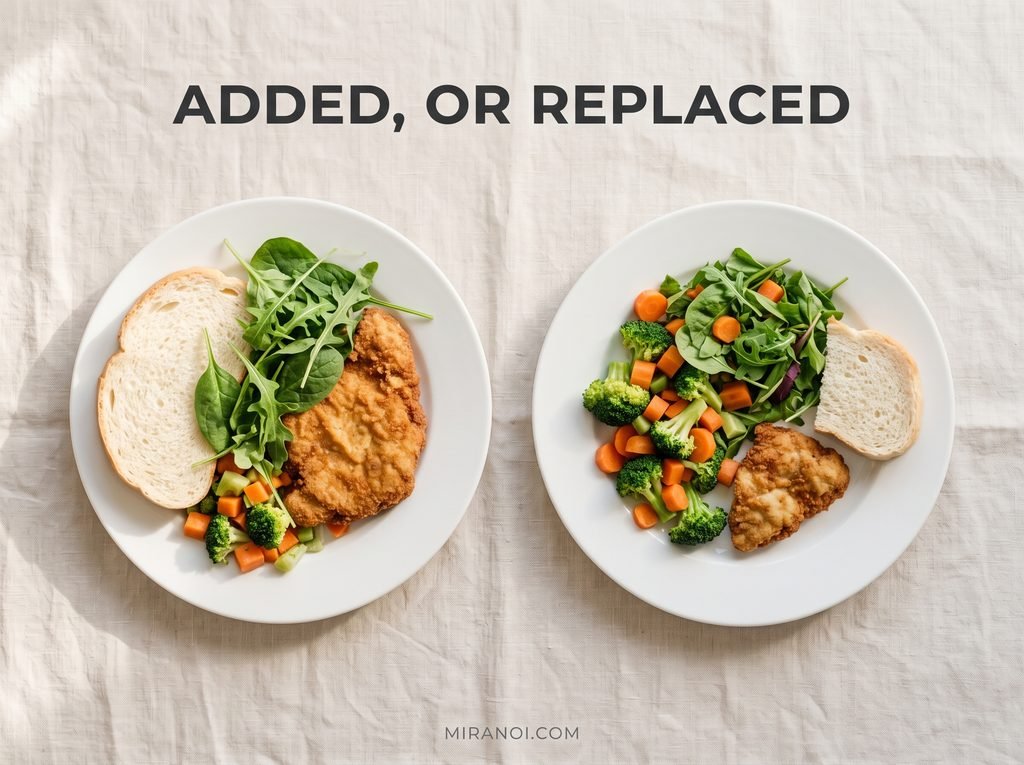
The difference between the first row and the second is not effort or willpower. It is the word replaced. Adding spinach to a week that still contains the same bread, the same salt and the same takeaway gives you the potassium and keeps everything else; the trial that produced eleven millimetres did not add anything to people’s diets, it rebuilt them, while holding salt deliberately level so that rearrangement had to do the work alone.
That is also why the last row is not a joke. A list of fifteen foods is pleasant to read and easy to agree with, and agreement changes no reading on any monitor. Two swaps you actually make beat fifteen foods you have merely approved of.
If you want the shortest honest version of this entire page: eat the pattern rather than the items, salt less than you do now, and buy a potassium salt substitute if your kidneys are healthy. Everything above is the evidence for those three sentences, and the reason the fifteen foods are the ingredients rather than the plan.
This article is for general informational purposes and is not a substitute for individual medical advice. Do not start, stop or change blood-pressure medication based on an article. If you have chronic kidney disease or take a potassium-retaining medication, do not increase potassium intake or use a salt substitute without medical advice. A reading of 180/120 or higher needs urgent medical attention.
References
- Appel LJ, et al. A Clinical Trial of the Effects of Dietary Patterns on Blood Pressure (DASH). New England Journal of Medicine, 1997 — trial summary
- A clinical trial of the effects of dietary patterns on blood pressure — DASH Collaborative Research Group, PubMed record
- 2025 AHA/ACC Guideline for the Prevention, Detection, Evaluation and Management of High Blood Pressure in Adults — graded recommendations summary
- 2025 High Blood Pressure Guideline-at-a-Glance. Journal of the American College of Cardiology
- Poorolajal J, et al. Oral potassium supplementation for management of essential hypertension: a meta-analysis of randomized controlled trials. PLOS ONE, 2017 — 23 trials, 1,213 participants
- Ried K, et al. Effect of garlic on blood pressure: a systematic review and meta-analysis. BMC Cardiovascular Disorders, 2008 — 11 trials
- Ried K, et al. Effect of Garlic on Blood Pressure: A Meta-Analysis. Journal of Clinical Hypertension, 2015
- Cochrane review — Effect of cocoa on blood pressure (35 studies, 1,804 participants)
- American Heart Association — Consuming about 3 grams of omega-3 fatty acids a day may lower blood pressure (meta-analysis of 71 trials, nearly 5,000 adults)
- Siervo M, et al. Inorganic nitrate and beetroot juice supplementation reduces blood pressure in adults: a systematic review and meta-analysis. Journal of Nutrition, 2013 — PubMed record
- Evidence appraisal — beetroot and dietary nitrate in mild arterial hypertension
- American Heart Association — High Blood Pressure
- CDC — High Blood Pressure Facts