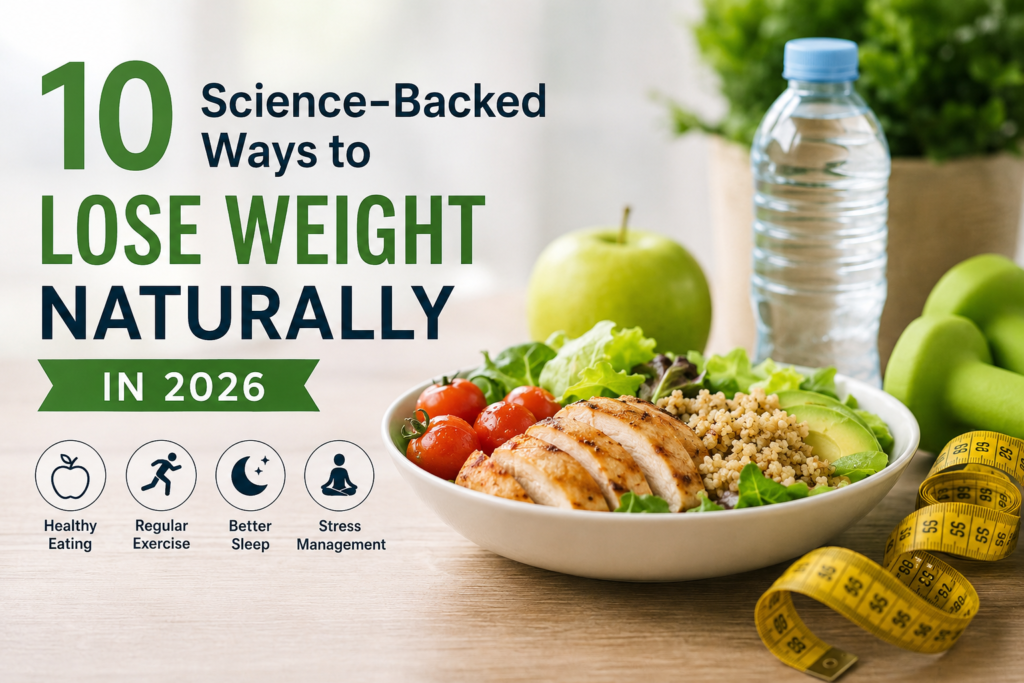
If you want to lose weight naturally, you’re not alone — losing weight is one of the most common health goals worldwide…, yet many people struggle because they follow restrictive diets, quick fixes, or unrealistic fitness plans. Sustainable weight loss isn’t about starving yourself — it’s about building habits that support your body over time.
Scientific research consistently shows that gradual lifestyle changes are far more effective than crash diets. By improving nutrition, increasing physical activity, getting enough sleep, and managing stress, you can achieve long-term weight loss while improving your overall health. This guide covers ten evidence-based strategies that can help you lose weight naturally and keep it off.
Quick Fact: Losing weight too quickly often backfires — most people who lose weight gradually (0.5-1 kg per week) are more likely to keep it off long-term than those who lose it rapidly through crash diets.
1. Eat More Protein
Protein is one of the most effective nutrients for weight management. A high-protein diet helps reduce hunger hormones while increasing feelings of fullness. It also supports muscle preservation during weight loss and slightly increases the number of calories your body burns through digestion.
Excellent protein sources include eggs, chicken breast, turkey, fish, Greek yogurt, cottage cheese, lentils, beans, and tofu. Aim to include a source of protein with every meal.
2. Choose Whole Foods Instead of Processed Foods
Ultra-processed foods often contain added sugars, unhealthy fats, and refined carbohydrates that make overeating easier. Instead, focus on whole foods such as vegetables, fruits, whole grains, lean meats, fish, nuts, seeds, and legumes. Whole foods are generally more filling and provide essential vitamins, minerals, and fiber.
3. Increase Your Fiber Intake
Dietary fiber slows digestion and helps control appetite. High-fiber foods include oats, apples, pears, broccoli, carrots, beans, chickpeas, chia seeds, and flaxseeds. Adults should aim for approximately 25-38 grams of fiber per day.
4. Drink More Water
Many people confuse thirst with hunger. Drinking water before meals may help reduce calorie intake by increasing feelings of fullness. Replacing sugary beverages with water can also significantly reduce daily calorie consumption.
5. Exercise Regularly
Exercise helps increase calorie expenditure while improving cardiovascular health and preserving muscle mass. The best options include brisk walking, cycling, swimming, strength training, running, and HIIT workouts. Experts recommend at least 150 minutes of moderate physical activity each week.
6. Get Enough Sleep
Sleep plays a major role in appetite regulation. Poor sleep affects hormones such as leptin and ghrelin, increasing hunger and cravings. Adults should aim for 7-9 hours of quality sleep each night.
7. Reduce Added Sugar
Excess sugar contributes to weight gain by increasing calorie intake without providing lasting fullness. Common hidden sources include soft drinks, candy, breakfast cereals, sweetened yogurt, energy drinks, and packaged snacks. Reading nutrition labels helps reduce unnecessary sugar consumption.
8. Practice Mindful Eating
Mindful eating encourages paying attention to hunger and fullness cues. Helpful habits include eating slowly, avoiding distractions, chewing food thoroughly, and stopping when comfortably full. This simple strategy may naturally reduce overeating.
9. Manage Stress
Chronic stress increases cortisol levels, which may encourage overeating and fat storage, especially around the abdomen. Healthy stress-management techniques include meditation, yoga, deep breathing, walking outdoors, journaling, and talking with friends.
10. Stay Consistent
Consistency matters more than perfection. Instead of aiming for rapid results, focus on sustainable habits that you can maintain for years. Healthy weight loss generally ranges from 0.5 to 1 kilogram (1-2 pounds) per week.
Quick Reference: Healthy Weight Loss Guidelines
| Factor | Recommendation |
|---|---|
| Safe weekly weight loss | 0.5–1 kg (1–2 lbs) |
| Daily fiber intake | 25–38 grams |
| Weekly moderate exercise | At least 150 minutes |
| Nightly sleep | 7–9 hours |
| Protein | A source at every meal |
Best Foods for Natural Weight Loss → Best Foods to Help You Lose Weight Naturally
The following foods are nutrient-dense and can support a healthy weight-loss plan: eggs, salmon, chicken breast, Greek yogurt, leafy greens, broccoli, oats, apples, berries, beans, lentils, avocados, almonds, and chia seeds.
Foods to Limit
Consider reducing your intake of sugary drinks, fast food, fried foods, white bread, pastries, candy, processed snacks, and excess alcohol.
Common Weight Loss Mistakes
Many people unknowingly slow their progress by skipping meals, following extreme diets, drinking sugary beverages, sleeping too little, ignoring strength training, and expecting instant results.
Practical Tips
- Build one habit at a time rather than overhauling your entire diet overnight.
- Track progress with how your clothes fit or energy levels, not just the scale.
- Prep protein-rich meals in advance so convenience doesn’t derail your goals.
- Treat sleep and stress management as part of your weight-loss plan, not separate from it.
If you’re building out a full plan, it’s worth pairing this with our guides on how much protein you need per day and strength training for beginners, since both directly support sustainable weight loss.
When Should You See a Doctor?
Consider speaking with a doctor if you’ve made consistent lifestyle changes without any progress after several months, if you’re losing weight unintentionally, or if you’re considering a very low-calorie diet or weight-loss medication. A healthcare provider can rule out underlying conditions and help build a plan suited to your individual health needs.
Frequently Asked Questions
What is the healthiest way to lose weight? The healthiest approach combines balanced nutrition, regular physical activity, adequate sleep, and long-term lifestyle changes rather than short-term restriction.
How much weight can I safely lose each week? Most health organizations recommend losing about 0.5-1 kg (1-2 pounds) per week for sustainable, lasting results.
Do I need to avoid carbohydrates? No. Whole-grain carbohydrates, fruits, vegetables, and legumes are healthy parts of a balanced diet. The focus should be on limiting refined carbohydrates and added sugars, not carbs in general.
Is exercise required for weight loss? Weight loss is primarily influenced by calorie balance, but exercise improves overall health, helps preserve muscle, and supports long-term weight maintenance.
Can drinking water help with weight loss? Water may help reduce calorie intake when consumed before meals and is an excellent replacement for sugary beverages.
Looking for meal ideas that fit this approach? Try our 5 healthy high-protein recipes you can make in 30 minutes or less.
If you’re considering meal timing strategies, it’s worth reading whether intermittent fasting actually delivers on its weight loss claims.
Conclusion
If your goal is to lose weight naturally and keep it off, remember: it isn’t about quick fixes or restrictive diets… — it’s about building habits you can maintain for life. By eating more protein, choosing whole foods, exercising regularly, sleeping well, staying hydrated, and managing stress, you can lose weight safely while improving your overall health.
Small, consistent changes often produce the biggest long-term results. Start with one healthy habit today, and gradually build a lifestyle that supports lasting success.
This article is for general informational purposes and is not a substitute for personalized medical or nutritional advice. Consult a healthcare provider before starting a significant weight-loss program, especially if you have an existing health condition.
References
National Institutes of Health (NIH) — Weight Management Research