This article performs subtraction. The best evidence in its field is about substitution.
The original’s reasoning was sound: remove the salt, replace what salt was doing with acid, herbs, aromatics and toasted spices, wait for your palate to adapt. All of that is correct and most of it survives below. But its supporting evidence was DASH-Sodium, a trial that measured blood pressure — a number on a cuff.
The largest trial ever run on dietary salt measured strokes and deaths. And what it changed was not how much salt people used. It was which salt was in the jar.
Twenty thousand nine hundred and ninety-five people across six hundred villages got a substitute that was 70% sodium chloride and 30% potassium chloride. Same spoon, same cooking, same amount. Over nearly five years, stroke fell 14%, major cardiovascular events fell 13%, and death from any cause fell 12%.
That intervention appears in the original article once, as a half-sentence of caution. It deserves better than that — and it deserves the caution too, because for some readers it is genuinely dangerous. This rebuild gives it both.
Quick Fact: Monosodium glutamate contains one third the sodium of table salt by weight — 12.3 g per 100 g against 39.3 g. In a test of 163 consumers, recipes that swapped part of the salt for MSG cut total sodium by 31% to 61% and were liked just as much. One was liked more. The original article never mentions it.
What Salt Is Actually Doing
The original said low-sodium cooking fails because people remove salt without replacing “its flavour role.” Singular. Salt has at least four, and they come apart.
| What salt does | How it works | What the original offered instead |
|---|---|---|
| Tastes salty | Direct, on the tongue | Acid — partly works, by a different route |
| Suppresses bitterness | Sodium ions blunt some bitter receptors | Nothing |
| Releases aroma | Alters volatility of aroma compounds | Toasted spices, fresh herbs — works well |
| Enhances sweetness | Perceptual interaction | Nothing specific, but spices help |
Row two is the gap, and it explains the pattern most people notice without being able to name it.
Sodium salts suppress the bitterness of many bitter compounds — a finding from human sensory work in the 1990s, with recent receptor studies showing it happens at the bitter receptor itself for at least some compounds, and that it is the sodium ion doing it rather than the chloride. Take the salt out and bitterness comes forward.
Which is why low-sodium chicken is easy and low-sodium greens are hard. Brassicas, kale, broccoli rabe, radicchio, grapefruit, coffee, dark chocolate — anything with real bitterness gets noticeably worse without salt, and acid does not fix it. In some cases acid makes it worse.
What does help bitterness: a little sweetness, fat, and umami. Which is where the next section goes.
Two Kinds of Evidence, and the Article Cited the Weaker One
| DASH-Sodium | SSaSS | |
|---|---|---|
| What it measured | Blood pressure | Stroke, cardiovascular events, death |
| Type of endpoint | Surrogate | Hard outcome |
| The intervention | Eat less sodium | Replace 30% of the sodium chloride with potassium chloride |
| Result | 4.6 mmHg systolic on a typical American diet | See below |
| What the original cited | This one | Not mentioned |
Blood pressure is a good surrogate and it is still a surrogate. A trial that counts strokes is a different order of evidence, and there is one.
| SSaSS outcome | Substitute | Regular salt | Effect |
|---|---|---|---|
| Stroke, per 1,000 person-years | 29.14 | 33.65 | 14% lower |
| Major cardiovascular events | 49.09 | 56.29 | 13% lower |
| Death from any cause | 39.27 | 44.61 | 12% lower (RR 0.88, 0.82–0.95) |
| Fatal stroke | — | — | RR 0.77 (0.65–0.91) |
| Clinical hyperkalemia | 3.35 | 3.30 | No difference (P = 0.76) |
Mean follow-up was 4.74 years.
Three honest caveats, because this is a strong result and strong results get overextended.
The population was high risk by design — 73% had already had a stroke and 88% had hypertension. These were not average adults, and the benefit in a healthy 40-year-old is unknown. Only one formulation was tested. And potassium levels were not monitored serially during the trial, so mild hyperkalemic episodes could have gone undetected even though clinical events did not differ.
But the direction is clear, the mechanism is understood, and the intervention costs nothing and changes no recipe. For the right person it is almost certainly the highest-value thing on this page.
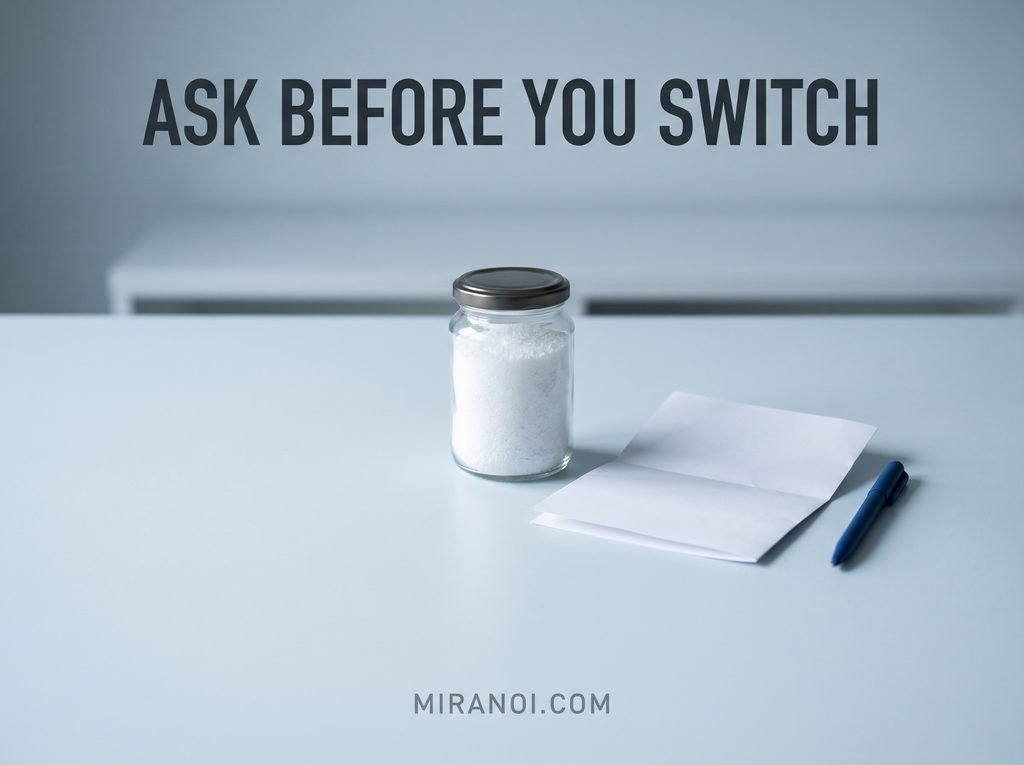
Who Must Not Use a Potassium Salt Substitute
This table is the reason the end of this article is a fork rather than a conclusion.
| If you | Why |
|---|---|
| Have chronic kidney disease, or reduced kidney function | Kidneys clear potassium. If they are not clearing it efficiently, added potassium accumulates |
| Take an ACE inhibitor (ramipril, lisinopril) | Raises serum potassium |
| Take an ARB (losartan, valsartan, candesartan) | Raises serum potassium |
| Take a potassium-sparing diuretic (spironolactone, amiloride, eplerenone) | Raises serum potassium, substantially |
| Take a potassium supplement already | Additive |
| Have heart failure, or have been told to limit potassium | Several of the above usually apply at once |
| Do not know | Then you do not know, and this is a blood test and a medication list |
High potassium is not a symptom you notice. It is a number on a blood test, and at the top of its range it causes dangerous heart rhythms. This is not a reason for most people to be frightened of a salt substitute. It is a reason the decision belongs to someone who can see your creatinine and your prescriptions.
The Ingredient the Article Left Out
Monosodium glutamate is the most useful omission in the original piece, and it is omitted for reputational reasons rather than scientific ones.
| Sodium per 100 g | |
|---|---|
| Table salt | 39.3 g |
| MSG | 12.3 g |
One third. So replacing part of the salt in a dish with MSG lowers total sodium while adding umami, which is one of the few things that genuinely helps the bitterness problem from the first table.
That is not theoretical. In a study that rebuilt four everyday recipes this way and put them in front of 163 consumers:
| Dish | Standard | With MSG swap | Reduction |
|---|---|---|---|
| Roasted vegetables | 0.27 g sodium | 0.19 g | 31% |
| Quinoa bowl | 0.37 g | 0.25 g | 31% |
| Savoury yogurt dip | 0.16 g | 0.09 g | 46% |
| Pork cauliflower fried rice | 0.17 g | 0.07 g | 61% |
Three of the four were liked as much as the full-salt versions. The yogurt dip was liked more.
You do not need a tub labelled MSG to use this. Parmesan, dried mushrooms, tomato paste, anchovy, miso and soy sauce all deliver glutamate — but all of them except dried mushrooms also deliver sodium, which is the trap the next section is about.
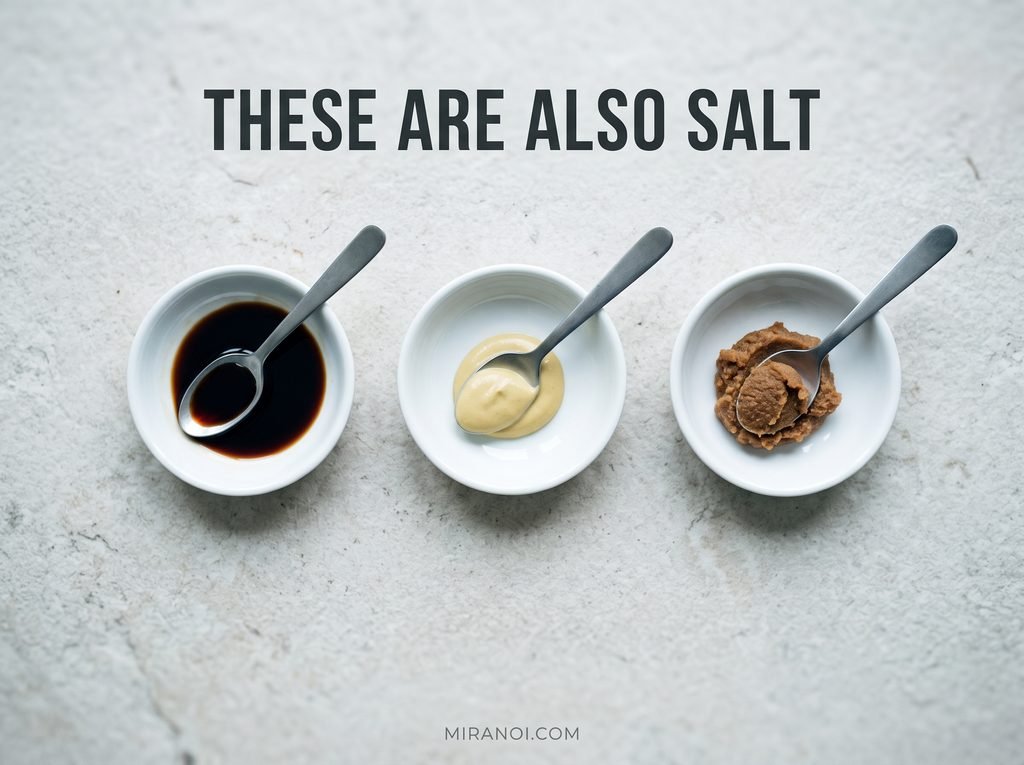
Two of These Recipes Understate Their Sodium
And in both cases the culprit is the thing that was supposed to replace the salt.
The stir-fry is listed at ~200 mg per serving. It contains a tablespoon of low-sodium tamari across two servings. Low-sodium tamari runs roughly 500–700 mg a tablespoon depending on brand, so that single ingredient contributes something like 250–350 mg per serving before anything else is counted. A realistic figure for that dish is closer to 400 mg, which makes it double the next highest on the list rather than roughly equal to it.
The salmon is listed at ~150 mg per serving. It contains a tablespoon of Dijon mustard across two servings. Dijon carries about 360 mg of sodium a tablespoon, so roughly 180 mg per serving arrives from the mustard alone, before the salmon’s own sodium. A realistic figure is closer to 240 mg.
Neither dish is unhealthy and neither needs removing. The point is structural, and it is the sharpest thing in this article: the condiments people reach for to replace salt are mostly salt delivery systems. Mustard, soy sauce, tamari, miso, fish sauce, Worcestershire, stock cubes, and every jarred paste on the shelf. They work precisely because they are salty, and a flavour strategy built on them is not a sodium strategy.
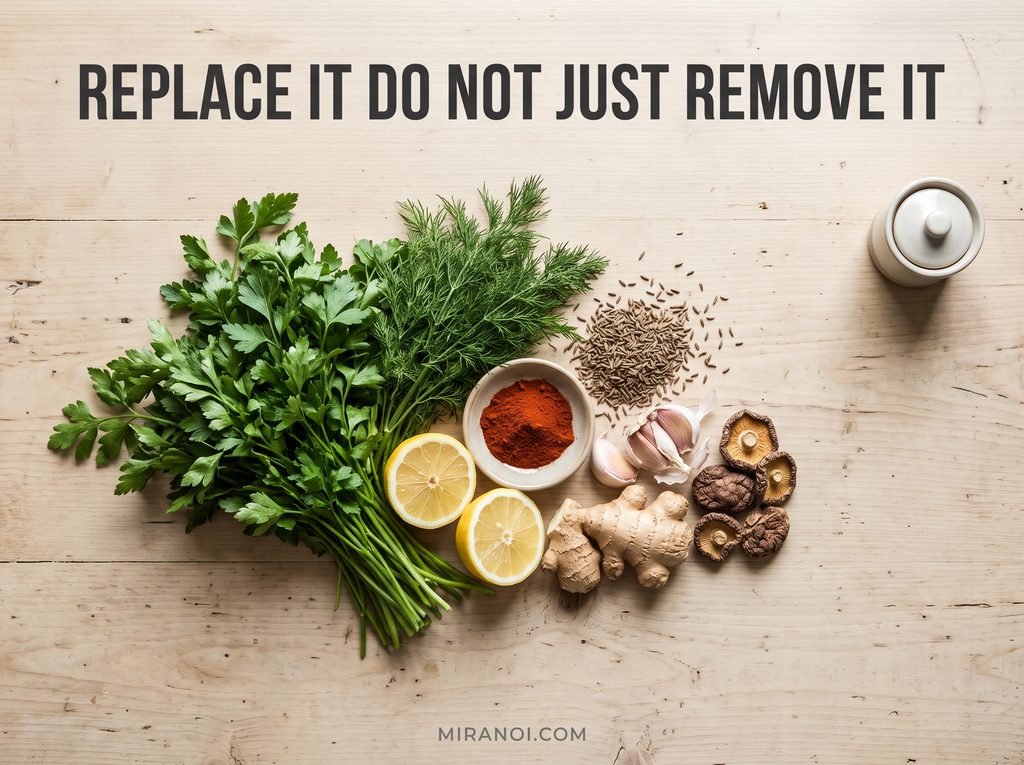
The genuine non-sodium flavour tools are a shorter list: acid, fresh herbs, toasted whole spices, alliums, heat, smoke, dried mushrooms, and browning. Everything else, check the label.
When to Add What
The original’s advice on technique was good and incomplete. This is the full version.
| Add | When | Why |
|---|---|---|
| Whole or ground spices | Into hot oil, ~30 seconds, early | Fat-soluble aromatics need fat and heat to release |
| Alliums, ginger | Early, softened in fat | Flavour develops through cooking |
| Dried mushrooms, tomato paste | Early, with the fat | Glutamate builds through cooking, and neither adds much sodium |
| Fresh soft herbs | Off the heat, at the end | Volatile compounds are destroyed by sustained heat |
| Acid — lemon, vinegar | Off the heat, at the end | Brightness fades with cooking; acidity flattens |
| Any salt you do use | On the surface, at the end | Surface salt reaches the tongue directly rather than being absorbed into the food |
The last row is worth a sentence. If you are using a reduced amount of salt, finishing with a small quantity on the surface gives you more perceived saltiness per gram than stirring the same quantity in during cooking, because what you taste is what contacts your tongue. Salt mixed through a stew during a long simmer is distributed everywhere and tasted nowhere in particular.
The Six Recipes
Quantities as the original gave them. The sodium figures are the original’s except where corrected above.
1. Lemon-Herb Roasted Chicken and Vegetables — ~120 mg, serves 4
4 chicken thighs skin removed · 4 cups mixed vegetables · 2 lemons, juice and zest · 4 cloves garlic · 2 tbsp olive oil · 1 tbsp fresh rosemary · 1 tsp black pepper
Roast at 200°C (400°F) until the chicken reaches 74°C (165°F). Lemon juice and zest at the end, not the start.
The job it solves: saltiness, by acid. Chicken is not bitter, which is why this is the easiest dish on the list to make work without salt.
2. Smoky Black Bean Soup — ~180 mg, serves 4
2 cans no-salt-added black beans, drained and rinsed · 1 onion, 3 cloves garlic, 1 red pepper · 4 cups no-salt-added vegetable broth · 2 tsp smoked paprika, 1 tsp cumin, ¼ tsp cayenne · 1 lime · 1 tbsp olive oil
Toast the spices in the oil for thirty seconds before the liquid. Lime off the heat.
The job it solves: aroma, by smoke and toasted spice. The smoked paprika is doing the heaviest lifting on this page — smoke reads as savoury depth and carries no sodium at all.
3. Garlic-Ginger Stir-Fry with Brown Rice — ~400 mg, corrected, serves 2
8 oz chicken breast or firm tofu · 3 cups broccoli, snap peas, carrots · 2 tbsp fresh ginger, 4 cloves garlic · 1 tbsp low-sodium tamari, 1 tsp sesame oil, rice vinegar · 1 cup cooked brown rice
The correction: the tamari alone is 250–350 mg a serving. The original’s ~200 mg figure does not include it properly.
The fix: halve the tamari to 1½ teaspoons and add a teaspoon of rice vinegar and a pinch of sugar to compensate. Or replace it entirely with dried shiitake soaked and chopped, which brings the glutamate without the sodium. Either brings this back under 250 mg.
4. Mediterranean Lentil Salad — ~90 mg, serves 3
1½ cups green lentils cooked without salt · 1 cucumber, 1 cup cherry tomatoes, ½ red onion · ¼ cup each parsley and mint · 3 tbsp olive oil, 2 tbsp red wine vinegar, 1 tsp dried oregano
The job it solves: everything, at once, and this is the best recipe here. Lowest sodium, enormous herb volume, acid, raw allium, and nothing in it is bitter. If one dish proves the article’s thesis it is this one.
5. Baked Salmon with Dill and Mustard — ~240 mg, corrected, serves 2
2 salmon fillets · 1 tbsp Dijon mustard · 2 tbsp fresh dill · 1 lemon · 1 tbsp olive oil · black pepper
Bake to 63°C (145°F).
The correction: the Dijon contributes roughly 180 mg a serving on its own. Halve it, or swap to a no-salt-added wholegrain mustard if you can find one, and lean harder on the dill and lemon.
6. Spiced Chickpea and Sweet Potato Bowl — ~140 mg, serves 3
1 can no-salt-added chickpeas, drained and dried thoroughly · 2 sweet potatoes, cubed · 2 tsp cumin, 1 tsp coriander, 1 tsp turmeric, ½ tsp cinnamon · 2 tbsp olive oil · plain yogurt and lemon to serve
Roast at 220°C (425°F) until the chickpeas crisp.
The job it solves: sweetness and warmth. The sweet potato and the cinnamon are doing something the other recipes do not — using sweetness to fill the space salt leaves, which is one of the few genuine answers to the bitterness problem.
Your Palate Actually Adapts
The original was right about this and it is the most important practical fact in low-sodium eating.
Food tastes flat for the first week or two and normal by weeks three or four. Afterwards, restaurant food and packaged snacks start tasting aggressively oversalted — which is the signal that the adaptation has happened rather than a sign anything has gone wrong.
What the original did not say is that the adaptation is not uniform. Saltiness perception shifts. Bitterness tolerance does not shift nearly as fast, which is why the bitter vegetables stay difficult longest and why some people conclude after a month that they have adapted to everything except greens. They have. That is the expected result, and it is a reason to cook bitter vegetables with fat and a little sweetness rather than a reason to stop eating them.
Common Mistakes
Replacing salt with salty things. Dijon, tamari, miso, stock cubes and fish sauce work because they are salty. Read the label on anything you reach for.
Expecting acid to fix bitterness. It fixes flatness. Bitterness needs fat, sweetness or umami.
Cutting the salt shaker and keeping the packaged food. Most dietary sodium arrives from bread, cheese, processed meat and sauces, not the stove.
Using a potassium salt substitute without checking first. For the right person it is the best-evidenced move here. For the wrong person it is dangerous, and you cannot tell which you are without a blood test.
Using regular canned beans or broth. One cup of ordinary stock can carry more sodium than an entire dish of this article’s cooking.
Adding acid at the start. It flattens through cooking. Off the heat, at the end.
Stirring your remaining salt in rather than finishing with it. Surface salt delivers more taste per gram.
Judging it in week one. Three to four weeks, and the bitter vegetables take longest.
Practical Tips
Buy no-salt-added beans, tomatoes and broth once, and the problem is solved permanently rather than meal by meal.
Keep dried mushrooms in the cupboard. They are the one strong umami source with essentially no sodium, and a soaked, chopped handful transforms a stew.
Toast your spices in oil for thirty seconds before any liquid goes in.
Use fresh herbs in quantities that feel excessive. A quarter cup, not a garnish.
Finish with acid off the heat, and finish with any salt on the surface.
Treat bitter vegetables as a separate problem, and give them fat and a little sweetness rather than more acid.
Give it three to four weeks before you judge any of it.
Our guide to foods that naturally lower blood pressure covers the rest of the eating pattern, our guide to measuring blood pressure at home is how you will know if any of this is working, and our heart-healthy dinner recipes apply the same swaps inside the DASH and Mediterranean patterns.
When Should You See a Doctor?
Ask your doctor before using any potassium-based salt substitute, and ask specifically. The question is whether your kidney function and your current medications allow added potassium. If you take an ACE inhibitor, an ARB, or a potassium-sparing diuretic, or if you have any degree of kidney disease, the answer is frequently no.
Speak to your doctor before a large sodium reduction if you take diuretics or blood pressure medication. Lowering sodium while on medication can drop blood pressure further than intended, and the dose may need adjusting.
Seek personalised targets rather than general ones if you have heart failure, kidney disease, or have been told to restrict either sodium or potassium. The general advice on this page is written for people without those conditions.
Contact a doctor promptly for muscle weakness, numbness or tingling, an irregular or unusually slow heartbeat, or palpitations after starting a potassium substitute. These can be signs of high potassium, which is otherwise silent.
See a doctor about blood pressure that stays high after two to three months of consistent dietary change. Diet is one lever among several and it is not always the decisive one.
Frequently Asked Questions
How much sodium should I actually eat? Under 2,300 mg a day for most adults, and 1,500 mg is the lower DASH target associated with further reductions in blood pressure. A main meal has room for roughly 700–800 mg against the higher ceiling, which every recipe on this page sits well under.
Are salt substitutes safe? For most people, yes, and the evidence for them is the strongest in this field — a trial of nearly 21,000 people found fewer strokes, fewer cardiovascular events and fewer deaths, with no increase in clinical hyperkalemia. For people with kidney disease or on potassium-raising medications, no. The distinction is a blood test and a prescription list, so ask before you switch.
Is MSG bad for me? The sodium arithmetic is the relevant fact: it carries a third of table salt’s sodium, and swapping part of the salt for it has been shown to cut total sodium by 31–61% in everyday recipes while keeping them just as well liked.
How long until lower sodium lowers my blood pressure? Days to weeks for the measurable effect; three to four weeks for your palate. Measure at home rather than guessing, and compare a week of readings against a week of readings rather than one against one.
Where does most dietary sodium come from? Packaged and restaurant food, not the shaker. Which means the recipes on this page matter less than the bread, the cheese and the sauce you eat alongside them.
The Bottom Line: Two Articles, and You Do Not Yet Know Which Is Yours
Everything above splits in two, on a fact about your body that this page cannot know.
If your kidney function is normal and you take none of the medications in that table, the highest-value action available to you is not a recipe. It is swapping the jar. A 70/30 sodium-potassium substitute changes nothing about how you cook and carries the only hard-outcome evidence in this subject — fewer strokes, fewer cardiovascular events, fewer deaths, over nearly five years, in twenty-one thousand people. Do that first, then use the recipes, and treat the technique in this article as the second lever rather than the first.
If you have kidney disease, or take an ACE inhibitor, an ARB, or a potassium-sparing diuretic, that option is closed and the entire weight falls on technique. Which means: MSG or glutamate-rich ingredients to carry savouriness at a third of the sodium cost, dried mushrooms as the one sodium-free umami source, acid off the heat, herbs in quantity, fat and sweetness against bitterness, and your remaining salt on the surface at the end. The lentil salad is your template.
You almost certainly do not know which of those two paragraphs applies to you, because the information is a creatinine result and a list of what is in your medicine cabinet. That is a five-minute conversation and it changes which half of this article you should be reading.
Go and have it, then come back.
This article is for general informational purposes and is not a substitute for personalized medical advice. Do not start a potassium-based salt substitute without speaking to your doctor, particularly if you have kidney disease or take blood pressure medication.
References
- Neal B, Wu Y, Feng X, et al. (2021). Effect of Salt Substitution on Cardiovascular Events and Death. New England Journal of Medicine, 385(12):1067–1077.
- Halim J, Bouzari A, Felder D, Guinard JX (2020). The Salt Flip: Sensory mitigation of salt (and sodium) reduction with monosodium glutamate (MSG) in “Better-for-You” foods. Journal of Food Science, 85(9):2902–2914.
- Kumar P, Behrens M (2024). Influence of Sodium Chloride on Human Bitter Taste Receptor Responses. Journal of Agricultural and Food Chemistry, 72(18):10531–10536.
- Sacks FM, Svetkey LP, Vollmer WM, et al. (2001). Effects on Blood Pressure of Reduced Dietary Sodium and the Dietary Approaches to Stop Hypertension (DASH) Diet. New England Journal of Medicine, 344(1):3–10.
- National Heart, Lung, and Blood Institute. DASH Eating Plan.
- Centers for Disease Control and Prevention. Tips for Reducing Sodium Intake.