Roughly 95% of American adults fall short on fiber. The average intake sits around 16 grams a day against a recommendation of 25 grams for women and 38 for men — a shortfall of 40-60% for most people.
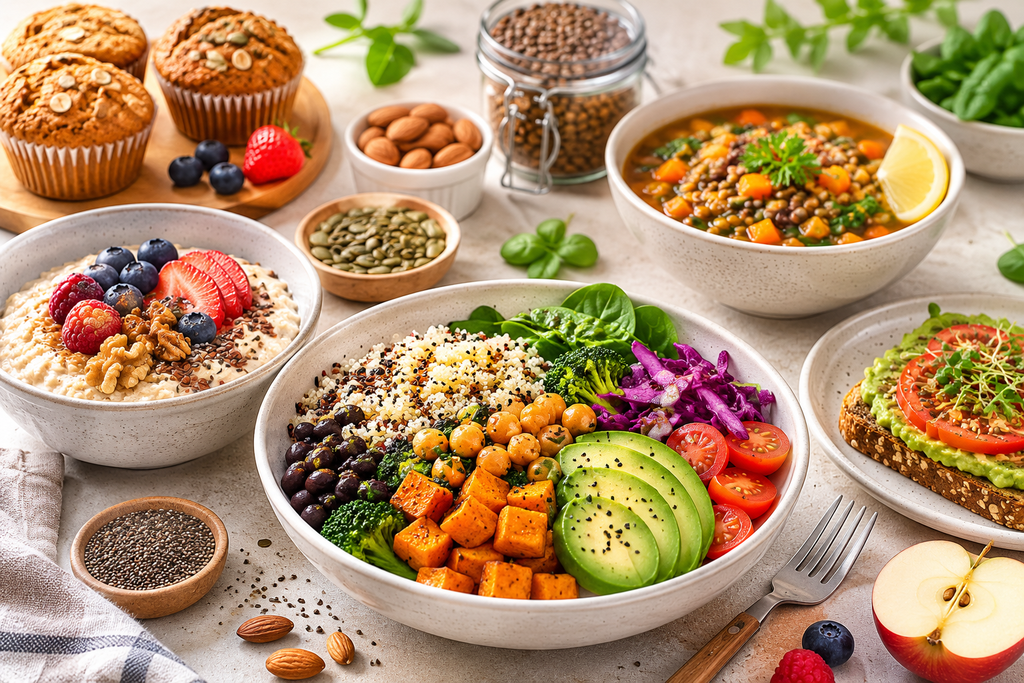
What makes that gap frustrating is how small the fix actually is. Most people don’t need a diet overhaul; they need two or three meals a week that are genuinely fiber-dense rather than nominally “healthy.” These six recipes are built for that specific job, with fiber counts listed so you can see exactly what each one contributes.
Quick Fact: Research shows that each 10-gram increase in daily fiber intake is associated with a 7% lower risk of colorectal cancer — and adequate intake has been linked to 20-30% lower cardiovascular disease risk and 30-40% lower type 2 diabetes risk.
1. Split Pea and Vegetable Soup
Roughly 14g fiber per serving
Ingredients (serves 4):
- 1 cup dried split peas, rinsed
- 1 onion, 2 carrots, 2 celery stalks, diced
- 4 cups low-sodium vegetable broth
- 2 cloves garlic, 1 bay leaf, 1 tbsp olive oil
Instructions: Sauté onion, carrot, and celery in olive oil until softened, about 6 minutes. Add garlic, split peas, broth, and bay leaf. Simmer covered for 45 minutes until peas break down. Remove bay leaf and season.
Why it works: Split peas are the single densest fiber source in most kitchens — about 16 grams per cooked cup. One bowl covers roughly half a day’s target.
2. Black Bean and Sweet Potato Tacos
Roughly 11g fiber per serving
Ingredients (serves 3):
- 1 can black beans, drained and rinsed
- 1 large sweet potato, cubed
- 6 whole wheat tortillas
- 1 tsp cumin, 1 tsp smoked paprika, 1 tbsp olive oil
- Avocado, cilantro, lime to serve
Instructions: Toss sweet potato cubes with olive oil and spices, roast at 425°F (220°C) for 25 minutes. Warm black beans with a splash of water and remaining spices. Fill tortillas and top with avocado and cilantro.
Why it works: Three separate fiber sources stack here — beans, sweet potato skin, and whole wheat tortillas. Swapping white tortillas for whole wheat alone roughly triples the fiber contribution.
3. Overnight Oats with Chia and Raspberries
Roughly 13g fiber per serving
Ingredients (serves 1):
- 1/2 cup rolled oats
- 1 tbsp chia seeds
- 1 cup raspberries
- 3/4 cup milk or plant milk
- 1 tbsp almond butter
Instructions: Combine oats, chia, and milk in a jar, stir, and refrigerate overnight. Top with raspberries and almond butter before eating.
Why it works: Raspberries carry about 8 grams of fiber per cup — the highest of any common fruit — and oats contribute beta-glucan, a soluble fiber shown to reduce LDL cholesterol by 5-10% at adequate intakes.
4. Lentil Bolognese
Roughly 12g fiber per serving
Ingredients (serves 4):
- 1 cup brown or green lentils
- 1 can crushed tomatoes
- 1 onion, 2 carrots, finely diced
- 3 cloves garlic, 1 tsp oregano, 2 tbsp olive oil
- Whole wheat pasta to serve
Instructions: Sauté onion, carrot, and garlic in olive oil. Add lentils, crushed tomatoes, oregano, and 2 cups water. Simmer 30-35 minutes until lentils are tender and sauce thickens. Serve over whole wheat pasta.
Why it works: Lentils deliver about 15.6 grams of fiber per cooked cup. Served over whole wheat pasta (6g per cup versus 2g for regular), the meal roughly triples the fiber of a standard bolognese.
5. Roasted Chickpea and Barley Bowl
Roughly 12g fiber per serving
Ingredients (serves 2):
- 1 can chickpeas, drained and patted dry
- 1 cup cooked pearl barley
- 2 cups roasted vegetables (broccoli, red onion, bell pepper)
- 2 tbsp tahini, lemon juice, olive oil
Instructions: Toss chickpeas with olive oil and roast at 400°F (200°C) for 25 minutes until crisp. Roast vegetables alongside. Serve over barley with tahini-lemon dressing.
Why it works: Barley is one of the more overlooked high-fiber grains, and chickpeas add roughly 6.3 grams per half cup. Roasting the chickpeas makes them a genuinely appealing texture rather than a nutritional obligation.
6. Artichoke and White Bean Dip with Vegetables
Roughly 9g fiber per serving
Ingredients (serves 4):
- 1 can artichoke hearts, drained
- 1 can white beans, drained
- 2 tbsp olive oil, 1 clove garlic, lemon juice
- Raw vegetables and whole grain crackers to serve
Instructions: Blend artichokes, white beans, garlic, olive oil, and lemon until smooth. Serve with sliced vegetables and whole grain crackers.
Why it works: Artichokes carry about 7 grams of fiber each — unusually high for a vegetable — and white beans push the total higher. This is the snack slot, where most people’s fiber intake collapses.
Quick Reference: Fiber by Recipe
| Recipe | Fiber per Serving | Meal Slot |
|---|---|---|
| Split Pea Soup | ~14g | Lunch or dinner |
| Black Bean & Sweet Potato Tacos | ~11g | Dinner |
| Overnight Oats with Chia | ~13g | Breakfast |
| Lentil Bolognese | ~12g | Dinner |
| Chickpea & Barley Bowl | ~12g | Lunch |
| Artichoke White Bean Dip | ~9g | Snack |
What Actually Happens When You Increase Fiber
Here’s the part most recipe roundups skip, and it’s the reason people abandon high-fiber eating within a week.
If your body isn’t used to fiber, a sudden increase commonly causes bloating, gas, and cramping. This isn’t a sign something is wrong — it’s the gut microbiome adjusting to fermenting more material than it’s used to. According to dietitians at Cleveland Clinic, after about three to four weeks of consistent intake, the gut adapts and perceived gas levels return to baseline.
The people who succeed with this generally aren’t the ones with the best recipes. They’re the ones who ramped up over a few weeks instead of going from 14 grams to 35 grams overnight and concluding fiber “doesn’t agree with them.”
Common Mistakes
Increasing fiber without increasing water. Fiber behaves like a sponge in the digestive tract — it needs fluid to move through smoothly. Adding fiber while staying at your usual water intake is one of the most reliable ways to cause constipation, which is the opposite of the intended effect.
Jumping straight to the full target. Going from a typical 16 grams to 35 grams in one day nearly guarantees discomfort. Adding 3-5 grams per week gives your gut time to adjust.
Relying on fiber supplements instead of food. Supplements can fill a gap, but they don’t provide the satiety, micronutrients, or protein that whole-food fiber sources do. Fiber intake is also a decent proxy for overall diet quality — if you’re low, you’re likely missing other nutrients too, and a powder doesn’t address that.
Assuming “whole grain” on packaging means high fiber. Many products labeled whole grain contain minimal fiber. Checking the nutrition panel for grams per serving is more reliable than front-of-package claims.
Skipping the skins. Peeling potatoes, apples, and sweet potatoes removes a meaningful portion of their fiber. Leaving skins on is one of the lowest-effort increases available.
Practical Tips
- Front-load fiber at breakfast — the overnight oats recipe alone covers roughly half a day’s target before you’ve made another decision.
- Keep canned beans and lentils stocked; they’re the fastest route to a 10+ gram meal with minimal prep.
- Swap refined grains for whole grain versions one at a time (pasta first, then rice, then bread) rather than all at once.
- Aim to hit your target most days rather than perfectly every day — consistency over weeks matters more than any single day’s total.
- Pair increased fiber with increased water from day one, not as an afterthought when discomfort starts.
If you want the research behind why fiber matters this much, it’s worth pairing these recipes with our guides on gut health and your microbiome and 10 proven ways to improve gut health naturally, which cover the mechanisms in more depth.
When Should You See a Doctor?
Talk to a doctor before significantly increasing fiber if you have an inflammatory bowel condition like Crohn’s disease or ulcerative colitis, have had recent bowel surgery, or have been advised to follow a low-fiber diet. Also check in if bloating, cramping, or changes in bowel habits persist beyond the typical three-to-four-week adjustment period, rather than assuming it’s just fiber adaptation.
Frequently Asked Questions
How much fiber do I actually need per day? General guidance is 14 grams per 1,000 calories consumed, which works out to roughly 25 grams daily for women and 38 grams for men, though individual needs vary with total calorie intake.
Why does more fiber make me gassy? Your gut bacteria ferment fiber, producing gas as a byproduct. This is normal and typically settles within three to four weeks as the microbiome adapts — increasing gradually rather than suddenly minimizes it considerably.
Are fiber supplements as good as fiber from food? Not quite. Supplements can help close a gap, but they don’t deliver the satiety, micronutrients, and protein that come alongside whole-food fiber sources.
Which single food gives the most fiber per serving? Among common foods, split peas lead at roughly 16 grams per cooked cup, followed closely by lentils at 15.6 grams and chickpeas at 12.5 grams per cup.
The Bottom Line
The fiber gap isn’t a knowledge problem — nearly everyone knows they should eat more of it. It’s a practical one: most “healthy” meals contribute 3-5 grams, which never adds up to 25 or 38. These six recipes each contribute 9-14 grams, which changes the arithmetic entirely. Add two or three of them to a normal week and the gap mostly closes on its own.
References
- Mayo Clinic — Chart of High-Fiber Foods
- Academy of Nutrition and Dietetics (eatright.org) — Easy Ways to Boost Fiber in Your Daily Diet
- Cleveland Clinic — 20+ High Fiber Foods to Keep Your Gut Healthy