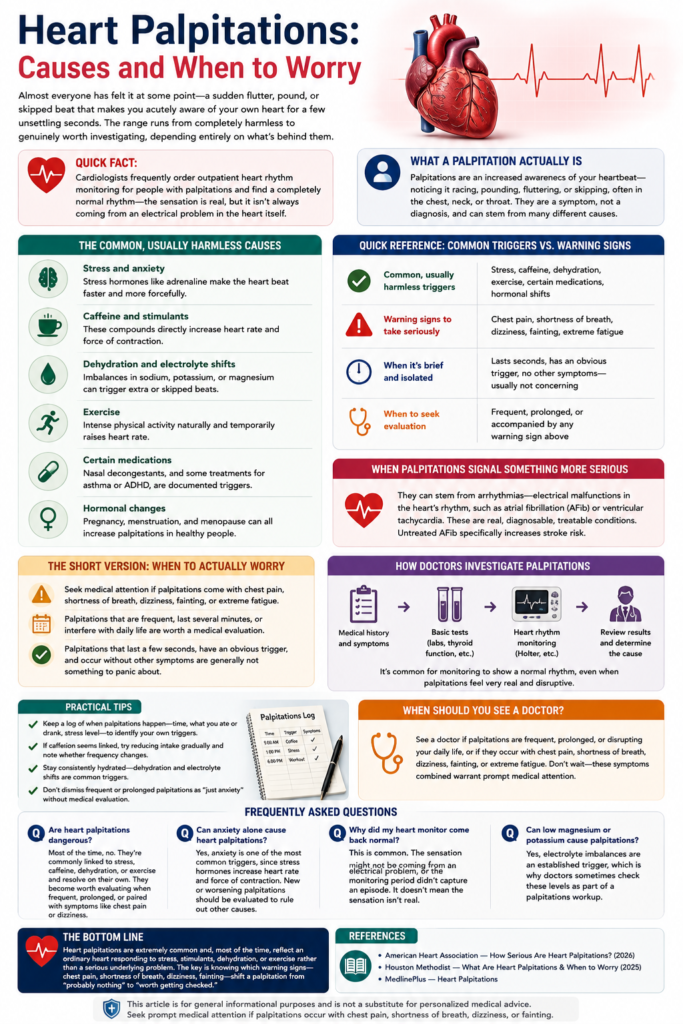
Almost everyone has felt it at some point — a sudden flutter, pound, or skipped beat that makes you acutely aware of your own heart for a few unsettling seconds. Heart palpitations are one of the most common reasons people seek cardiac care, yet the range runs from completely harmless to genuinely worth investigating, depending entirely on what’s behind them.
Quick Fact: Cardiologists frequently order outpatient heart rhythm monitoring for people with palpitations and find a completely normal rhythm — the sensation is real, but it isn’t always coming from an electrical problem in the heart itself.
What a Palpitation Actually Is
Palpitations are defined as an increased awareness of your own heartbeat — noticing it racing, pounding, fluttering, or skipping, often in the chest, neck, or throat. Importantly, palpitations are considered a symptom, not a diagnosis in themselves; the same sensation can stem from causes ranging from completely benign to a genuine arrhythmia.
The Common, Usually Harmless Causes
Stress and anxiety. This is one of the most frequent triggers. Stress hormones like adrenaline make the heart beat faster and more forcefully, which is why palpitations often show up during anxious or emotionally intense moments.
Caffeine and stimulants. These compounds directly increase heart rate and force of contraction, making palpitations more noticeable, especially with higher intake.
Dehydration and electrolyte shifts. Imbalances in sodium, potassium, or magnesium can trigger the sensation of extra or skipped beats.
Exercise. Intense physical activity naturally and temporarily raises heart rate — a normal response, not a warning sign on its own.
Certain medications. Nasal decongestants, and some treatments for asthma or ADHD, are documented triggers.
Hormonal changes. Pregnancy, menstruation, and menopause can all increase palpitation frequency in otherwise healthy people.
Quick Reference: Common Triggers vs. Warning Signs
| Category | Examples |
|---|---|
| Common, usually harmless triggers | Stress, caffeine, dehydration, exercise, certain medications, hormonal shifts |
| Warning signs to take seriously | Chest pain, shortness of breath, dizziness, fainting, extreme fatigue |
| When it’s brief and isolated | Lasts seconds, has an obvious trigger, no other symptoms — usually not concerning |
| When to seek evaluation | Frequent, prolonged, or accompanied by any warning sign above |
When Palpitations Signal Something More Serious
Palpitations can also stem from arrhythmias — genuine electrical malfunctions in the heart’s rhythm, such as atrial fibrillation (AFib) or ventricular tachycardia. These are real, diagnosable, treatable conditions, and they matter: untreated AFib specifically increases stroke risk. This is the key distinction doctors are trying to sort out when someone reports palpitations — is this a normal heart responding to stress or stimulants, or is this the heart’s electrical system itself malfunctioning?
The Short Version: When to Actually Worry
Cardiologists consistently point to the same warning signs across their guidance: seek medical attention if palpitations come with chest pain, shortness of breath, dizziness, fainting, or extreme fatigue. Palpitations that occur frequently, last several minutes rather than seconds, or interfere with daily life are also worth a medical evaluation — even without those more dramatic accompanying symptoms.
Palpitations that last only a few seconds, have an obvious and consistent trigger (a stressful moment, a coffee, a workout), and occur without any other symptoms are generally not something to panic about.
How Doctors Actually Investigate Palpitations
A workup typically starts with basics — checking thyroid function, since thyroid disorders are a common and treatable cause of palpitations, and ruling out more significant arrhythmias. Outpatient heart rhythm monitoring (like a Holter monitor, worn for a day or more) is frequently used to try to capture what the heart is actually doing during an episode. It’s genuinely common for this monitoring to come back showing a normal rhythm, even in people whose palpitations feel very real and disruptive — a frustrating but not dangerous outcome that at least rules out the more serious causes.
Practical Tips
- Keep a simple log of when palpitations happen — time of day, what you’d just eaten or drunk, stress level — to help identify your own triggers.
- If caffeine seems linked to your palpitations, try reducing intake gradually and note whether frequency changes.
- Stay consistently hydrated, since dehydration and electrolyte shifts are an easily addressable trigger for many people.
- Don’t dismiss frequent or prolonged palpitations as “just anxiety” without medical evaluation — anxiety is a real and common cause, but it should be a diagnosis of exclusion, not an assumption.
If you’re working on your broader heart health, it’s worth pairing this with our guides on resting heart rate and stress management techniques, since both directly relate to the most common palpitation triggers.
When Should You See a Doctor?
See a doctor if palpitations are frequent, prolonged, or disrupting your daily life, even without other symptoms. Seek prompt medical attention if palpitations occur alongside chest pain, shortness of breath, dizziness, fainting, or extreme fatigue — these combinations warrant evaluation rather than waiting to see if they pass.
Frequently Asked Questions
Are heart palpitations dangerous? Most of the time, no — they’re commonly linked to stress, caffeine, dehydration, or exercise and resolve on their own. They become worth evaluating when frequent, prolonged, or paired with symptoms like chest pain or dizziness.
Can anxiety alone cause heart palpitations? Yes, anxiety is one of the most common triggers, since stress hormones directly increase heart rate and force of contraction. That said, new or worsening palpitations shouldn’t be assumed to be anxiety without ruling out other causes first.
Why did my heart monitor come back normal even though I feel palpitations regularly? This is common. Sometimes the sensation isn’t originating from an electrical heart problem at all, or the monitoring period simply didn’t capture an episode — it doesn’t mean the sensation isn’t real.
Can low magnesium or potassium cause palpitations? Yes, electrolyte imbalances are an established trigger, which is part of why doctors sometimes check these levels as part of a palpitations workup.
The Bottom Line
Heart palpitations are extremely common and, most of the time, reflect an ordinary heart responding to stress, stimulants, dehydration, or exercise rather than a serious underlying problem. The key is knowing which warning signs — chest pain, shortness of breath, dizziness, fainting — shift a palpitation from “probably nothing” to “worth getting checked.”
This article is for general informational purposes and is not a substitute for personalized medical advice. Seek prompt medical attention if palpitations occur with chest pain, shortness of breath, dizziness, or fainting.
References
- American Heart Association — How Serious Are Heart Palpitations? (2026)
- Houston Methodist — What Are Heart Palpitations & When to Worry (2025)
- MedlinePlus — Heart Palpitations