For years, vitamin B12 deficiency was understood mainly as a cause of anemia and nerve damage. New research from 2025 and 2026 has expanded that picture considerably — scientists at Cornell and UAB found evidence that low B12 can directly impair the mitochondria that power muscle cells, and researchers at UCSF found subtle neurological decline even in older adults whose B12 levels were considered “normal.” The symptoms overlap so closely with normal aging that deficiency is frequently missed entirely.
Quick Fact: Vitamin B12 deficiency is commonly mistaken for ordinary aging because the symptoms — fatigue, brain fog, muscle weakness — closely resemble what many people simply expect to happen as they get older, according to clinical nutrition specialists.
What B12 Actually Does
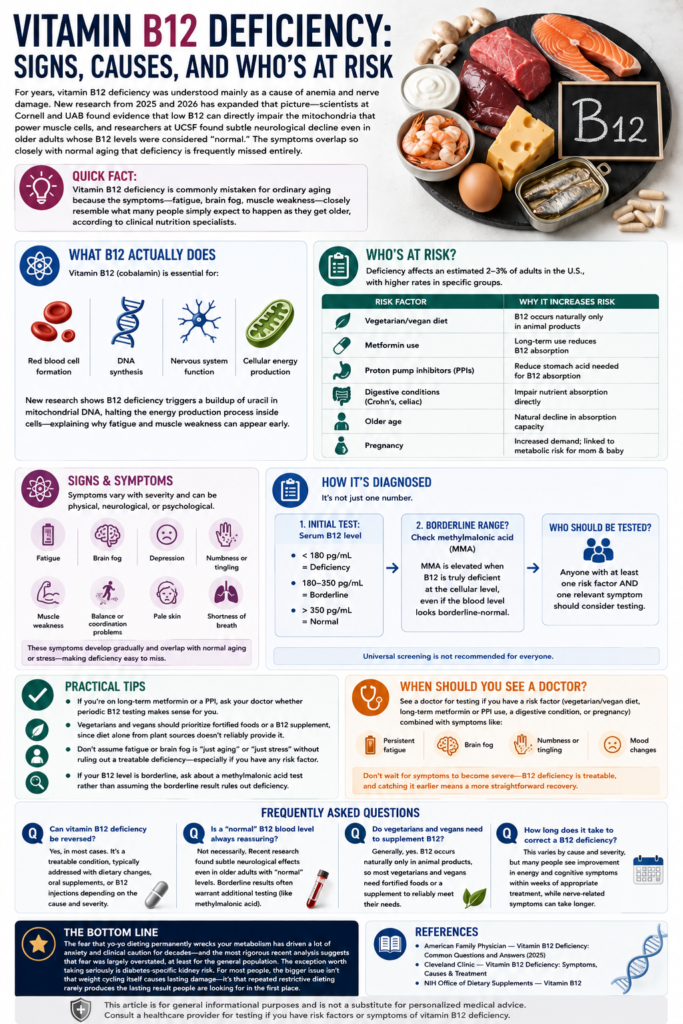
Vitamin B12 (cobalamin) is essential for red blood cell formation, DNA synthesis, and nervous system function. Newer research adds a fourth role to that list: cellular energy production. The Cornell/UAB findings showed B12 deficiency triggers a buildup of uracil in mitochondrial DNA, halting the energy production process inside cells — a mechanism that may explain why fatigue and muscle weakness can appear well before the classic markers of anemia show up on standard testing.
How Common Is It, and Who’s at Risk
Vitamin B12 deficiency affects an estimated 2-3% of adults in the United States, though rates run considerably higher in specific groups. Established risk factors include:
- Malabsorption conditions — celiac disease, Crohn’s disease, and other digestive disorders that impair nutrient absorption
- Limited dietary intake — B12 occurs naturally only in animal products, putting vegetarians and vegans at meaningfully higher risk without fortified foods or supplementation
- Certain medications — metformin (widely used for type 2 diabetes) and proton pump inhibitors (common acid reflux medications) are both linked to reduced B12 absorption with long-term use
- Older age — absorption naturally declines, and age-related stomach changes can further reduce it
- Pregnancy — new 2025 research found B12 deficiency during pregnancy was linked to disrupted fat metabolism and inflammatory markers associated with future diabetes and heart disease risk for both mother and child
Quick Reference: Vitamin B12 Deficiency Risk Factors
| Risk Factor | Why It Increases Risk |
|---|---|
| Vegetarian/vegan diet | B12 occurs naturally only in animal products |
| Metformin use | Long-term use reduces B12 absorption |
| Proton pump inhibitors (PPIs) | Reduce stomach acid needed for B12 absorption |
| Digestive conditions (Crohn’s, celiac) | Impair nutrient absorption directly |
| Older age | Natural decline in absorption capacity |
| Pregnancy | Increased demand; deficiency linked to metabolic risk |
Signs and Symptoms
Symptoms vary with severity and can be physical, neurological, or psychological: fatigue, brain fog, depression, peripheral neuropathy (numbness or tingling, typically in the hands or feet), and difficulty with balance or coordination. Because many of these symptoms develop gradually and overlap with normal aging or stress, deficiency is easy to attribute to something else entirely — which is part of why testing matters more than trying to self-diagnose from symptoms alone.
How It’s Actually Diagnosed
Diagnosis isn’t as simple as a single number. Standard testing starts with a total serum B12 level — under 180 pg/mL is generally considered diagnostic for deficiency. Levels in a borderline range (180-350 pg/mL) typically require a follow-up test measuring methylmalonic acid, which is elevated when B12 is truly deficient at the cellular level, even if the initial blood level looked borderline-normal. Universal screening isn’t recommended for everyone, but testing is generally advised for anyone with at least one risk factor and one relevant symptom.
Practical Tips
- If you’re on long-term metformin or a proton pump inhibitor, ask your doctor whether periodic B12 testing makes sense for you, since both are established risk factors.
- Vegetarians and vegans should prioritize fortified foods or a B12 supplement, since diet alone from plant sources doesn’t reliably provide it.
- Don’t assume fatigue or brain fog is “just aging” or “just stress” without ruling out a treatable deficiency first, especially if you have any risk factor from the list above.
- If your B12 level comes back borderline rather than clearly low or clearly normal, ask about a methylmalonic acid test rather than assuming the borderline result rules out deficiency.
If you’re evaluating your broader nutrient intake, it’s worth pairing this with our guides on magnesium benefits and do you need a multivitamin, since B12 is one of several nutrients worth assessing individually based on your specific risk factors.
When Should You See a Doctor?
See a doctor for testing if you have a risk factor (vegetarian/vegan diet, long-term metformin or PPI use, a digestive condition, or pregnancy) combined with symptoms like persistent fatigue, brain fog, numbness or tingling, or mood changes. Don’t wait for symptoms to become severe — B12 deficiency is treatable, and catching it earlier generally means a more straightforward recovery.
Frequently Asked Questions
Can vitamin B12 deficiency be reversed? Yes, in most cases. It’s a treatable condition, typically addressed with dietary changes, oral supplements, or B12 injections depending on the cause and severity.
Is a “normal” B12 blood level always reassuring? Not necessarily. Recent research found subtle neurological effects even in older adults with B12 levels considered normal, and borderline results often warrant additional testing (like methylmalonic acid) rather than being taken at face value.
Do vegetarians and vegans need to supplement B12? Generally, yes. B12 occurs naturally only in animal products, so most vegetarians and vegans need fortified foods or a supplement to reliably meet their needs.
How long does it take to correct a B12 deficiency? This varies by cause and severity, but many people see improvement in energy and cognitive symptoms within weeks of appropriate treatment, while nerve-related symptoms can take longer to resolve.
The Bottom Line
Vitamin B12 deficiency has traditionally been framed around anemia and nerve damage, but emerging research on mitochondrial function suggests its reach extends further — into muscle energy production and possibly brain aging. Because its early symptoms mimic normal aging so closely, testing based on risk factors matters more than waiting for obvious signs to appear.
This article is for general informational purposes and is not a substitute for personalized medical advice. Consult a healthcare provider for testing if you have risk factors or symptoms of vitamin B12 deficiency.
References
- American Family Physician — Vitamin B12 Deficiency: Common Questions and Answers (2025)
- Cleveland Clinic — Vitamin B12 Deficiency: Symptoms, Causes & Treatment
- National Institutes of Health (NIH) Office of Dietary Supplements — Vitamin B12