Vitamin D deficiency is one of the most common — and most overlooked — nutrient gaps in the world. Researchers estimate it affects up to a billion people globally, yet most cases go unnoticed because the signs of vitamin D deficiency are easy to write off as “just being tired” or “getting older.” Here’s what to actually watch for, why it happens, and what to do about it.
Why Vitamin D Matters So Much
Vitamin D isn’t just about bone health, though that’s where it plays its best-known role. It regulates how your body absorbs calcium, supports muscle function, and plays a part in immune regulation. Unlike most nutrients, your body makes most of its vitamin D from sun exposure on skin rather than from food — which is exactly why deficiency is so widespread, especially in people who spend most of their time indoors.
Researchers have also looked at broader links between vitamin D status and conditions like cardiovascular disease, autoimmune disorders, and depression. The evidence here is still developing — most of these are observational associations rather than proof that low vitamin D directly causes the condition — but it’s part of why doctors take deficiency seriously beyond just bone health.
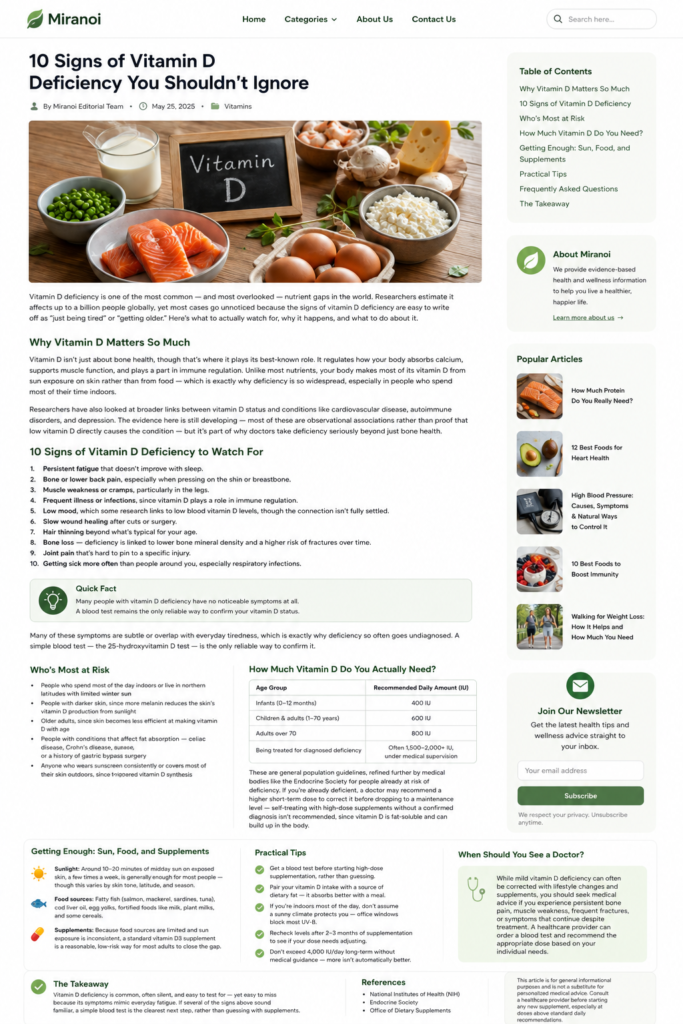
10 Signs of Vitamin D Deficiency to Watch For
- Persistent fatigue that doesn’t improve with sleep.
- Bone or lower back pain, especially when pressing on the shin or breastbone.
- Muscle weakness or cramps, particularly in the legs.
- Frequent illness or infections, since vitamin D plays a role in immune regulation.
- Low mood, which some research links to low blood vitamin D levels, though the connection isn’t fully settled.
- Slow wound healing after cuts or surgery.
- Hair thinning beyond what’s typical for your age.
- Bone loss — deficiency is linked to lower bone mineral density and a higher risk of fractures over time.
- Joint pain that’s hard to pin to a specific injury.
- Getting sick more often than people around you, especially respiratory infections.
Many of these symptoms are subtle or overlap with everyday tiredness, which is exactly why deficiency so often goes undiagnosed. A simple blood test — the 25-hydroxyvitamin D test — is the only reliable way to confirm it.
Quick Fact: Many people with vitamin D deficiency have no noticeable symptoms at all. A blood test remains the only reliable way to confirm your vitamin D status.
Who’s Most at Risk
- People who spend most of the day indoors or live in northern latitudes with limited winter sun
- People with darker skin, since more melanin reduces the skin’s vitamin D production from sunlight
- Older adults, since skin becomes less efficient at making vitamin D with age
- People with conditions that affect fat absorption — celiac disease, Crohn’s disease, or a history of gastric bypass surgery
- Anyone who wears sunscreen consistently or covers most of their skin outdoors, since both reduce UV-triggered vitamin D synthesis
How Much Vitamin D Do You Actually Need?
Quick Reference: Daily Vitamin D Recommendations
| Age Group | Recommended Daily Amount (IU) |
|---|---|
| Infants (0–12 months) | 400 IU |
| Children & adults (1–70 years) | 600 IU |
| Adults over 70 | 800 IU |
| Being treated for diagnosed deficiency | Often 1,500–2,000+ IU, under medical supervision |
These are general population guidelines, refined further by medical bodies like the Endocrine Society for people already at risk of deficiency. If you’re already deficient, a doctor may recommend a higher short-term dose to correct it before dropping to a maintenance level — self-treating with high-dose supplements without a confirmed diagnosis isn’t recommended, since vitamin D is fat-soluble and can build up in the body.
Getting Enough: Sun, Food, and Supplements
Sunlight: Around 10–20 minutes of midday sun on exposed skin, a few times a week, is generally enough for most people — though this varies enormously by skin tone, latitude, and season.
Food sources: Very few foods naturally contain meaningful vitamin D. The best options include:
- Fatty fish (salmon, mackerel, sardines, tuna)
- Cod liver oil
- Egg yolks
- Fortified foods like milk, plant milks, and some cereals
Supplements: Because food sources are limited and sun exposure is inconsistent, a standard vitamin D3 supplement is a reasonable, low-risk way for most adults to close the gap — especially in winter months.
Practical Tips
- Get a blood test before starting high-dose supplementation, rather than guessing.
- Pair your vitamin D intake with a source of dietary fat — it’s fat-soluble and absorbs better with a meal.
- If you’re indoors most of the day, don’t assume a sunny climate protects you — office windows block most UV-B.
- Recheck levels after 2–3 months of supplementation to see if your dose needs adjusting.
- Don’t exceed 4,000 IU/day long-term without medical guidance — more isn’t automatically better.
If you’re also working on your overall nutrition, it’s worth reading alongside our guides on how much protein you need per day and foods that naturally lower blood pressure, since nutrient gaps and other health markers rarely exist in isolation.
When Should You See a Doctor?
While mild vitamin D deficiency can often be corrected with lifestyle changes and supplements, you should seek medical advice if you experience persistent bone pain, muscle weakness, frequent fractures, or symptoms that continue despite treatment. A healthcare provider can order a blood test and recommend the appropriate dose based on your individual needs.
Frequently Asked Questions
Can I get enough vitamin D from food alone? It’s difficult. Very few foods naturally contain significant vitamin D, which is why sun exposure and supplementation are usually needed alongside diet.
Is it possible to take too much vitamin D? Yes. Unlike water-soluble vitamins, excess vitamin D is stored in fat tissue and can build up to toxic levels over time, usually only from very high, prolonged supplement doses — not from sun or food.
Does vitamin D deficiency cause weight gain? The evidence here is mixed. Some studies show a correlation between low vitamin D and higher body weight, but it’s not clear whether deficiency causes weight gain or whether people with more body fat simply have lower circulating vitamin D levels.
How long does it take to correct a deficiency? With appropriate supplementation, blood levels typically improve within 2–3 months, though this depends on how low your starting level was and the dose used.
The Takeaway
Vitamin D deficiency is common, often silent, and easy to test for — yet easy to miss because its symptoms mimic everyday fatigue. If several of the signs above sound familiar, a simple blood test is the clearest next step, rather than guessing with supplements.
This article is for general informational purposes and is not a substitute for personalized medical advice. Consult a healthcare provider before starting any new supplement, especially at doses above standard daily recommendations.