Nearly half of adults will struggle with a sleep problem at some point in their life, yet most people reach for the same tired advice: “just relax” or “try not to think about it.” If you want to sleep better naturally, the real answer lies less in willpower and more in a handful of daily habits research keeps confirming actually work.
Why Sleep Quality Matters More Than Sleep Duration
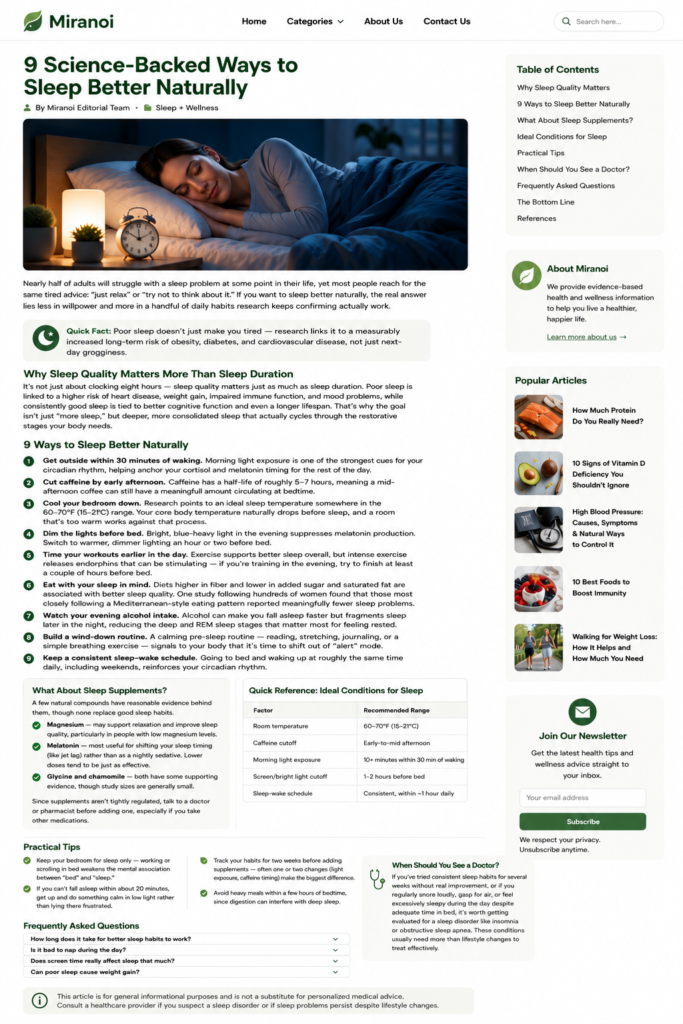
It’s not just about clocking eight hours — sleep quality matters just as much as sleep duration. Poor sleep is linked to a higher risk of heart disease, weight gain, impaired immune function, and mood problems, while consistently good sleep is tied to better cognitive function and even a longer lifespan. That’s why the goal isn’t just “more sleep,” but deeper, more consolidated sleep that actually cycles through the restorative stages your body needs.
9 Ways to Sleep Better Naturally
- Get outside within 30 minutes of waking. Morning light exposure is one of the strongest cues for your circadian rhythm, helping anchor your cortisol and melatonin timing for the rest of the day. Even 10 minutes of outdoor light on an overcast day delivers far more light intensity than a well-lit indoor room.
- Cut caffeine by early afternoon. Caffeine has a half-life of roughly 5-7 hours, meaning a mid-afternoon coffee can still have a meaningful amount circulating at bedtime. If you’re sensitive to it, aim to stop by early-to-mid afternoon.
- Cool your bedroom down. Research points to an ideal sleep temperature somewhere in the 60-70°F (15-21°C) range. Your core body temperature naturally drops before sleep, and a room that’s too warm works against that process.
- Dim the lights before bed. Bright, blue-heavy light in the evening suppresses melatonin production. Switching to warmer, dimmer lighting an hour or two before bed helps your body recognize that night is approaching.
- Time your workouts earlier in the day. Exercise supports better sleep overall, but intense exercise releases endorphins that can be stimulating — if you’re training in the evening, try to finish at least a couple of hours before bed.
- Eat with your sleep in mind. Diets higher in fiber and lower in added sugar and saturated fat are associated with better sleep quality. One study following hundreds of women found that those most closely following a Mediterranean-style eating pattern reported meaningfully fewer sleep problems.
- Watch your evening alcohol intake. Alcohol can make you fall asleep faster but fragments sleep later in the night, reducing the deep and REM sleep stages that matter most for feeling rested.
- Build a wind-down routine. A calming pre-sleep routine — reading, stretching, journaling, or a simple breathing exercise — signals to your body that it’s time to shift out of “alert” mode.
- Keep a consistent sleep-wake schedule. Going to bed and waking up at roughly the same time daily, including weekends, reinforces your circadian rhythm more effectively than “catching up” with irregular sleep-ins.
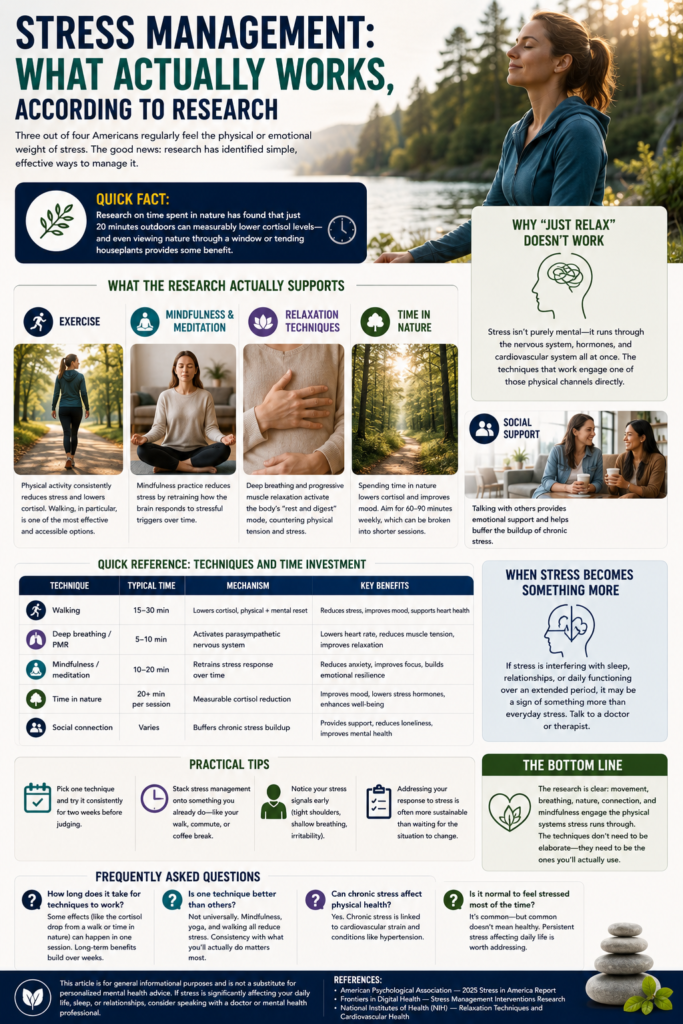
Quick Fact: Poor sleep doesn’t just make you tired — research links it to a measurably increased long-term risk of obesity, diabetes, and cardiovascular disease, not just next-day grogginess.
What About Sleep Supplements?
A few natural compounds have reasonable evidence behind them, though none replace good sleep habits:
- Magnesium — may support relaxation and has some evidence for improving sleep quality, particularly in people with low magnesium levels.
- Melatonin — most useful for shifting your sleep timing (like jet lag) rather than as a nightly sedative; lower doses tend to be just as effective as high ones.
- Glycine and chamomile — both have some supporting evidence, though study sizes are generally small.
Since supplements aren’t tightly regulated, it’s worth talking to a doctor or pharmacist before adding one, especially if you take other medications.
Quick Reference: Ideal Conditions for Sleep
| Factor | Recommended Range |
|---|---|
| Room temperature | 60–70°F (15–21°C) |
| Caffeine cutoff | Early-to-mid afternoon |
| Morning light exposure | 10+ minutes within 30 min of waking |
| Screen/bright light cutoff | 1–2 hours before bed |
| Sleep-wake schedule | Consistent, within ~1 hour daily |
Practical Tips
- Keep your bedroom for sleep only — working or scrolling in bed weakens the mental association between “bed” and “sleep.”
- If you can’t fall asleep within about 20 minutes, get up and do something calm in low light rather than lying there frustrated.
- Track your habits for two weeks before adding supplements — often one or two changes (light exposure, caffeine timing) make the biggest difference.
- Avoid heavy meals within a few hours of bedtime, since digestion can interfere with settling into deep sleep.
If better sleep is part of a bigger wellness push for you, it’s worth pairing this with our guides on how much protein you need per day and the signs of vitamin D deficiency, since sleep, nutrient status, and diet are closely connected.
When Should You See a Doctor?
If you’ve tried consistent sleep habits for several weeks without real improvement, or if you regularly snore loudly, gasp for air, or feel excessively sleepy during the day despite adequate time in bed, it’s worth getting evaluated for a sleep disorder like insomnia or obstructive sleep apnea. These conditions usually need more than lifestyle changes to treat effectively.
Frequently Asked Questions
How long does it take for better sleep habits to work? Some changes, like cooling your room or cutting evening caffeine, can help within days. Circadian rhythm adjustments, like consistent morning light exposure, typically take one to two weeks to show their full effect.
Is it bad to nap during the day? Not necessarily, but long or late-afternoon naps can make it harder to fall asleep at night. If you nap, keeping it under 30 minutes and earlier in the day tends to work best.
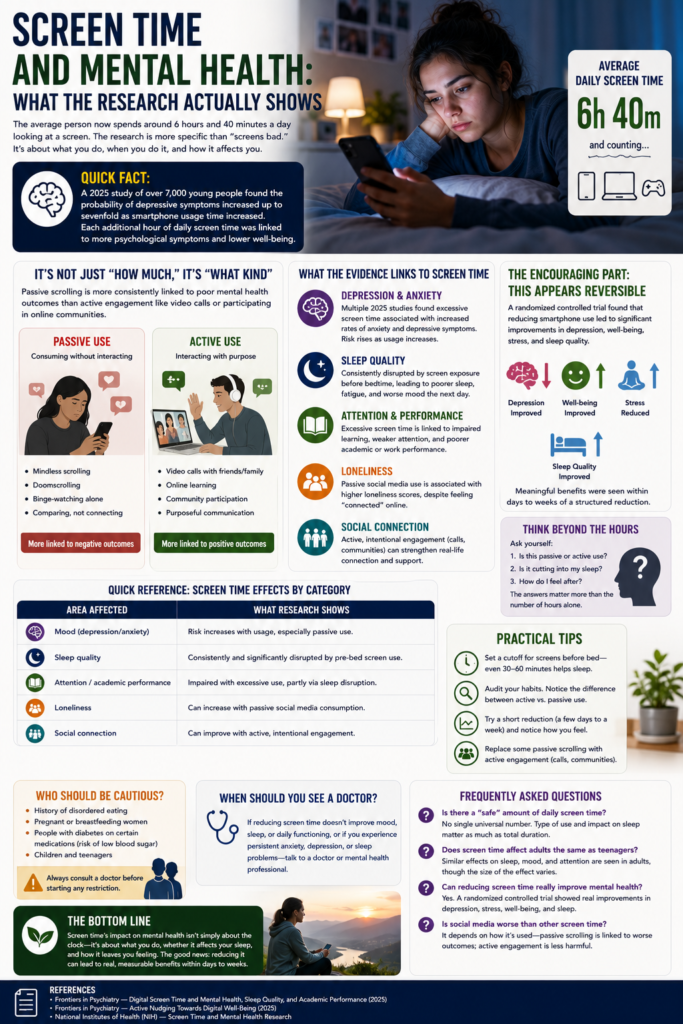
Does screen time really affect sleep that much? The blue light itself matters less than what most people are doing on the screen — stimulating content, scrolling, or work stress right before bed is often the bigger issue than the light alone.
Can poor sleep cause weight gain? There’s a real link. Sleep deprivation affects the hormones that regulate hunger and fullness, which can increase appetite and cravings for higher-calorie foods.
The Bottom Line
Better sleep rarely comes down to one fix — it’s the accumulation of small, consistent habits: morning light, a cooler room, a wind-down routine, and a steady schedule. Start with one or two changes rather than overhauling everything at once, and give them a couple of weeks before judging whether they’re working.
This article is for general informational purposes and is not a substitute for personalized medical advice. Consult a healthcare provider if you suspect a sleep disorder or if sleep problems persist despite lifestyle changes.