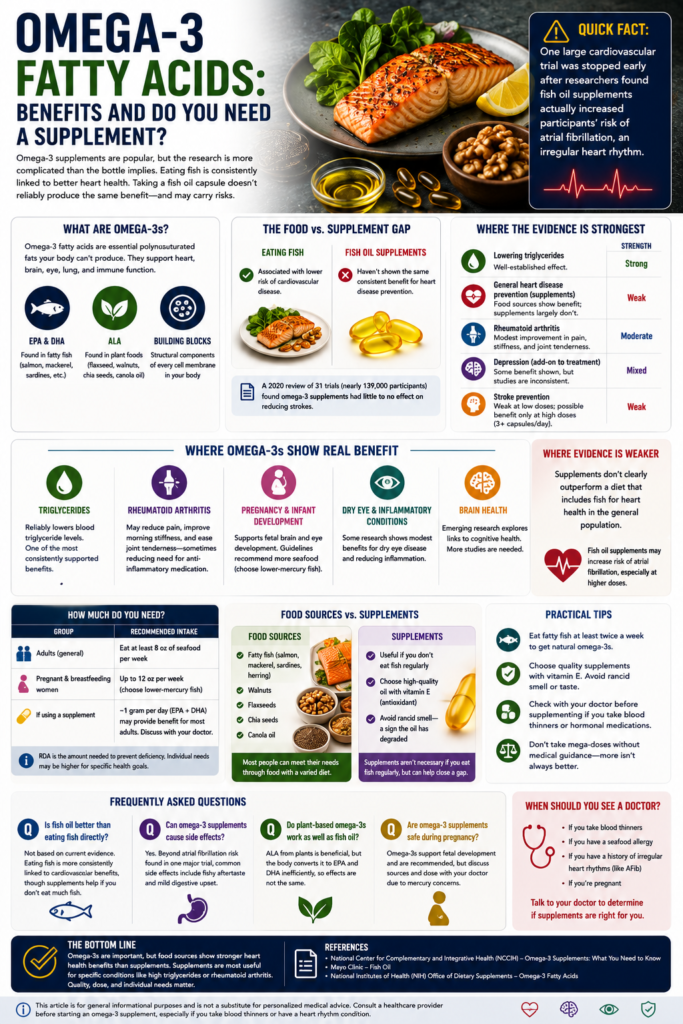
Omega-3 supplements are among the most popular on the market, and the research behind them tells a more complicated story than the bottle usually implies. Eating fish rich in omega-3s is consistently linked to better heart health. Taking a fish oil capsule instead doesn’t reliably produce the same benefit — and in at least one major trial, it came with a real downside.
Quick Fact: One large cardiovascular trial was stopped early after researchers found fish oil supplements actually increased participants’ risk of atrial fibrillation, an irregular heart rhythm — a reminder that “natural” and “supplement” don’t automatically mean risk-free.
What Omega-3s Actually Are
Omega-3 fatty acids are polyunsaturated “healthy fats” your body needs but can’t produce on its own — they have to come from food or supplements. They’re structural components of every cell membrane and support heart, brain, lung, and immune function. Most research focuses on two forms found in seafood — EPA and DHA — plus a plant-based form called ALA, found in flaxseed, walnuts, chia seeds, and canola oil.
The Food vs. Supplement Gap
This is the most important nuance in the current research: eating fish high in omega-3s is associated with a lower risk of cardiovascular disease, partly through improved cholesterol and triglyceride levels. Fish oil supplements, however, haven’t shown the same consistent benefit for heart disease prevention in the general population. A 2020 review of 31 trials involving nearly 139,000 participants found omega-3 supplements had little to no effect on reducing strokes. This gap between “eating the food” and “taking the extracted nutrient” is a pattern that shows up in nutrition research fairly often, and omega-3s are one of the clearer examples of it.
Quick Reference: Where the Evidence Is Strongest
| Use Case | Strength of Evidence |
|---|---|
| Lowering triglycerides | Strong — well-established effect |
| General heart disease prevention (supplements) | Weak — food sources show benefit, supplements largely don’t |
| Rheumatoid arthritis symptom relief | Moderate — modest but real improvement in some studies |
| Depression (as an add-on to treatment) | Mixed — some benefit shown, but studies have inconsistent results |
| Stroke prevention | Weak at low doses; possible benefit only at high doses (3+ capsules/day), based on limited data |
Where Omega-3s Show Real Benefit
Triglycerides. This is one of the more consistently supported effects — omega-3 fatty acids reliably lower blood triglyceride levels, whether from food or supplements.
Rheumatoid arthritis. Research suggests fish oil supplements may reduce pain, improve morning stiffness, and ease joint tenderness in people with rheumatoid arthritis, sometimes reducing the need for anti-inflammatory medication, though relief tends to be modest.
Pregnancy and infant development. Omega-3s support fetal brain and eye development, which is part of why dietary guidelines recommend pregnant and breastfeeding women consume more seafood than the general population — while also being mindful of mercury content in certain fish types.
Dry eye and inflammatory conditions. Some research points to modest benefits for dry eye disease and general inflammatory markers, though effect sizes vary across studies.
Where the Evidence Is Weaker Than Marketing Suggests
Despite the popularity of omega-3 supplements for heart health specifically, the general-population evidence doesn’t strongly support supplements outperforming a diet that already includes fish. The atrial fibrillation risk noted earlier is also worth taking seriously — it’s not a reason to avoid all omega-3 supplementation, but it underscores that these aren’t risk-free, especially at higher doses or for people with existing heart rhythm concerns.
How Much Do You Need?
Dietary guidelines generally recommend adults eat at least 8 ounces of seafood per week (up to 12 ounces if pregnant or breastfeeding, choosing lower-mercury options). If you don’t regularly eat fish, a supplement is a reasonable way to close that gap — reviews of major cardiovascular trials suggest around 1 gram per day of combined EPA/DHA provides some benefit for the general population, though individual needs and appropriate dosing are best discussed with a doctor rather than assumed from a general figure.
Practical Tips
- If you eat fatty fish (salmon, mackerel, sardines) at least twice a week, you may not need a supplement at all.
- Choose a supplement with an added antioxidant like vitamin E to reduce oxidation, and avoid any product with a rancid smell — a sign the oil has already degraded.
- Check with a doctor before starting omega-3 supplements if you take blood thinners or hormonal medications, since interactions are possible.
- Don’t assume “more is better” — the atrial fibrillation risk noted in research is a reason to stick to studied dose ranges rather than self-escalating.
If you’re evaluating your broader nutrient intake, it’s worth pairing this with our guides on do you need a multivitamin and magnesium benefits, since omega-3s are one of several nutrients better evaluated on their own merits than lumped into a “just take everything” approach.
When Should You See a Doctor?
Talk to a doctor before starting an omega-3 supplement if you take blood-thinning medication, have a seafood allergy, or have a history of irregular heart rhythms like atrial fibrillation. It’s also worth a conversation if you’re pregnant, since dosing and food source considerations (like mercury) differ from general adult recommendations.
Frequently Asked Questions
Is fish oil better than eating fish directly? Not based on current evidence — eating fish is more consistently linked to cardiovascular benefits than taking fish oil supplements, though supplements can help close a gap for people who don’t eat much fish.
Can omega-3 supplements cause side effects? Yes, in some cases. Beyond the atrial fibrillation risk found in one major trial, more common side effects include a fishy aftertaste and mild digestive upset.
Do plant-based omega-3s (like flaxseed) work as well as fish oil? ALA from plant sources is a valid omega-3, but the body converts it to EPA and DHA inefficiently, so it doesn’t produce identical effects to marine-sourced omega-3s at equivalent intake.
Are omega-3 supplements safe during pregnancy? Omega-3s support fetal development and are generally recommended, but pregnant women should discuss appropriate sources and doses with their doctor, given mercury considerations with certain fish.
The Bottom Line
Omega-3s are genuinely important for health, but the research draws a real distinction between eating omega-3-rich food and taking a supplement — food sources show more consistent cardiovascular benefit, while supplements shine more clearly for specific issues like high triglycerides or rheumatoid arthritis symptoms. If you don’t eat much fish, a supplement is reasonable, but it’s not a guaranteed substitute for the dietary pattern the strongest research is actually based on.
This article is for general informational purposes and is not a substitute for personalized medical advice. Consult a healthcare provider before starting an omega-3 supplement, especially if you take blood thinners or have a heart rhythm condition.
References
- National Center for Complementary and Integrative Health (NCCIH) — Omega-3 Supplements: What You Need to Know
- Mayo Clinic — Fish Oil
- National Institutes of Health (NIH) Office of Dietary Supplements — Omega-3 Fatty Acids