Best Anti-Inflammatory Foods You Should Eat Every Day (2026 Guide)
Chronic inflammation has become one of the biggest hidden health concerns in modern life. While short-term inflammation is a natural defense mechanism that helps your body fight infections and heal injuries, long-lasting inflammation may increase the risk of heart disease, type 2 diabetes, obesity, arthritis, and certain cancers.
Fortunately, your daily diet plays a major role in controlling inflammation. Scientific research has shown that many natural foods contain powerful antioxidants, vitamins, minerals, and plant compounds that help reduce inflammation and protect your body from long-term damage.
In this guide, you’ll discover the best anti-inflammatory foods you can easily include in your meals every day.
Quick Fact: Chronic low-grade inflammation often has no obvious symptoms — it’s frequently identified only through blood markers like CRP, yet it’s linked to some of the most common chronic diseases.
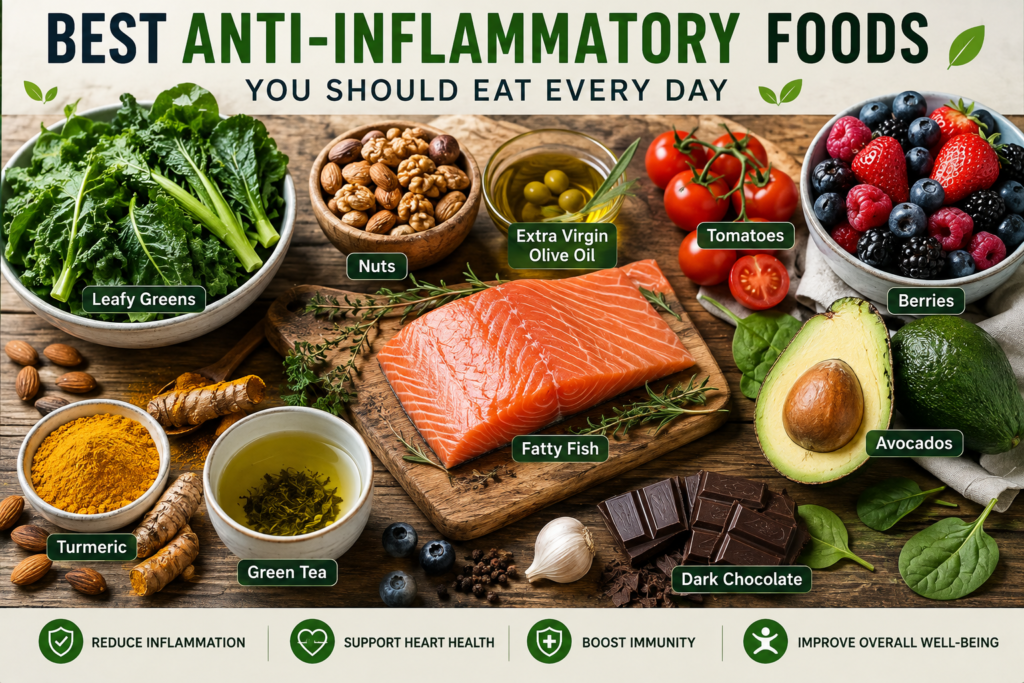
Best Anti-Inflammatory Foods
1. Fatty Fish
Fatty fish are among the richest sources of omega-3 fatty acids, which are known to reduce inflammatory markers in the body. Excellent choices include salmon, sardines, mackerel, herring, and trout. Aim to eat fatty fish at least two times per week.
2. Extra Virgin Olive Oil
Olive oil is a key component of the Mediterranean diet. It contains oleocanthal, a natural compound that works similarly to some anti-inflammatory medications. Benefits include better heart health, reduced inflammation, and improved cholesterol levels. Use extra virgin olive oil for salads and light cooking whenever possible.
3. Berries
Blueberries, strawberries, raspberries, and blackberries are packed with antioxidants called anthocyanins. These natural compounds help reduce oxidative stress while supporting healthy immune function. Fresh or frozen berries are both excellent choices.
4. Leafy Green Vegetables
Dark leafy greens provide vitamins, minerals, and plant nutrients that protect your cells. Healthy options include spinach, kale, Swiss chard, and arugula. Try adding greens to salads, smoothies, or cooked meals every day.
5. Tomatoes
Tomatoes are rich in lycopene, a powerful antioxidant associated with reduced inflammation. Cooking tomatoes with a small amount of olive oil may improve lycopene absorption.
6. Nuts
Almonds and walnuts contain healthy fats, vitamin E, magnesium, and fiber. Eating a small handful daily may support heart health while lowering inflammation. Choose unsalted varieties whenever possible.
7. Turmeric
Turmeric contains curcumin, one of the most researched natural anti-inflammatory compounds. To improve absorption, combine turmeric with black pepper in your meals.
8. Green Tea
Green tea contains catechins, antioxidants that help reduce inflammation while supporting metabolism and brain health. Replacing sugary beverages with green tea is a simple healthy habit.
9. Avocados
Avocados provide healthy monounsaturated fats, potassium, magnesium, and fiber. They also contain antioxidants that help protect cells from inflammation-related damage. Enjoy avocado on toast, salads, or sandwiches.
10. Dark Chocolate
High-quality dark chocolate with at least 70% cocoa contains flavonoids that may reduce inflammation when eaten in moderation. Keep portions small because chocolate is still calorie-dense.
Quick Reference: Top Anti-Inflammatory Compounds by Food
| Compound | Found In |
|---|---|
| Omega-3 fatty acids | Fatty fish |
| Oleocanthal | Extra virgin olive oil |
| Anthocyanins | Berries |
| Lycopene | Tomatoes |
| Curcumin | Turmeric |
| Catechins | Green tea |
| Flavonoids | Dark chocolate |
Foods That May Increase Inflammation
Limiting certain foods may be just as important as eating healthy ones. Try to reduce sugary drinks, processed snacks, deep-fried foods, processed meats, excess refined carbohydrates, and highly processed fast food.
Healthy Lifestyle Tips
Diet works best when combined with healthy daily habits. You can further reduce inflammation by exercising regularly, sleeping 7-9 hours each night, managing stress, drinking enough water, maintaining a healthy weight, and avoiding smoking.
Practical Tips
- Build meals around a base of vegetables and healthy fats rather than treating anti-inflammatory foods as occasional add-ons.
- Swap at least one processed snack a day for a handful of nuts or berries.
- Cook with olive oil instead of heavily processed vegetable oils where possible.
- Combine turmeric with black pepper and a source of fat to significantly improve absorption.
If you’re building a broader anti-inflammatory routine, it’s worth pairing this with our guides on sleeping better naturally and foods that naturally lower blood pressure, since sleep and cardiovascular health are both closely tied to inflammation.
When Should You See a Doctor?
See a doctor if you experience persistent, unexplained symptoms like joint pain, fatigue, or swelling, since these can sometimes signal an underlying inflammatory condition that needs more than dietary changes. Blood tests like CRP (C-reactive protein) can help identify chronic inflammation if your doctor suspects it.
Frequently Asked Questions
Can diet alone eliminate chronic inflammation? Diet is a major factor, but chronic inflammation is often influenced by multiple factors including sleep, stress, physical activity, and underlying health conditions — not diet in isolation.
How quickly can anti-inflammatory foods make a difference? Some markers of inflammation can improve within weeks of consistent dietary changes, though the full benefits of a sustained anti-inflammatory diet typically build over months.
Are anti-inflammatory supplements as effective as food? Whole foods generally provide a broader mix of beneficial compounds than isolated supplements. Supplements may help fill specific gaps, but they aren’t a replacement for a nutrient-rich diet.
Is a small amount of “inflammatory” food really harmful? Occasional indulgence isn’t the concern — it’s the consistent, daily pattern of highly processed foods and added sugar that drives chronic inflammation over time.
Ready to put this into practice? Try our 6 anti-inflammatory recipes you can make tonight.
Final Thoughts
There is no single miracle food that eliminates inflammation overnight. Instead, long-term health comes from consistently eating a balanced diet filled with nutrient-rich whole foods. Adding more vegetables, berries, fatty fish, olive oil, nuts, and other anti-inflammatory foods to your meals can help protect your body, improve overall wellness, and reduce the risk of chronic disease over time.
This article is for general informational purposes and is not a substitute for personalized medical advice. Consult a healthcare provider if you suspect chronic inflammation or have a related health condition.
References
Harvard T.H. Chan School of Public Health — Anti-Inflammatory Diet
National Institutes of Health (NIH) — Diet and Inflammation Research