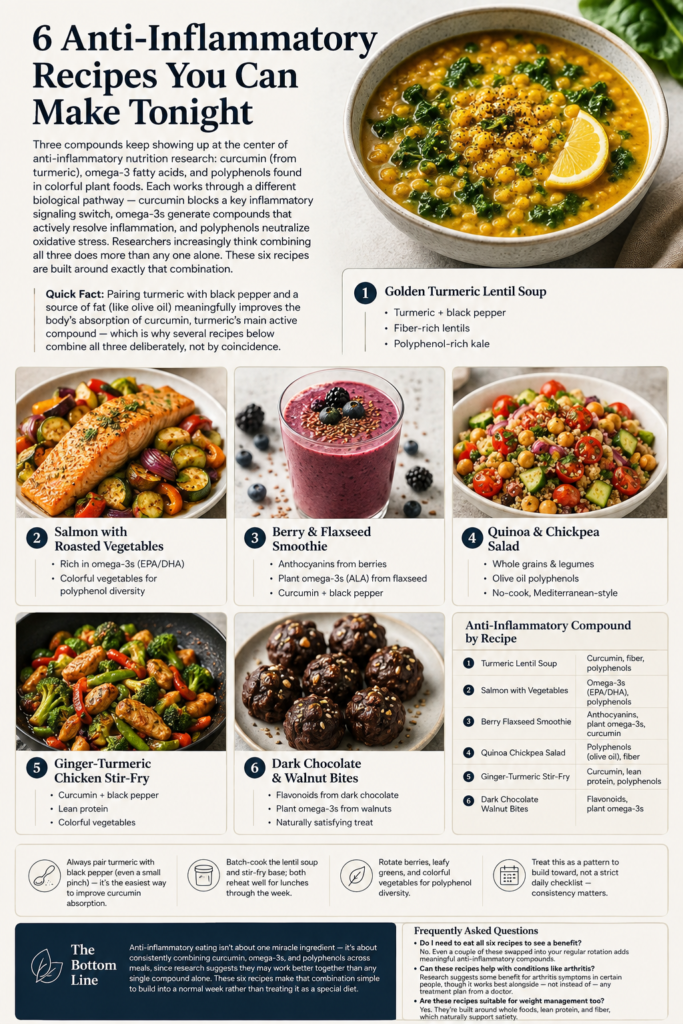
Looking for anti-inflammatory recipes that actually work? Three compounds keep showing up at the center of the research: curcumin (from turmeric), omega-3 fatty acids, and polyphenols found in colorful plant foods.. Each works through a different biological pathway — curcumin blocks a key inflammatory signaling switch, omega-3s generate compounds that actively resolve inflammation, and polyphenols neutralize oxidative stress. Researchers increasingly think combining all three does more than any one alone. These six recipes are built around exactly that combination.
Quick Fact: Pairing turmeric with black pepper and a source of fat (like olive oil) meaningfully improves the body’s absorption of curcumin, turmeric’s main active compound — which is why several recipes below combine all three deliberately, not by coincidence.
1. Golden Turmeric Lentil Soup
Ingredients (serves 4):
- 1 cup red lentils, rinsed
- 1 onion, diced, 2 cloves garlic, minced
- 1 tbsp fresh ginger, grated
- 1 tsp turmeric, pinch of black pepper
- 4 cups low-sodium vegetable broth
- 2 cups chopped kale, 1 tbsp olive oil, lemon to finish
Instructions: Sauté onion, garlic, and ginger in olive oil until fragrant. Add turmeric and black pepper, then lentils and broth. Simmer 20 minutes until lentils soften, stir in kale until wilted, and finish with a squeeze of lemon.
Why it fits: Turmeric and black pepper together, plus fiber-rich lentils and kale’s polyphenols — three anti-inflammatory mechanisms in one bowl.
2. Salmon with Roasted Vegetables
Ingredients (serves 2):
- 2 salmon fillets
- 2 cups mixed vegetables (bell peppers, zucchini, red onion)
- 2 tbsp olive oil, garlic, lemon, herbs
Instructions: Toss vegetables with olive oil and roast at 400°F (200°C) for 15 minutes. Add salmon to the pan, season, and roast another 12-15 minutes until it flakes easily.
Why it fits: Salmon is one of the richest dietary sources of EPA and DHA omega-3s, paired with colorful vegetables for polyphenol diversity.
3. Berry and Flaxseed Smoothie
Ingredients (serves 1):
- 1 cup mixed blueberries and blackberries
- 1 tbsp ground flaxseed
- 1/2 tsp turmeric, pinch of black pepper
- 1 cup milk or unsweetened plant milk
Instructions: Blend all ingredients until smooth.
Why it fits: Berries are among the richest sources of anthocyanins, ground flaxseed adds plant-based omega-3s (ALA), and the turmeric-pepper combination rounds out all three target compounds in one glass.
4. Quinoa and Chickpea Salad
Ingredients (serves 3):
- 1 cup cooked quinoa
- 1 can chickpeas, drained
- 1 cup cherry tomatoes, cucumber, red onion
- 2 tbsp olive oil, lemon juice, oregano
Instructions: Combine quinoa, chickpeas, and chopped vegetables. Whisk olive oil, lemon juice, and oregano, then toss everything together.
Why it fits: A whole grain and legume base with olive oil’s polyphenol content — a simple, no-cook-required option built on Mediterranean diet principles.
5. Ginger-Turmeric Chicken Stir-Fry
Ingredients (serves 2):
- 2 chicken breasts, sliced
- 2 cups broccoli, bell peppers, snap peas
- 1 tbsp fresh ginger, 1 tsp turmeric, pinch of black pepper
- 1 tbsp sesame oil, low-sodium soy sauce
Instructions: Sear chicken in sesame oil until cooked through, add ginger and turmeric, then vegetables, stir-frying until crisp-tender. Finish with a splash of soy sauce.
Why it fits: Combines lean protein with the curcumin-black pepper pairing and a range of colorful vegetables in one pan.
6. Dark Chocolate and Walnut Bites
Ingredients (makes about 12):
- 1/2 cup walnuts, chopped
- 1/2 cup dark chocolate (70%+ cacao), melted
- 1 tbsp chia seeds
Instructions: Stir walnuts and chia seeds into melted dark chocolate, spoon onto a lined tray in small mounds, and refrigerate until set.
Why it fits: Dark chocolate at 70%+ cacao is a genuine source of flavonoids, and walnuts provide plant-based omega-3s — a treat that fits the same framework as the meals around it.
Quick Reference: Anti-Inflammatory Compound by Recipe
| Recipe | Primary Compound(s) |
|---|---|
| Turmeric Lentil Soup | Curcumin, fiber, polyphenols |
| Salmon with Vegetables | Omega-3s (EPA/DHA), polyphenols |
| Berry Flaxseed Smoothie | Anthocyanins, plant omega-3s, curcumin |
| Quinoa Chickpea Salad | Polyphenols (olive oil), fiber |
| Ginger-Turmeric Stir-Fry | Curcumin, lean protein, polyphenols |
| Dark Chocolate Walnut Bites | Flavonoids, plant omega-3s |
Practical Tips
- Always pair turmeric with black pepper (even a small pinch) — it’s the single easiest change that improves how much curcumin your body actually absorbs.
- Batch-cook the lentil soup and stir-fry base; both reheat well for lunches through the week.
- Rotate berries, leafy greens, and colorful vegetables rather than relying on the same one or two — polyphenol diversity appears to matter as much as quantity.
- Treat this as a pattern to build toward, not a strict daily checklist — consistency over weeks matters more than any single “perfect” meal.
If you’re building a broader anti-inflammatory routine, it’s worth pairing these recipes with our guides on the best anti-inflammatory foods and gut health and your microbiome, since inflammation, diet, and gut health are closely connected.
Frequently Asked Questions
Do I need to eat all six recipes to see a benefit? No. Even a couple of these swapped into your regular rotation adds meaningful anti-inflammatory compounds — consistency over time matters more than eating every recipe on the list.
Is fresh turmeric better than powdered? Both work; powdered turmeric is more concentrated and convenient for everyday cooking, while fresh turmeric root offers a milder, slightly different flavor profile.
Can these recipes help with conditions like arthritis? Research on anti-inflammatory eating patterns, including turmeric specifically, suggests some benefit for arthritis symptoms in certain people, though it works best alongside — not instead of — any treatment plan from a doctor.
Are these recipes suitable for weight management too? Yes. They’re built around whole foods, lean protein, and fiber, which naturally support satiety and fit well within a broader weight management approach.
For a deeper look at specific foods, our guide on anti-inflammatory foods covers what to eat every day and why.
The Bottom Line
Anti-inflammatory eating isn’t about one miracle ingredient — it’s about consistently combining curcumin, omega-3s, and polyphenols across meals, since research suggests they may work better together than any single compound alone. These six recipes make that combination simple to build into a normal week rather than treating it as a special diet.
References
- Frontiers/Inflamous research summary — Turmeric, Omega-3, and Polyphenols in Inflammation
- Medical News Today — Turmeric and Anti-Inflammatory Diet Research
- National Institutes of Health (NIH) — Diet and Chronic Inflammation Research