The most persistent myth in vegetarian nutrition is that plant proteins must be carefully combined at every single meal — rice with beans, pita with hummus — or the protein “doesn’t count.”
That guidance came from a 1970s book and was retracted by its own author years later. The American Dietetic Association has since confirmed that eating a variety of plant proteins across the day provides all essential amino acids. You don’t need to engineer a perfect amino acid profile at every meal.
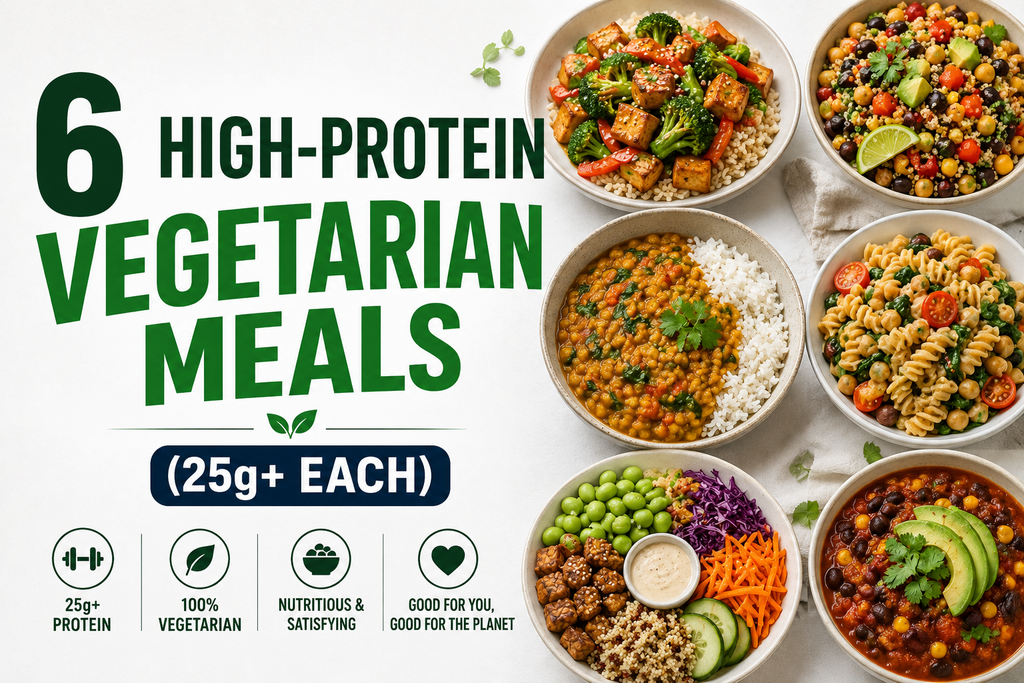
What you do need is enough total protein, which is where most vegetarian meals genuinely fall short. These six each deliver 25g or more.
Quick Fact: A 2019 systematic review in the British Journal of Sports Medicine found no significant difference in lean mass or strength gains between animal and plant protein sources when total daily protein intake was matched. The source matters far less than the total.
The Real Problem Isn’t Amino Acids — It’s Volume
Here’s what actually goes wrong with vegetarian eating.
A chicken breast delivers roughly 30g of protein in a portion most people finish easily. Getting the same 30g from lentils means eating about three cups. The amino acids are fine; the volume is the obstacle.
This is why the practical solution isn’t combining foods for completeness — it’s stacking multiple protein sources in one dish. A bowl with tofu, edamame, and quinoa reaches 30g+ without requiring anyone to eat three cups of anything.
Quick Reference: Vegetarian Protein Sources
| Food | Protein per Serving | Complete? |
|---|---|---|
| Tofu (firm, 100g) | ~17g | Yes |
| Tempeh (100g) | ~19g | Yes |
| Edamame (1 cup) | ~18g | Yes |
| Greek yogurt (1 cup) | ~20g | Yes |
| Eggs (2 large) | ~12g | Yes |
| Quinoa (1 cup cooked) | ~8g | Yes |
| Lentils (1 cup cooked) | ~18g | Low in methionine |
| Chickpeas (1 cup) | ~15g | Low in methionine |
| Cottage cheese (1 cup) | ~25g | Yes |
1. Crispy Tofu and Quinoa Bowl with Peanut Sauce
~32g protein per serving
Ingredients (serves 2):
- 400g extra-firm tofu, pressed and cubed
- 1 cup cooked quinoa
- 2 cups broccoli florets
- 2 tbsp peanut butter, 1 tbsp tamari, lime juice, garlic
- 1 tbsp cornstarch, 1 tbsp oil
Instructions: Toss pressed tofu in cornstarch, then pan-fry or air-fry at 400°F (200°C) for 20 minutes until crisp. Steam broccoli. Whisk peanut butter, tamari, lime, and garlic with a splash of hot water. Serve tofu over quinoa with broccoli and sauce.
Why it works: Pressing the tofu and coating it in cornstarch is what separates crispy from mushy — the texture complaint that puts most people off tofu entirely.
2. Three-Legume Chopped Salad
~28g protein per serving
Ingredients (serves 2):
- 1 cup chickpeas, 1/2 cup white beans, 1/2 cup shelled edamame
- 1 cucumber, 1 bell pepper, diced
- 60g feta cheese, crumbled
- 3 tbsp olive oil, 2 tbsp red wine vinegar, oregano
Instructions: Combine legumes and diced vegetables. Whisk dressing and toss through. Top with feta. Rest 15 minutes before serving.
Why it works: Stacking three legumes plus cheese gets you to 28g without any single ingredient dominating. No lettuce — filler dilutes protein density without adding much.
3. Cottage Cheese and Egg Breakfast Scramble
~30g protein per serving
Ingredients (serves 1):
- 3 eggs
- 1/2 cup cottage cheese
- 1 cup spinach, 1/4 cup diced tomato
- 1 slice whole grain toast
Instructions: Whisk eggs, scramble over medium-low heat, folding in cottage cheese during the last 30 seconds so it stays creamy. Stir in spinach until wilted. Serve with toast.
Why it works: Breakfast is where vegetarian protein intake collapses most reliably. Cottage cheese folded into eggs adds 12g without changing the meal’s character.
4. Tempeh and Black Bean Chili
~27g protein per serving
Ingredients (serves 4):
- 200g tempeh, crumbled
- 2 cans black beans, drained
- 1 can crushed tomatoes
- 1 onion, 1 bell pepper, 3 cloves garlic
- 2 tsp cumin, 1 tbsp chili powder, 1 tsp smoked paprika
Instructions: Brown crumbled tempeh in oil until golden. Add onion, pepper, garlic, then spices. Add beans and tomatoes, simmer 30 minutes.
Why it works: Crumbled tempeh takes on the texture of ground meat in a chili, which makes this the most convincing swap on the list for anyone transitioning.
5. Lentil and Halloumi Traybake
~26g protein per serving
Ingredients (serves 3):
- 1.5 cups cooked green lentils
- 200g halloumi, cubed
- 2 cups mixed vegetables (zucchini, red onion, cherry tomatoes)
- 2 tbsp olive oil, 1 tsp za’atar or oregano, lemon
Instructions: Roast vegetables and halloumi at 425°F (220°C) for 25 minutes, turning halloumi once. Stir through warm lentils, finish with lemon.
Why it works: Halloumi holds its shape when roasted and carries enough salt and fat to make lentils taste like a meal rather than a side.
6. Greek Yogurt Protein Bowl
~29g protein per serving
Ingredients (serves 1):
- 1.5 cups plain Greek yogurt
- 2 tbsp hemp seeds
- 1/2 cup berries
- 1 tbsp almond butter, cinnamon
Instructions: Top yogurt with hemp seeds, berries, almond butter, and a dusting of cinnamon.
Why it works: Requires no cooking, takes ninety seconds, and covers the snack slot where most people’s protein intake drops to near zero.
Quick Reference: Protein by Recipe
| Recipe | Protein | Prep Time | Meal Slot |
|---|---|---|---|
| Crispy Tofu & Quinoa Bowl | ~32g | 30 min | Dinner |
| Three-Legume Chopped Salad | ~28g | 15 min | Lunch |
| Cottage Cheese Egg Scramble | ~30g | 10 min | Breakfast |
| Tempeh & Black Bean Chili | ~27g | 40 min | Dinner (batch) |
| Lentil & Halloumi Traybake | ~26g | 30 min | Dinner |
| Greek Yogurt Protein Bowl | ~29g | 2 min | Breakfast/snack |
The Stacking Formula
Once you see the pattern, you don’t need recipes. Every meal above follows the same structure:
One anchor protein (15-20g) — tofu, tempeh, Greek yogurt, cottage cheese, or eggs.
One supporting legume or grain (8-15g) — lentils, chickpeas, black beans, edamame, or quinoa.
One small booster (5-8g) — hemp seeds, feta, halloumi, nuts, or nutritional yeast.
That’s 25-35g without measuring anything. The booster tier is what most people skip, and it’s frequently the difference between a 20g meal and a 28g one.
What Vegetarians Actually Report
The most common realization isn’t about amino acids — it’s about breakfast.
Vegetarian lunches and dinners tend to be reasonably protein-containing by default. Breakfast is where intake collapses: toast, oatmeal, fruit, coffee. Many people report their entire daily shortfall traces back to a single meal, and fixing that one meal closes most of the gap.
The second pattern involves tofu texture. People try tofu once, find it watery and bland, and conclude they dislike it. What they disliked was unpressed tofu cooked without a coating. Pressing out the water and dusting with cornstarch before high-heat cooking produces something genuinely different, and it’s the change that most often converts people.
Third, a realistic note on satiety: plant protein comes packaged with significantly more fiber and volume than animal protein. This is a benefit for fullness but means larger portions. People switching from meat-based meals frequently underestimate how much food a 30g plant-based serving actually is — and then undereat protein while feeling like they ate plenty.
Common Mistakes
Believing you must combine proteins at every meal. This guidance was retracted decades ago. Variety across the day is sufficient.
Not pressing tofu. Water in the tofu prevents browning and produces the soggy texture that turns people off. Press it for at least 15 minutes.
Building salads on lettuce. Leafy greens add volume and nutrients but almost no protein. Build on legumes and treat greens as an addition.
Skipping the booster tier. Two tablespoons of hemp seeds or 60g of feta is the difference between a 20g and a 28g meal, with minimal effort.
Assuming “plant-based” products are high protein. Many meat alternatives are engineered for texture, not protein density. Check the label — some deliver less than the beans they replaced.
Relying on nuts as a primary protein source. Nuts are predominantly fat. A serving of almonds delivers roughly 6g of protein alongside 14g of fat — useful as a booster, insufficient as an anchor.
Practical Tips
- Fix breakfast first — it’s where the shortfall usually concentrates, and one change often closes most of the gap.
- Keep pressed tofu, cooked lentils, and Greek yogurt on hand; these three cover anchor protein for most meals.
- Batch-cook the chili and lentil traybake — both improve after a day in the fridge.
- Add a booster to meals you already eat rather than redesigning them: hemp seeds on oatmeal, feta on salad.
- Weigh your protein sources once to calibrate; most people significantly overestimate how much a “serving” of legumes is.
If you’re working on protein intake more broadly, it’s worth pairing these recipes with our guides on how much protein you need per day and protein and appetite, since total intake and meal distribution both shape results more than source does.
Frequently Asked Questions
Do I need to combine plant proteins at every meal? No. The American Dietetic Association confirmed that eating a variety of plant proteins throughout the day provides all essential amino acids. Meal-by-meal combining isn’t necessary.
Which vegetarian foods are complete proteins on their own? Soy foods (tofu, tempeh, edamame), quinoa, and all animal-derived vegetarian sources — eggs, dairy, Greek yogurt, and cottage cheese.
How much protein do I actually need per day? The 2025-2030 Dietary Guidelines recommend 1.2 to 1.6 g per kg of body weight for healthy adults — higher than the older 0.8 g/kg baseline, which was set to prevent deficiency rather than optimize health.
Is plant protein as effective as animal protein for building muscle? Research found no significant difference in lean mass or strength gains when total protein intake was matched. Hitting your daily target consistently matters more than the source.
Why does my tofu turn out soggy? Almost always because it wasn’t pressed. Removing the water and coating in cornstarch before high-heat cooking is what produces a crisp exterior.
The Bottom Line
Vegetarian protein has a volume problem, not an amino acid problem. Stop worrying about combining foods within a meal and start stacking sources within a dish — an anchor, a legume or grain, and a small booster. That formula reaches 25-30g reliably, and it works with whatever happens to be in your kitchen once you stop needing the recipe.
References
- Healthline — Vegan Complete Proteins: Plant-Based Options
- British Journal of Sports Medicine — Plant vs. Animal Protein and Lean Mass
- Dietary Guidelines for Americans (2025-2030) — Protein Recommendations