Gestational diabetes affects roughly 1 in 7 pregnancies worldwide, yet many people have never heard of it until they’re handed a glucose test at their prenatal appointment. Here’s what gestational diabetes actually is, what causes it, and how it’s managed for a healthy pregnancy.
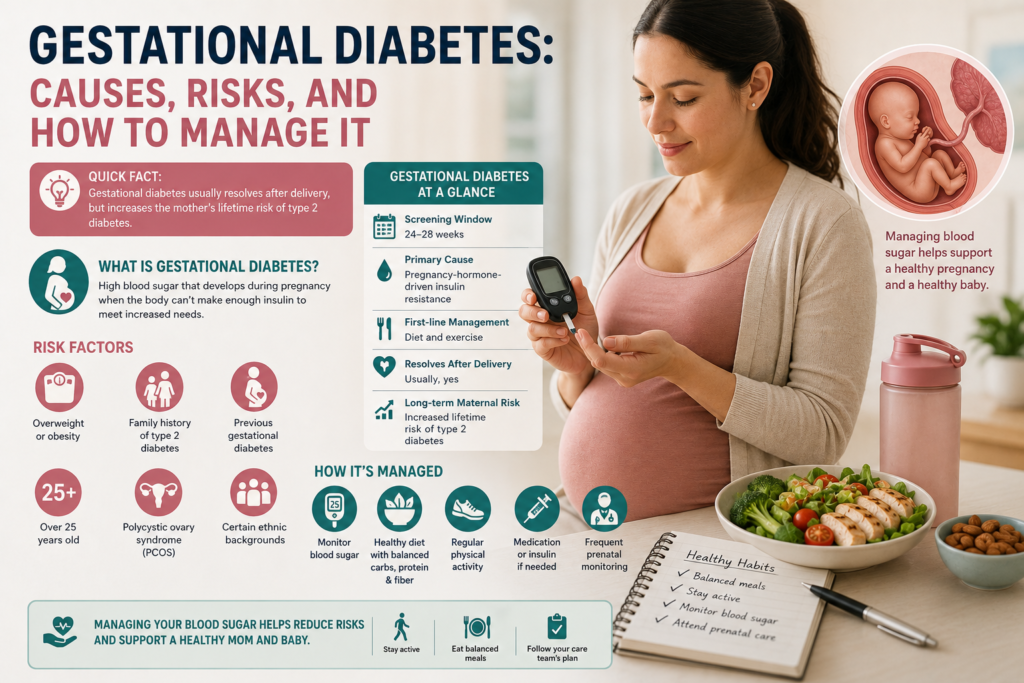
Quick Fact: Gestational diabetes usually resolves after delivery, but it significantly raises the mother’s lifetime risk of developing type 2 diabetes later on — which is why follow-up screening after pregnancy matters.
What Is Gestational Diabetes?
Gestational diabetes (GDM) is a form of high blood sugar that develops specifically during pregnancy, typically diagnosed around 24-28 weeks through a glucose tolerance test. It happens because pregnancy hormones can interfere with how the body’s cells respond to insulin, and for some people, the pancreas can’t produce enough extra insulin to compensate. This is different from having type 1 or type 2 diabetes before pregnancy, though the underlying insulin resistance shares some similarities with type 2 diabetes.
What Causes It?
Pregnancy naturally increases insulin resistance in every mother to some degree, since placental hormones are designed to ensure the growing baby has enough glucose available. Gestational diabetes develops when this normal shift becomes more pronounced than the body can manage. Risk factors include:
- Being overweight or gaining significant weight before pregnancy
- A family history of type 2 diabetes
- Having had gestational diabetes in a previous pregnancy
- Being over 25, with risk increasing further with age
- Polycystic ovary syndrome (PCOS)
- Certain ethnic backgrounds carrying higher population-level risk
Having risk factors doesn’t guarantee gestational diabetes will develop, and some people with no clear risk factors are diagnosed anyway — which is part of why routine screening is standard practice rather than optional for higher-risk individuals only.
Why Managing It Matters
Left unmanaged, gestational diabetes increases the risk of complications including a larger-than-average baby (macrosomia), preterm birth, preeclampsia, and a higher likelihood of needing a C-section. It also raises the baby’s own long-term risk of obesity and type 2 diabetes later in life. The encouraging news is that good blood sugar control during pregnancy substantially reduces these risks — gestational diabetes is very manageable with the right approach.
Quick Reference: Gestational Diabetes at a Glance
| Factor | Detail |
|---|---|
| Typical screening window | 24–28 weeks of pregnancy |
| Primary cause | Pregnancy-hormone-driven insulin resistance |
| First-line management | Diet and exercise |
| Resolves after delivery | Usually, yes |
| Long-term maternal risk | Increased lifetime risk of type 2 diabetes |
How Gestational Diabetes Is Managed
Blood sugar monitoring. Most people with GDM check their blood sugar multiple times a day, typically fasting and after meals, to track how well the management plan is working.
Dietary changes. A meal plan focused on consistent carbohydrate intake, paired with protein and fiber, helps prevent the blood sugar spikes that are harder to manage during pregnancy. Working with a registered dietitian is common and often covered as part of prenatal care.
Physical activity. Regular, moderate exercise — when approved by a doctor — helps improve insulin sensitivity and supports healthy blood sugar levels throughout pregnancy.
Medication when needed. Many people manage gestational diabetes through diet and exercise alone, but some need insulin or oral medication if blood sugar remains elevated despite lifestyle changes. Needing medication isn’t a sign of doing something wrong — it reflects individual physiology, not effort.
More frequent monitoring. Pregnancies affected by gestational diabetes typically involve more frequent prenatal visits and additional monitoring of the baby’s growth, particularly in the third trimester.
Practical Tips
- Keep a consistent meal schedule, since irregular eating can make blood sugar harder to predict and manage.
- Pair carbohydrates with protein or healthy fat at each meal rather than eating them alone.
- Stay active with doctor-approved movement like walking, which is often well tolerated throughout pregnancy.
- Don’t skip the postpartum glucose screening, typically done 4-12 weeks after delivery — it’s your window to catch and address ongoing risk early.
If you’re also focused on general nutrition during this time, it’s worth reading alongside our guide on the best diet for Type 2 diabetes, since many of the same blood-sugar-friendly food principles apply, though your specific plan should come from your prenatal care team.
When Should You See a Doctor?
Attend all recommended prenatal screenings, since gestational diabetes often causes no noticeable symptoms and is typically caught through routine testing rather than symptoms. Seek prompt medical attention for symptoms like unusual thirst, frequent urination, or blurred vision, and always follow your care team’s guidance on blood sugar targets and monitoring frequency specific to your pregnancy.
Frequently Asked Questions
Will gestational diabetes go away after birth? For most people, yes — blood sugar typically returns to normal after delivery. However, it significantly raises the risk of developing type 2 diabetes later in life, which is why postpartum screening and long-term healthy habits matter.
Can gestational diabetes harm the baby? Well-managed gestational diabetes carries a much lower risk of complications. Unmanaged high blood sugar during pregnancy increases risks like excessive birth weight and low blood sugar in the newborn immediately after birth.
Do I need insulin if I have gestational diabetes? Not necessarily. Many people manage it successfully through diet and exercise alone. Insulin or medication is added if blood sugar targets aren’t met through lifestyle changes, and this varies by individual.
Will I definitely get gestational diabetes again in future pregnancies? Having it once does increase the risk in future pregnancies, but it’s not guaranteed. Maintaining a healthy weight and active lifestyle between pregnancies can help reduce that risk.
The Bottom Line
Gestational diabetes is common, usually manageable, and typically resolves after delivery — but it deserves real attention both during pregnancy and afterward, given its connection to long-term type 2 diabetes risk. Consistent monitoring, a supportive care team, and manageable lifestyle adjustments are usually enough to navigate it safely.
This article is for general informational purposes and is not a substitute for personalized medical advice. Consult your prenatal care provider for diagnosis, monitoring, and a management plan tailored to your pregnancy.
References
- American Diabetes Association — Standards of Care in Diabetes: Pregnancy
- World Health Organization — Guidelines on Diabetes in Pregnancy
- National Institutes of Health (NIH) — Gestational Diabetes Research