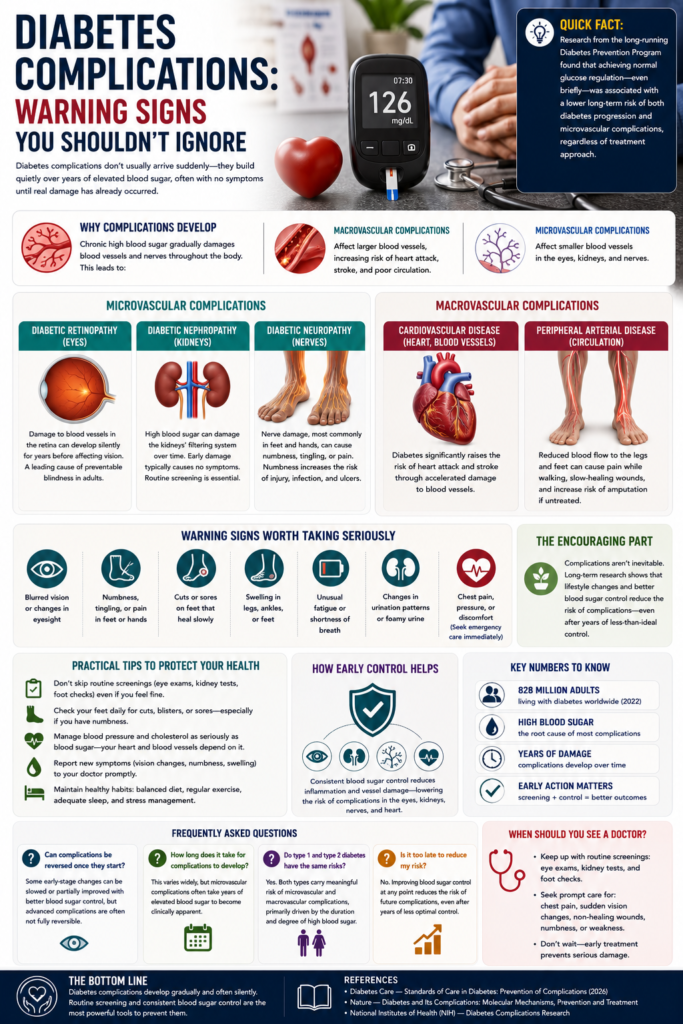
Diabetes complications don’t usually arrive suddenly — they build quietly over years of elevated blood sugar, often with no symptoms until real damage has already occurred. In 2022, an estimated 828 million adults worldwide were living with diabetes, and researchers describe the resulting complications as a major driver of disability and mortality. Knowing what to watch for, and why early control matters so much, is one of the most protective things you can do.
Quick Fact: Research from the long-running Diabetes Prevention Program found that achieving normal glucose regulation — even briefly — was associated with a lower long-term risk of both diabetes progression and microvascular complications, regardless of which treatment approach got someone there.
Why Complications Develop
Chronic high blood sugar gradually damages blood vessels and nerves throughout the body. This shows up in two broad categories: macrovascular complications, affecting larger blood vessels (heart attack, stroke, poor circulation), and microvascular complications, affecting smaller vessels (eyes, kidneys, nerves). Both stem from the same underlying process — sustained high glucose triggering inflammation and vessel damage over time — which is why blood sugar control is so central to preventing them.
Microvascular Complications
Diabetic retinopathy (eyes). Damage to blood vessels in the retina can develop silently for years before affecting vision. It’s a leading cause of preventable blindness in adults, which is why regular dilated eye exams matter even without noticeable vision changes.
Diabetic nephropathy (kidneys). Elevated blood sugar can damage the kidneys’ filtering system over time. Like retinopathy, early kidney damage typically causes no symptoms, making routine screening (urine and blood tests) essential rather than optional.
Diabetic neuropathy (nerves). Nerve damage, most commonly in the feet and hands, can cause numbness, tingling, or pain — and paradoxically, numbness can mean an injury goes unnoticed, increasing infection and wound risk.
Quick Reference: Complications by Category
| Category | Affected Area | Often Symptom-Free Until Advanced? |
|---|---|---|
| Retinopathy | Eyes | Yes — regular screening essential |
| Nephropathy | Kidneys | Yes — screening essential |
| Neuropathy | Nerves (feet/hands) | No — often causes noticeable symptoms |
| Cardiovascular disease | Heart, blood vessels | Can be silent until an event occurs |
| Peripheral arterial disease | Circulation (legs/feet) | Often causes noticeable symptoms |
Macrovascular Complications
Cardiovascular disease. Diabetes significantly raises the risk of heart attack and stroke, largely through accelerated damage to blood vessels — part of why blood pressure and cholesterol management are treated as seriously as blood sugar itself in diabetes care.
Peripheral arterial disease. Reduced circulation, especially to the legs and feet, can cause pain while walking, slow-healing wounds, and in advanced cases, a meaningfully increased risk of amputation if untreated.
Warning Signs Worth Taking Seriously
- Blurred vision or noticeable changes in eyesight
- Numbness, tingling, or pain in the feet or hands
- Cuts or sores on the feet that heal slowly or not at all
- Swelling in the legs, ankles, or feet
- Unusual fatigue or shortness of breath
- Changes in urination patterns or foamy urine
- Chest pain, pressure, or discomfort — treat this as a possible emergency, not a symptom to monitor
The Genuinely Encouraging Part
Diabetes complications aren’t inevitable. Long-term follow-up of the Diabetes Prevention Program found that lifestyle intervention and medication both reduced diabetes incidence and microvascular complications over more than two decades of follow-up — and separate research found that even temporarily returning to normal glucose levels lowered long-term complication risk. This is a genuinely different message than “damage is coming eventually” — sustained blood sugar control has measurable, lasting protective effects.
Practical Tips
- Don’t skip routine screenings (eye exams, kidney function tests, foot checks) just because you feel fine — many complications are silent until they’re advanced.
- Check your feet regularly for cuts, blisters, or sores, especially if you have any numbness, since reduced sensation can mask an injury.
- Treat blood pressure and cholesterol management as seriously as blood sugar control, since cardiovascular complications are a leading cause of diabetes-related death.
- Report new symptoms (vision changes, foot numbness, swelling) to your doctor promptly rather than waiting for a routine appointment.
If you’re focused on blood sugar management day to day, it’s worth pairing this with our guides on normal blood sugar levels and diabetes and exercise, since consistent glucose control is the most direct lever for reducing complication risk over time.
When Should You See a Doctor?
Keep up with recommended routine screenings — annual dilated eye exams, kidney function tests, and regular foot checks — even without symptoms, since several major complications are silent in their early stages. Seek prompt medical attention for chest pain, sudden vision changes, a wound that isn’t healing, or any new numbness or weakness, rather than waiting to see if it resolves.
Frequently Asked Questions
Can diabetes complications be reversed once they start? Some early-stage changes can be slowed or partially improved with better blood sugar control, but advanced complications are often not fully reversible — which is why early detection through routine screening matters so much.
How long does it typically take for complications to develop? This varies widely, but microvascular complications like retinopathy and nephropathy often take years of elevated blood sugar to become clinically apparent, which is part of why they can go unnoticed for a long time.
Does type 1 diabetes carry the same complication risks as type 2? Both types carry meaningful risk of microvascular and macrovascular complications, primarily driven by the duration and degree of elevated blood sugar rather than which type someone has.
Is it too late to reduce my risk if I’ve had diabetes for years? No. Research consistently shows that improving blood sugar control at any point reduces the risk of further complications developing, even after years of less optimal control.
The Bottom Line
Diabetes complications develop gradually and often silently, which makes routine screening — not just symptom-watching — the real foundation of prevention. The research is genuinely encouraging on one point: sustained blood sugar control, even achieved later rather than earlier, measurably reduces the risk of the complications that make diabetes dangerous in the first place.
This article is for general informational purposes and is not a substitute for personalized medical advice. Consult a healthcare provider for routine diabetes screening and to discuss your individual complication risk.
References
- Diabetes Care — Standards of Care in Diabetes: Prevention of Complications (2026)
- Nature — Diabetes and Its Complications: Molecular Mechanisms, Prevention and Treatment
- National Institutes of Health (NIH) — Diabetes Complications Research