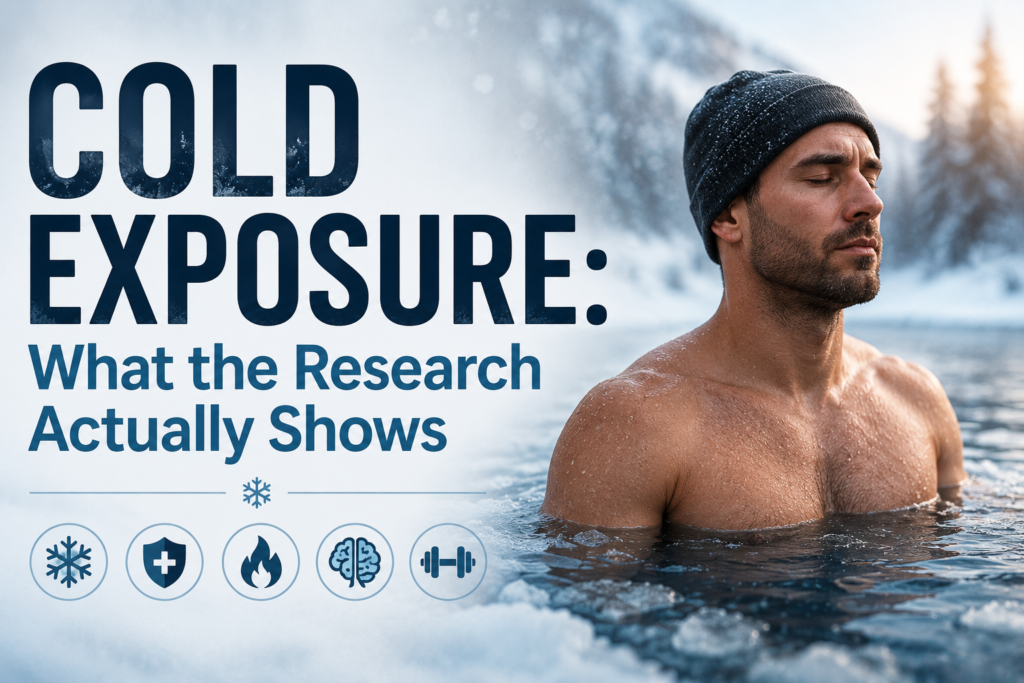
Cold plunges have gone from niche recovery tool to full-blown wellness phenomenon — athletes post ice bath videos, influencers credit it with everything from faster metabolism to dramatic dopamine boosts, and celebrities swear by it. Scientists are increasingly pushing back on the more extreme claims, while genuine research keeps confirming a smaller, more specific set of real benefits. Both things are true at once.
Quick Fact: A 2025 study found a 20-minute cold plunge reduced blood flow to muscle by roughly 70% and lowered the amount of dietary protein incorporated into muscle during recovery by about 30% — meaning cold exposure right after strength training may actually work against muscle-building goals, not for them.
What the Research Actually Supports
Mood and mental clarity. Many people report increased alertness, energy, and focus immediately after cold immersion, and researchers describe the evidence for mood and even depression symptom improvement as “looking very promising,” though this remains a growing rather than settled area.
Sleep quality. Several studies suggest cold-water immersion may improve sleep, particularly after strenuous exercise — plausibly because the drop in core body temperature mimics one of the body’s natural pre-sleep signals.
Post-exercise soreness and muscle damage. This is one of the more established uses — cold water immersion has shown evidence of reducing exercise-induced muscle damage and resulting soreness, likely through rapid blood vessel constriction and reduced inflammation.
Cellular stress resilience. A 2025 study found that seven days of cold water acclimation improved autophagy — the cell’s internal “recycling” process — in young men, suggesting a plausible mechanism for improved cellular resilience with regular, gradual exposure.
Quick Reference: What the Evidence Shows
| Claim | Evidence Strength |
|---|---|
| Reduces post-exercise soreness/muscle damage | Reasonably well-supported |
| Improves alertness/mental clarity short-term | Well-supported, consistently reported |
| Improves mood, may help depression symptoms | Promising, still emerging |
| Improves sleep quality | Some supporting evidence |
| Speeds muscle growth after strength training | Not supported — may actually impair it |
| Major metabolism/weight loss effect | Overstated relative to current evidence |
Where the Hype Outpaces the Science
A landmark 2025 systematic review and meta-analysis pooling 11 studies and over 3,000 participants found the picture is more modest — and more short-lived — than popular claims suggest. Stress reduction showed up specifically at 12 hours post-exposure, but not immediately after, one hour after, 24 hours after, or two days later. A separate trial found a 29% reduction in sickness absence, but no significant difference in actual illness days between groups. Quality-of-life improvements were real but faded and were no longer significant three months later.
The Muscle-Building Catch
This is the finding most cold plunge enthusiasts haven’t heard: cold exposure immediately after resistance training appears to blunt the very adaptations strength training is meant to produce. If your goal is building muscle, timing matters — using a cold plunge right after a lifting session may work against your progress rather than accelerating recovery for that purpose.
A Genuinely Interesting Contradiction: Inflammation
Cold-water immersion is popularly used to reduce inflammation and soreness, yet the 2025 meta-analysis found it actually increased inflammation immediately after and one hour post-exposure. Researchers explain this isn’t necessarily contradictory — cold is perceived by the body as a stressor, triggering a short-term inflammatory response similar to how exercise itself causes temporary muscle damage before producing strength gains. The proposed idea is that regular, repeated exposure may build resilience over time, even though a single session shows an initial inflammatory uptick rather than an immediate anti-inflammatory effect.
Practical Tips
- If your primary goal is strength or muscle building, avoid cold plunges immediately after resistance training — save cold exposure for non-lifting days or separate it by several hours.
- Water temperatures around 59-68°F (15-20°C) for a few minutes appear sufficient for most reported benefits; colder isn’t necessarily proportionally better and increases risk.
- Never cold plunge alone in open water, and keep exposure time limited — hypothermia and frostbite are real risks, particularly in outdoor or prolonged immersion.
- Treat mood and alertness benefits as the most consistently reported effect if you’re trying it for the first time, rather than expecting dramatic metabolic or weight changes.
If you’re working on your broader wellness routine, it’s worth pairing this with our guides on stress management techniques and sleeping better naturally, since cold exposure’s most consistent benefits overlap directly with both.
When Should You See a Doctor?
Talk to a doctor before starting cold water immersion if you have a heart condition, since the physiological stress response cold exposure triggers can pose real risk for people with certain cardiac issues. Also seek medical attention if you experience symptoms of hypothermia (uncontrollable shivering, confusion, slurred speech) during or after cold exposure, rather than waiting for symptoms to resolve on their own.
Frequently Asked Questions
Is a cold plunge good for weight loss? The evidence for a meaningful metabolic or fat-loss effect is much weaker than popular claims suggest — current research supports more modest, short-term benefits like alertness and reduced soreness rather than significant weight loss.
Should I do a cold plunge before or after a workout? After is more common, but not immediately following strength training specifically — research suggests this can blunt muscle-building adaptations. Separating cold exposure from lifting sessions by several hours, or reserving it for non-lifting days, avoids this tradeoff.
How long do the benefits of a cold plunge actually last? Shorter than marketing suggests for several outcomes — one major review found stress reduction appeared specifically around 12 hours post-exposure rather than immediately, and some quality-of-life improvements faded within months.
Is cold water immersion safe for everyone? No. People with certain heart conditions should avoid it or consult a doctor first, given the significant physiological stress response cold exposure triggers.
The Bottom Line
Cold exposure isn’t a wellness myth, but it’s also not the metabolism-boosting, all-purpose recovery tool social media often portrays. The most consistently supported benefits are short-term alertness, modest sleep and mood support, and reduced post-exercise soreness — while claims about major weight loss or accelerated muscle growth outpace what the current evidence actually shows, and timing it right after strength training may work against your goals rather than for them.
This article is for general informational purposes and is not a substitute for personalized medical advice. Consult a healthcare provider before starting cold water immersion, especially if you have a heart condition.
References
- National Geographic — Science Is Pushing Back on the Hype Over Cold Plunges (2026)
- Harvard Health — Research Highlights Health Benefits From Cold-Water Immersions (2025)
- Mayo Clinic Health System — Cold-Water Plunging Health Benefits