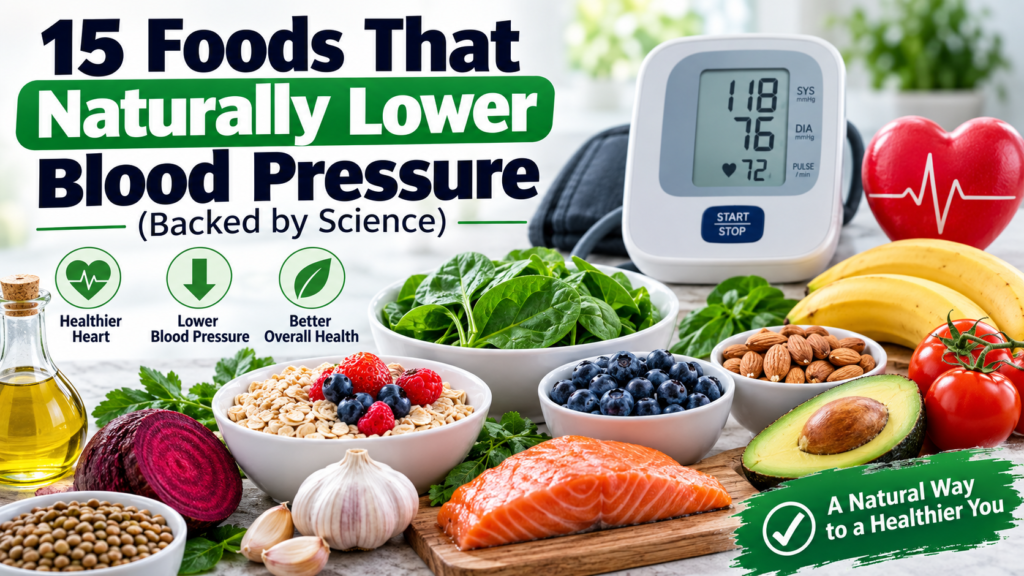
15 Foods That Naturally Lower Blood Pressure (Backed by Science)
High blood pressure, also known as hypertension, is one of the most common health conditions worldwide. It often develops silently without noticeable symptoms, earning it the nickname “the silent killer.” If left unmanaged, hypertension can increase the risk of heart disease, stroke, kidney disease, and other serious health problems.
The good news is that diet plays a major role in controlling blood pressure. Scientific research has shown that certain foods are rich in nutrients like potassium, magnesium, fiber, antioxidants, and healthy fats that support healthy blood vessels and improve circulation.
In this guide, you’ll discover 15 of the best foods that naturally lower blood pressure and learn simple ways to include them in your daily meals.
Quick Fact: Most adults should aim for less than 2,300 mg of sodium per day — and many people with high blood pressure benefit from consuming even less.
Why Diet Matters for Blood Pressure
Blood pressure measures the force of blood pushing against the walls of your arteries. When this pressure stays consistently high, your heart has to work harder to pump blood, increasing strain on your cardiovascular system.
A healthy diet can help lower systolic and diastolic blood pressure, improve blood vessel function, reduce inflammation, support heart health, lower cholesterol, and promote healthy weight management. Combining nutritious foods with regular exercise, adequate sleep, and stress management offers the best long-term results.
15 Foods That Naturally Lower Blood Pressure
1. Leafy Green Vegetables
Leafy greens are among the best foods for lowering blood pressure because they are naturally rich in potassium. Potassium helps your kidneys remove excess sodium from the body, reducing pressure on blood vessel walls. Excellent choices include spinach, kale, Swiss chard, romaine lettuce, and arugula. Aim to include at least one serving of leafy greens every day.
2. Berries
Blueberries, strawberries, raspberries, and blackberries contain powerful antioxidants called anthocyanins. These compounds may improve blood vessel flexibility and reduce blood pressure. Fresh or frozen berries make an excellent snack or breakfast topping.
3. Bananas
Bananas are famous for their potassium content. Potassium helps balance sodium levels and supports healthy blood pressure. Enjoy bananas with oatmeal, yogurt, or as a convenient snack.
4. Oats
Oats are rich in soluble fiber, which supports healthy cholesterol levels and improves heart health. A bowl of oatmeal for breakfast is a simple way to start your day with heart-friendly nutrition.
5. Fatty Fish
Salmon, sardines, trout, and mackerel provide omega-3 fatty acids that reduce inflammation and support healthy blood pressure. Experts recommend eating fatty fish at least twice per week.
6. Garlic
Garlic contains allicin, a natural compound that may help relax blood vessels and improve circulation. Fresh garlic provides the greatest health benefits.
7. Yogurt
Low-fat plain yogurt supplies calcium, potassium, and protein, nutrients that contribute to healthy blood pressure. Choose unsweetened varieties whenever possible.
8. Beans and Lentils
Beans and lentils are excellent sources of fiber, magnesium, potassium, and plant protein. These nutrients support healthy blood pressure while helping you feel full longer.
9. Avocados
Avocados provide healthy monounsaturated fats along with potassium and magnesium. They make an excellent replacement for butter or mayonnaise.
10. Beetroot
Beets contain natural nitrates that help widen blood vessels and improve blood flow. Roasted beets, salads, or fresh beet juice are popular choices.
11. Nuts
Almonds, walnuts, pistachios, and cashews contain healthy fats, magnesium, and antioxidants that support cardiovascular health. Keep portions moderate since nuts are calorie-dense.
12. Seeds
Flaxseeds, chia seeds, sunflower seeds, and pumpkin seeds provide fiber, healthy fats, and important minerals. Sprinkle them over yogurt, salads, or smoothies.
13. Tomatoes
Tomatoes contain potassium and lycopene, an antioxidant linked to improved heart health. Fresh tomatoes and low-sodium tomato products are both excellent choices.
14. Dark Chocolate
Dark chocolate with at least 70% cocoa contains flavonoids that may improve blood vessel function. Enjoy small portions occasionally as part of a balanced diet.
15. Olive Oil
Extra virgin olive oil is a cornerstone of the Mediterranean diet and has been associated with lower blood pressure and reduced cardiovascular risk. Use it in salads or for light cooking.
Quick Reference: Foods That Lower Blood Pressure by Key Nutrient
| Nutrient | Foods |
|---|---|
| Potassium | Leafy greens, bananas, beans, avocados |
| Nitrates | Beetroot |
| Omega-3s | Fatty fish |
| Antioxidants | Berries, dark chocolate, tomatoes |
| Healthy fats | Olive oil, avocados, nuts |
Foods to Limit
To better control blood pressure, reduce your intake of processed foods, fast food, salty snacks, sugary drinks, processed meats, excess alcohol, and highly refined carbohydrates. Reading nutrition labels can help you reduce sodium intake.
Lifestyle Habits That Help
Healthy eating works best when combined with other positive habits: exercise for at least 150 minutes per week, maintain a healthy weight, get 7-9 hours of sleep each night, reduce stress through relaxation techniques, avoid smoking, and drink enough water daily.
Practical Tips
- Cook at home more often — restaurant and packaged foods are the biggest source of hidden sodium.
- Swap salt for herbs, garlic, and citrus to add flavor without raising sodium intake.
- Build meals around a base of vegetables, then add lean protein and whole grains.
- Track your blood pressure at home if you’ve been diagnosed with hypertension, so you can see which habits actually move the numbers.
If you’re building out a broader heart-healthy routine, it’s worth pairing this with our guides on how much protein you need per day and strength training for beginners, since both diet and exercise directly affect blood pressure.
When Should You See a Doctor?
See a doctor if your blood pressure readings are consistently above 130/80 mmHg, if you experience symptoms like severe headaches, chest pain, shortness of breath, or vision changes, or if you’re on blood pressure medication and considering major dietary changes, since some foods can interact with these medications.
Frequently Asked Questions
Can food really lower blood pressure? Yes. A diet rich in fruits, vegetables, whole grains, lean proteins, and healthy fats can significantly improve blood pressure over time, especially when combined with a healthy lifestyle.
How much sodium should I consume? Most adults should aim for less than 2,300 mg of sodium per day, and many people with hypertension benefit from consuming even less.
Is coffee bad for blood pressure? Caffeine may temporarily raise blood pressure in some individuals. Moderate coffee intake is generally considered safe for most healthy adults, but sensitivity varies.
Final Thoughts
Managing high blood pressure starts with daily choices. By filling your plate with nutrient-rich foods like leafy greens, berries, oats, fatty fish, garlic, beans, avocados, and olive oil, you can support healthier blood pressure naturally.
Remember that no single food is a cure. The greatest benefits come from maintaining a balanced diet, staying physically active, getting enough sleep, and following your healthcare provider’s advice. Small changes made consistently can lead to lasting improvements in heart health and overall well-being.
This article is for general informational purposes and is not a substitute for personalized medical advice. Consult a healthcare provider before making significant dietary changes, especially if you take blood pressure medication.
Looking for meal ideas that fit this approach? Try our 6 heart-healthy dinner recipes inspired by the DASH and Mediterranean diets.
References
National Institutes of Health (NIH) — Blood Pressure and Diet Researchn lead to lasting improvements in heart health and overall well-being.