Strength training for beginners can feel intimidating — machines with too many pins, gym-goers who seem to know exactly what they’re doing, and conflicting advice everywhere you look. The good news: the research-backed basics are much simpler than the noise suggests, and you can start with just your bodyweight or a pair of dumbbells.
Why Strength Training Matters, Even If You’re Not “Into Fitness”
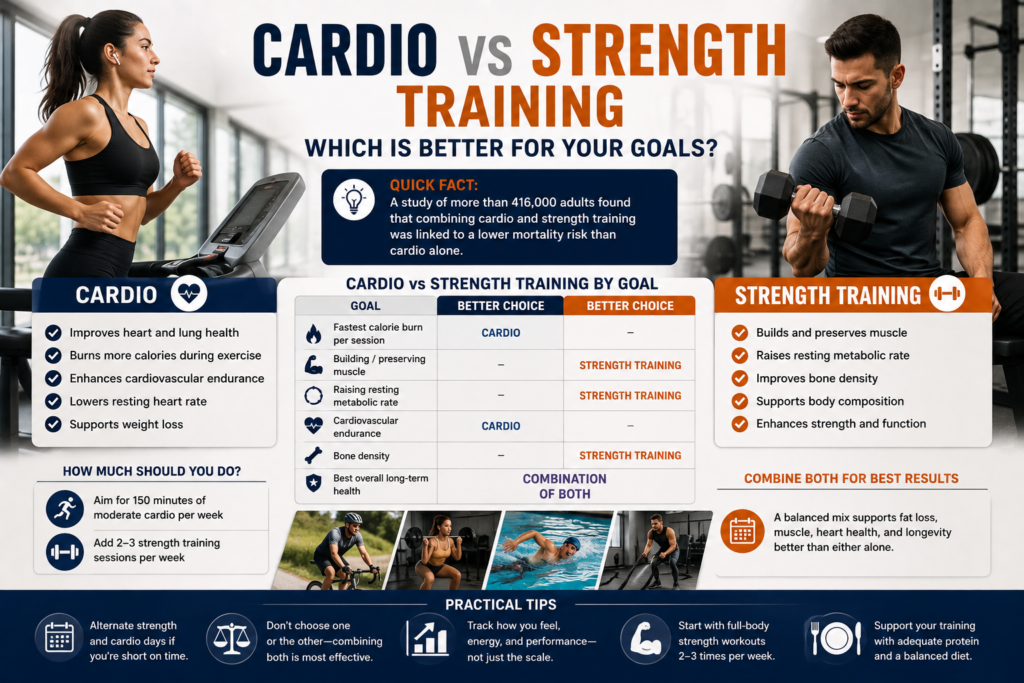
Muscle mass naturally starts declining after your 30s, a process called sarcopenia, and strength training is one of the most effective tools for slowing it down. The benefits go well beyond appearance: resistance training supports bone density, helps regulate blood sugar, and is linked to better mood and cognitive function. Health bodies like the World Health Organization recommend at least two strength sessions per week for adults, specifically to reduce the risk of chronic disease and support long-term muscle and bone health.
How Often Should You Strength Train as a Beginner?
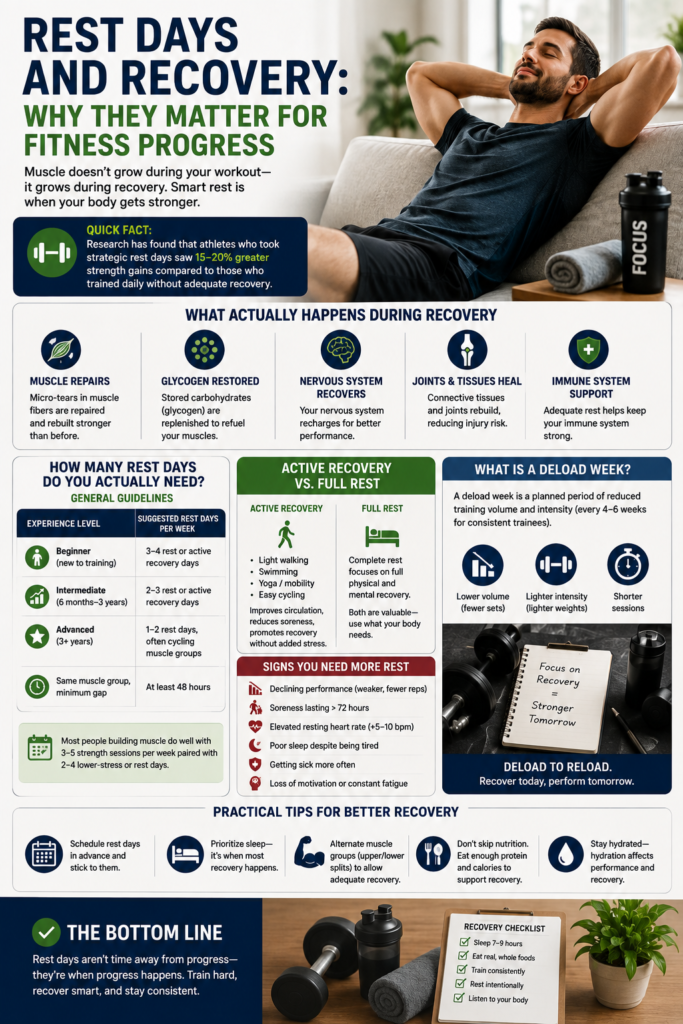
For beginners, the evidence points to a clear, simple answer: 2-3 full-body sessions per week, with at least one rest day between sessions that target the same muscles. This frequency gives your body enough practice to learn new movement patterns without overwhelming your recovery capacity, which is often the biggest limiting factor for people just starting out.
Quick Fact: Two full-body strength sessions a week is enough to build meaningful strength and muscle for most beginners — you don’t need to train daily to see real results.
Quick Reference: Beginner Strength Training Basics
| Factor | Beginner Recommendation |
|---|---|
| Frequency | 2–3 full-body sessions per week |
| Sets per exercise | 2–3 sets |
| Reps per set | 8–12 reps |
| Rest between sets | 60–90 seconds |
| Rest between sessions (same muscles) | At least 48 hours |
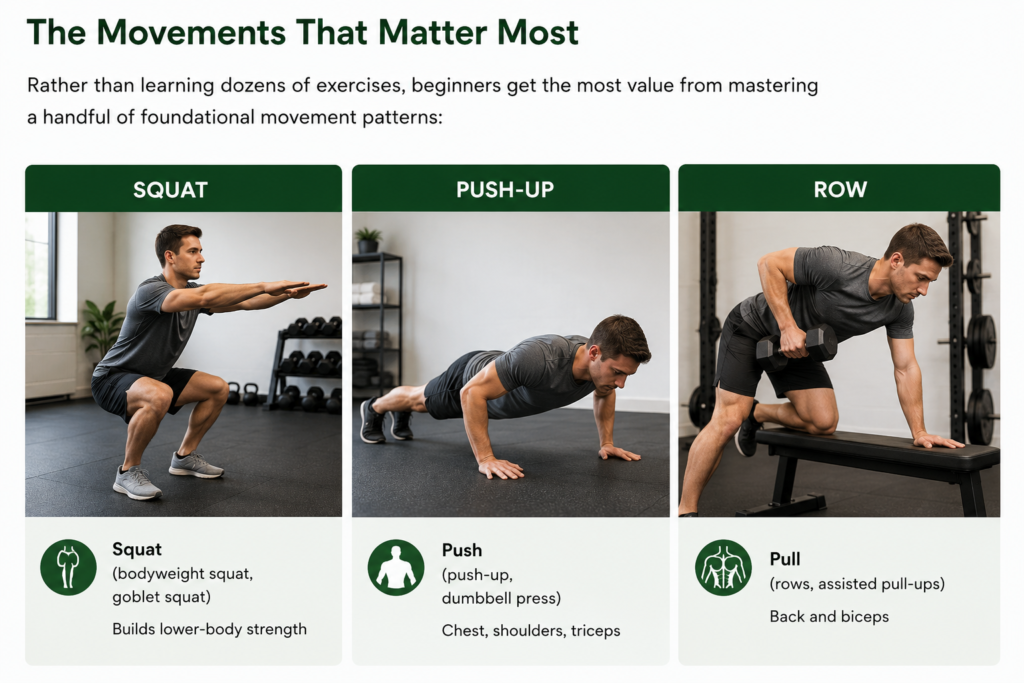
The Movements That Matter Most
Rather than learning dozens of exercises, beginners get the most value from mastering a handful of foundational movement patterns:
- Squat (bodyweight squat, goblet squat) — builds lower-body strength
- Hip hinge (deadlift, glute bridge) — targets the posterior chain and lower back
- Push (push-up, dumbbell press) — chest, shoulders, triceps
- Pull (rows, assisted pull-ups) — back and biceps
- Carry (farmer’s carry) — grip strength and core stability
Compound movements like these work multiple muscle groups at once, making them far more time-efficient than isolation exercises for someone just starting out.
A Sample Beginner Full-Body Routine
- Bodyweight squats or goblet squats — 3 sets of 10-12
- Push-ups (knee push-ups are a valid regression) — 3 sets of 8-12
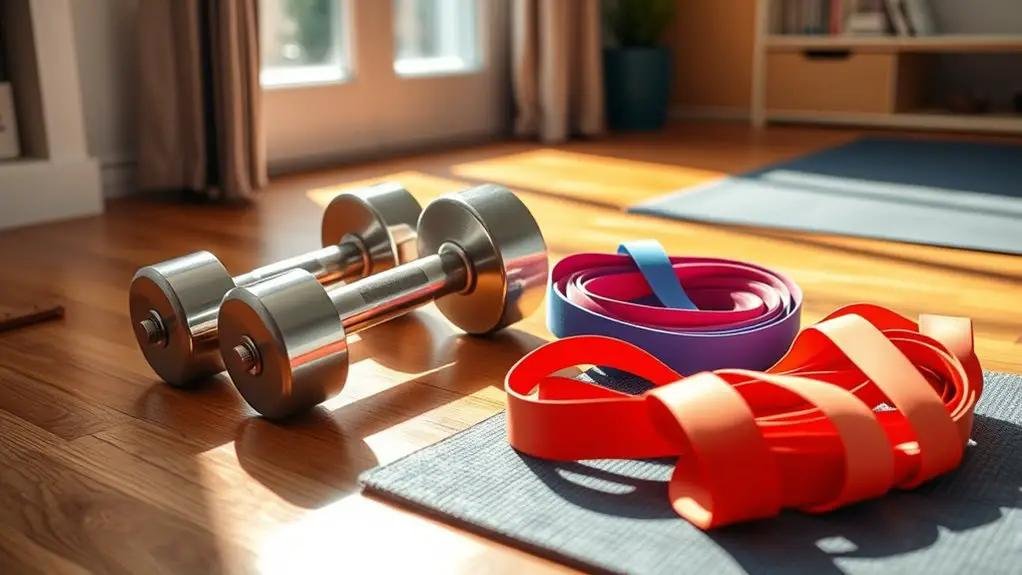
- Dumbbell or resistance band rows — 3 sets of 10-12
- Glute bridges or Romanian deadlifts — 3 sets of 10-12
- Plank — 3 sets, hold as long as good form allows
Repeat this same routine 2-3 times per week, focusing on gradually adding a rep, a small amount of weight, or better form over time — a principle called progressive overload, which is essential for continued progress.
Common Myths That Hold Beginners Back
“Lifting weights will make me bulky.” Building significant muscle mass takes months of dedicated, progressive training combined with a calorie surplus — it doesn’t happen by accident from a couple of sessions a week.
“No pain, no gain.” Some muscle soreness after a new routine is normal, but sharp or joint pain is not something to push through. Persistent soreness, poor sleep, and declining performance are signs of overtraining, not progress.
“I need a gym membership to start.” Bodyweight exercises like push-ups, squats, and lunges can effectively build real strength, especially when made progressively harder through more reps, slower tempo, or added resistance.
Practical Tips
- Warm up for 5-10 minutes with light cardio and dynamic stretching before lifting.
- Prioritize learning correct form over lifting heavier weight early on — form mistakes compound as the weight increases.
- Track your workouts in a notebook or app so you can see progress and know when to add weight or reps.
- Give yourself at least one full rest day between sessions hitting the same muscle groups.
- Pair training with adequate protein and sleep, since that’s when muscle actually repairs and grows.
If you’re building out your overall routine, it’s worth pairing this with our guides on how much protein you need per day and sleeping better naturally, since recovery depends on both.
When Should You See a Doctor?
Check with a doctor before starting a new strength training program if you have an existing heart condition, joint problems, or haven’t exercised in a long time. Also seek medical attention if you experience sharp pain during exercise, chest pain, dizziness, or joint pain that doesn’t improve with rest, since these can signal something beyond normal training discomfort.
Frequently Asked Questions
Do I need supplements to build muscle? No. While protein supports muscle repair, most people can meet their needs through diet alone. Supplements can help if your dietary intake falls short, but they aren’t required to make progress.
Is 20 minutes enough for a strength workout? Yes, especially for beginners. A focused 20-30 minute full-body session covering the major movement patterns is enough to see real progress, particularly when you’re new to training.
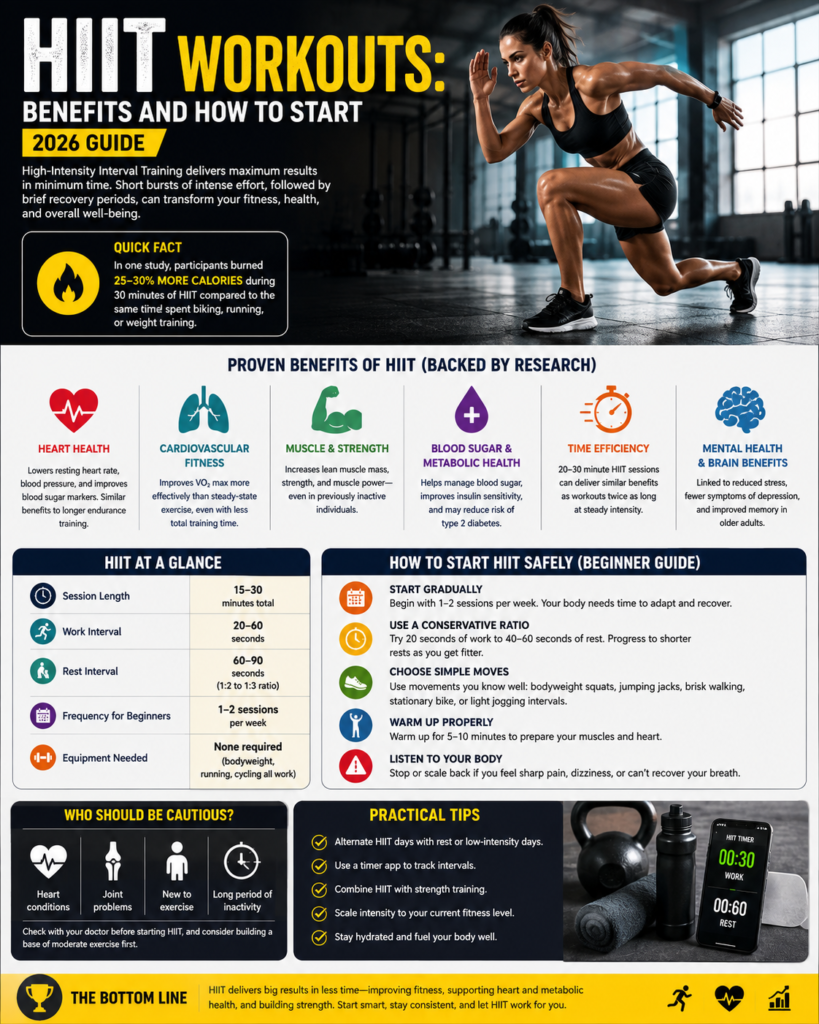
Should I do cardio and strength training on the same day? Both are fine to combine. If you’re short on time, doing strength training first tends to preserve more of your lifting performance, since fatigue from cardio can affect your lifts more than the reverse.
How long until I see results? Strength gains (feeling stronger, lifting more) often show up within 4-6 weeks, largely from improved neuromuscular coordination. Visible muscle growth typically takes longer — usually 8-12 weeks of consistent training.
Not sure how much activity you actually need? Our guide on WHO exercise guidelines breaks down the official recommendations.
The Bottom Line
Strength training for beginners doesn’t need to be complicated: two to three full-body sessions a week, a handful of core movement patterns, and consistency over time will get you further than any advanced program you’re not ready for yet. Start where you are, focus on form, and let progressive overload do the rest.
This article is for general informational purposes and is not a substitute for personalized medical or fitness advice. Consult a healthcare provider before starting a new exercise program, especially if you have an existing health condition.
References
- World Health Organization — Physical Activity Guidelines
- National Institutes of Health (NIH) — Resistance Training and Health
- Centers for Disease Control and Prevention (CDC) — Physical Activity Guidelines