
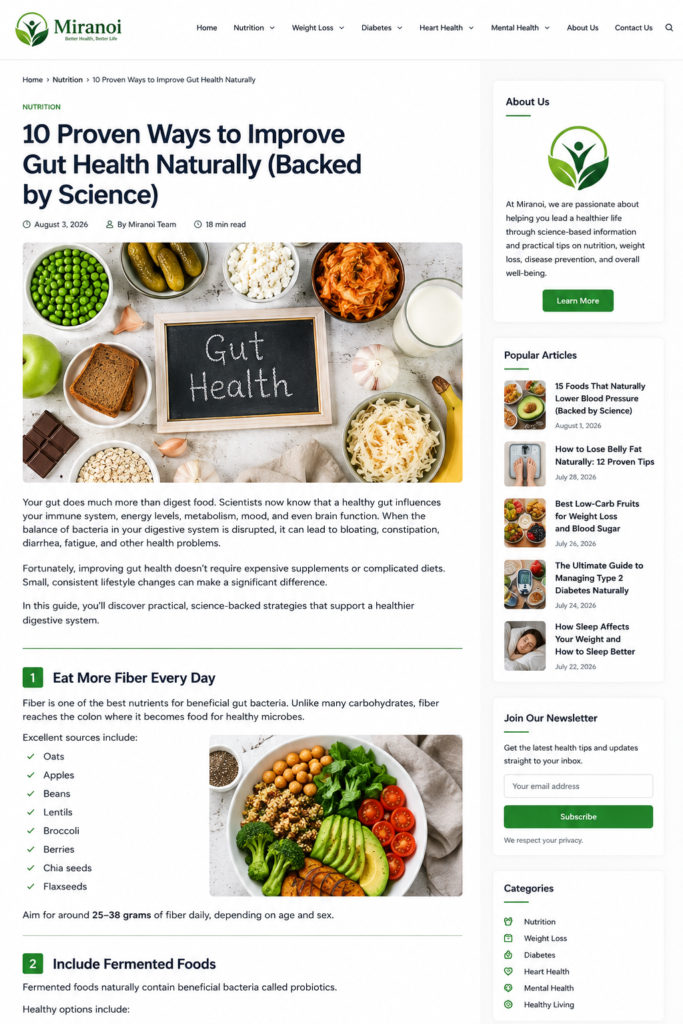
Your gut hosts trillions of microorganisms that influence far more than digestion — immunity, metabolism, and increasingly, mood. If you’ve read about why gut health matters, this guide covers the practical side: ten specific, evidence-backed changes that actually shift your gut microbiome in a beneficial direction.
Quick Fact: Research suggests aiming for 30+ different plant-based foods per week — not a typo — since microbial diversity in the gut responds more to variety of fiber sources than to any single “superfood.”
1. Prioritize Fiber-Rich Whole Foods
Fiber is the single most consistently supported lever for gut health. When gut bacteria ferment fiber, they produce short-chain fatty acids (SCFAs), compounds linked to reduced inflammation and better metabolic health. Beans, lentils, oats, barley, chia seeds, flaxseeds, and vegetables are all strong sources — and whole-food fiber is generally preferred over fiber-fortified processed snacks, which often carry added sugar without the same nutrient density.
2. Add Fermented Foods Regularly
Yogurt (with live cultures), kefir, sauerkraut, kimchi, tempeh, and miso introduce live beneficial microbes directly into your gut. If you’re new to fermented foods, start with a few tablespoons a day rather than a large serving — easing in reduces the temporary bloating some people experience.
3. Eat a Wide Variety of Plant Foods
Diversity appears to matter as much as quantity. Rather than eating large amounts of the same one or two vegetables, rotating through a broad range of fruits, vegetables, legumes, nuts, and whole grains feeds a wider range of beneficial bacterial species.
Quick Reference: 10 Ways at a Glance
| Method | Primary Mechanism |
|---|---|
| Fiber-rich whole foods | Feeds bacteria, produces SCFAs |
| Fermented foods | Introduces live beneficial microbes |
| Diverse plant foods | Supports broader microbial diversity |
| Resistant starches | Fuels beneficial bacteria as prebiotic |
| Polyphenol-rich foods | Selectively supports beneficial species |
| Limiting unnecessary antibiotics | Preserves existing microbial balance |
| Quality sleep | Supports microbiome stability |
| Regular exercise | Associated with greater microbial diversity |
| Stress management | Reduces gut-brain axis disruption |
| Gradual fiber increases | Prevents bloating, supports adherence |
4. Include Resistant Starches
Cooked-then-cooled potatoes, green bananas, cooled rice, and legumes contain resistant starch — a type of prebiotic fiber that survives digestion intact and reaches the colon, where it fuels beneficial bacteria and helps them outcompete less helpful microbes.
5. Eat More Polyphenol-Rich Foods
Berries, beets, black beans, eggplant, cocoa, tea, coffee, grapes, and nuts are rich in polyphenols — plant compounds that act as fuel for specific beneficial bacterial species while research suggests they may work against some less desirable ones.
6. Use Antibiotics Only When Necessary
Antibiotics don’t discriminate between harmful and beneficial bacteria — they can significantly disrupt gut balance. Use them only when prescribed for actual bacterial infections (not viruses), and follow your doctor’s guidance on restoring gut balance afterward, such as through probiotics or fermented foods.
7. Prioritize Sleep
Sleep quality and gut health appear to influence each other in both directions — poor sleep is associated with less favorable shifts in gut bacteria, while a healthier microbiome may support better sleep. This is one of the more overlooked levers compared to diet-focused advice.
8. Move Regularly
Regular physical activity is associated with greater gut microbial diversity independent of diet, suggesting exercise affects the gut through pathways beyond just supporting a healthier overall lifestyle.
9. Manage Stress
The gut and brain communicate directly through the vagus nerve and other pathways — chronic stress can measurably affect gut bacterial composition and gut symptoms, making stress management a legitimate gut health strategy, not just a general wellness suggestion.
10. Increase Fiber Gradually, Not All at Once
If your current fiber intake is low, ramp up slowly over several weeks rather than jumping straight to a high-fiber diet. A sudden large increase commonly causes bloating, gas, and discomfort — introducing new fiber sources one at a time makes the transition far more comfortable and sustainable.
Food Sources vs. Supplements
Across the research, fermented whole foods are generally considered advantageous over isolated probiotic supplements, since foods provide complex microbial ecosystems and additional beneficial compounds produced during fermentation — not just a single isolated strain. If you do choose fermented products, look for labels indicating “live and active cultures,” minimal added sugar, and refrigerated storage, which tends to preserve probiotic content better than shelf-stable versions.
Practical Tips
- Track how many different plant foods you eat in a typical week — most people are surprised how narrow their range actually is compared to the 30+ target.
- Add one fermented food to a meal you already eat daily (yogurt at breakfast, kimchi with dinner) rather than trying to overhaul your whole diet at once.
- Pair fiber increases with adequate water intake, since fiber needs fluid to move through the digestive system comfortably.
- Don’t treat any single food or supplement as a fix — the research consistently favors overall pattern (diet, sleep, movement, stress) over isolated interventions.
If you want to understand the “why” behind these recommendations in more depth, it’s worth reading our guide on gut health and your microbiome, along with stress management techniques, since stress reduction is one of the more evidence-backed but under-discussed gut health strategies.
Frequently Asked Questions
How long does it take to notice a difference in gut health? Some shifts in gut bacterial composition can occur within days of dietary change, though building lasting, stable improvements in diversity generally takes weeks to months of consistent habits.
Are probiotic supplements necessary if I eat fermented foods? Not necessarily. Research suggests fermented whole foods often provide advantages over isolated supplements, since they deliver a broader mix of live microbes and beneficial compounds together.
Can I improve gut health without changing my diet at all? Diet has the most direct influence, but sleep, exercise, and stress management all independently affect gut bacteria — meaningful improvement is possible even with modest dietary changes if these other areas are addressed too.
Is it normal to feel bloated when increasing fiber or fermented foods? Mild, temporary bloating is common when increasing either too quickly. Introducing changes gradually — small amounts, added slowly over weeks — typically prevents or minimizes this.
The Bottom Line
Improving gut health naturally isn’t about a single miracle food — it’s a combination of fiber, fermented foods, dietary diversity, sleep, movement, and stress management working together. Start with one or two changes from this list, hold them consistently, and build from there rather than trying to implement all ten at once.
This article is for general informational purposes and is not a substitute for personalized medical advice. Talk to a doctor before making significant dietary changes, especially if you have an existing digestive condition.
References
National Institutes of Health (NIH) — Diet, Gut Microbes, and Health Research
Medical News Today — 10 Ways to Improve Your Gut Microbiome (2025)
Stony Brook Medicine — How to Improve Gut Health: Foods & Lifestyle Tips That Work