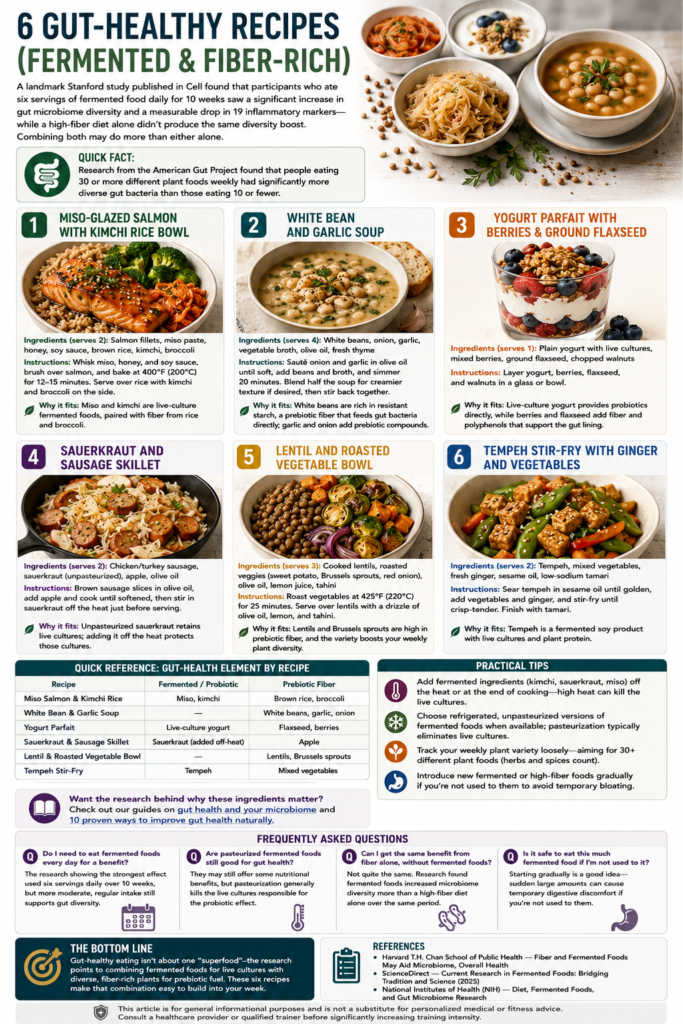
Looking for gut-healthy recipes backed by real research? A landmark Stanford study published in Cell found that participants who ate six servings of fermented food daily for 10 weeks saw a significant increase in gut microbiome diversity and a measurable drop in inflammatory markers. for 10 weeks saw a significant increase in gut microbiome diversity and a measurable drop in 19 inflammatory markers — while a high-fiber diet alone, over the same period, didn’t produce the same diversity boost. The takeaway isn’t that fiber doesn’t matter (it does, enormously) — it’s that fermented foods and fiber appear to work through different mechanisms, and combining both may do more than either alone. These six recipes are built around exactly that combination.
Quick Fact: Research from the American Gut Project found that people eating 30 or more different plant foods weekly had significantly more diverse gut bacteria than those eating 10 or fewer — variety, not just volume, appears to be a distinct driver of gut health.
1. Miso-Glazed Salmon with Kimchi Rice Bowl
Ingredients (serves 2):
- 2 salmon fillets, 1 tbsp miso paste, 1 tsp honey, 1 tsp soy sauce
- 1 cup cooked brown rice
- 1/2 cup kimchi
- 1 cup steamed broccoli
Instructions: Whisk miso, honey, and soy sauce, brush over salmon, and bake at 400°F (200°C) for 12-15 minutes. Serve over rice with kimchi and broccoli on the side.
Why it fits: Miso and kimchi are both live-culture fermented foods, paired with fiber from rice and broccoli.
2. White Bean and Garlic Soup
Ingredients (serves 4):
- 2 cans white beans, drained
- 1 onion, 4 cloves garlic, minced
- 4 cups low-sodium vegetable broth
- 2 tbsp olive oil, fresh thyme
Instructions: Sauté onion and garlic in olive oil until soft, add beans and broth, and simmer 20 minutes. Blend half the soup for a creamier texture if desired, then stir back together.
Why it fits: White beans are rich in resistant starch, a prebiotic fiber that feeds gut bacteria directly; garlic and onion add additional prebiotic compounds.
3. Yogurt Parfait with Berries and Ground Flaxseed
Ingredients (serves 1):
- 1 cup plain yogurt with live active cultures
- 1/2 cup mixed berries
- 1 tbsp ground flaxseed
- 1 tbsp chopped walnuts
Instructions: Layer yogurt, berries, flaxseed, and walnuts in a glass or bowl.
Why it fits: Live-culture yogurt provides probiotics directly, while berries and flaxseed add fiber and polyphenols that support the gut lining.
4. Sauerkraut and Sausage Skillet
Ingredients (serves 2):
- 2 chicken or turkey sausages, sliced
- 1 cup sauerkraut (unpasteurized, refrigerated)
- 1 apple, sliced
- 1 tbsp olive oil
Instructions: Brown sausage slices in olive oil, add apple and cook until softened, then stir in sauerkraut off the heat (to preserve its live cultures) just before serving.
Why it fits: Unpasteurized sauerkraut retains live cultures; adding it off the heat protects those cultures from being destroyed by cooking temperatures.
5. Lentil and Roasted Vegetable Bowl
Ingredients (serves 3):
- 1 cup cooked lentils
- 2 cups roasted vegetables (sweet potato, Brussels sprouts, red onion)
- 2 tbsp olive oil, lemon juice, tahini
Instructions: Roast vegetables at 425°F (220°C) for 25 minutes. Serve over lentils with a drizzle of olive oil, lemon, and tahini.
Why it fits: Lentils and Brussels sprouts are both high in prebiotic fiber, and the ingredient diversity here contributes toward a broader weekly plant count.
6. Tempeh Stir-Fry with Ginger and Vegetables
Ingredients (serves 2):
- 8 oz tempeh, cubed
- 2 cups mixed vegetables (snap peas, carrots, bell peppers)
- 1 tbsp fresh ginger, 1 tsp sesame oil, low-sodium tamari
Instructions: Sear tempeh in sesame oil until golden, add vegetables and ginger, and stir-fry until crisp-tender. Finish with tamari.
Why it fits: Tempeh is a fermented soy product with live cultures and plant protein, distinct from most fermented dairy options on this list.
Quick Reference: Gut-Health Element by Recipe
| Recipe | Fermented/Probiotic | Prebiotic Fiber |
|---|---|---|
| Miso Salmon & Kimchi Rice | Miso, kimchi | Brown rice, broccoli |
| White Bean & Garlic Soup | — | White beans, garlic, onion |
| Yogurt Parfait | Live-culture yogurt | Flaxseed, berries |
| Sauerkraut & Sausage Skillet | Sauerkraut (added off-heat) | Apple |
| Lentil & Roasted Vegetable Bowl | — | Lentils, Brussels sprouts |
| Tempeh Stir-Fry | Tempeh | Mixed vegetables |
Practical Tips
- Add fermented ingredients (kimchi, sauerkraut, miso) off the heat or at the end of cooking whenever possible — high heat can kill the live cultures that make them beneficial.
- Choose refrigerated, unpasteurized versions of fermented foods when available; pasteurization typically eliminates live cultures.
- Track your weekly plant variety loosely — aiming for 30+ different plant foods (herbs and spices count) is a more achievable target than it sounds once you notice how many you’re already eating.
- Introduce new fermented or high-fiber foods gradually if you’re not used to them, since a sudden increase can cause temporary bloating.
If you want the research behind why these ingredients matter, it’s worth pairing these recipes with our guides on gut health and your microbiome and 10 proven ways to improve gut health naturally, which cover the mechanisms in more depth.
Frequently Asked Questions
Do I need to eat fermented foods every day for a benefit? The research showing the strongest effect used six servings daily over 10 weeks, but more moderate, regular intake still supports gut diversity — perfection isn’t required to see benefit.
Are pasteurized fermented foods still good for gut health? They may still offer some nutritional benefits, but pasteurization generally kills the live cultures responsible for the probiotic effect, so unpasteurized, refrigerated versions are preferred when the goal is live bacteria.
Can I get the same benefit from fiber alone, without fermented foods? Not quite the same. Research comparing the two found fermented foods increased microbiome diversity more than a high-fiber diet alone over the same period, suggesting they work through different mechanisms rather than being interchangeable.
Is it safe to eat this much fermented food if I’m not used to it? Starting gradually is a good idea — sudden large amounts of fermented or high-fiber foods can cause temporary digestive discomfort in people unaccustomed to them.
The Bottom Line
Gut-healthy eating isn’t about one “superfood” — the research points to combining fermented foods for live cultures with diverse, fiber-rich plants for prebiotic fuel. These six recipes are designed to hit both targets in the same meal, making the combination easier to build into a normal week rather than treating it as a separate project.
References
- Harvard T.H. Chan School of Public Health — Fiber and Fermented Foods May Aid Microbiome, Overall Health
- ScienceDirect — Current Research in Fermented Foods: Bridging Tradition and Science (2025)
- National Institutes of Health (NIH) — Diet, Fermented Foods, and Gut Microbiome Research