How much exercise do you need to actually see health benefits? “You should exercise more” is easy advice to give and hard to act on without a real target — the World Health Organization’s guidelines exist precisely to answer that, and the number is probably more achievable, and more flexible, than you’d expect..
Quick Fact: A large study found that adults who exercised two to four times above the recommended minimum had 26-31% lower all-cause mortality and 28-38% lower cardiovascular disease mortality — but even just hitting the baseline reduced cardiovascular mortality by 22-31%, showing meaningful benefit well before “extra credit” territory.
The Core Number
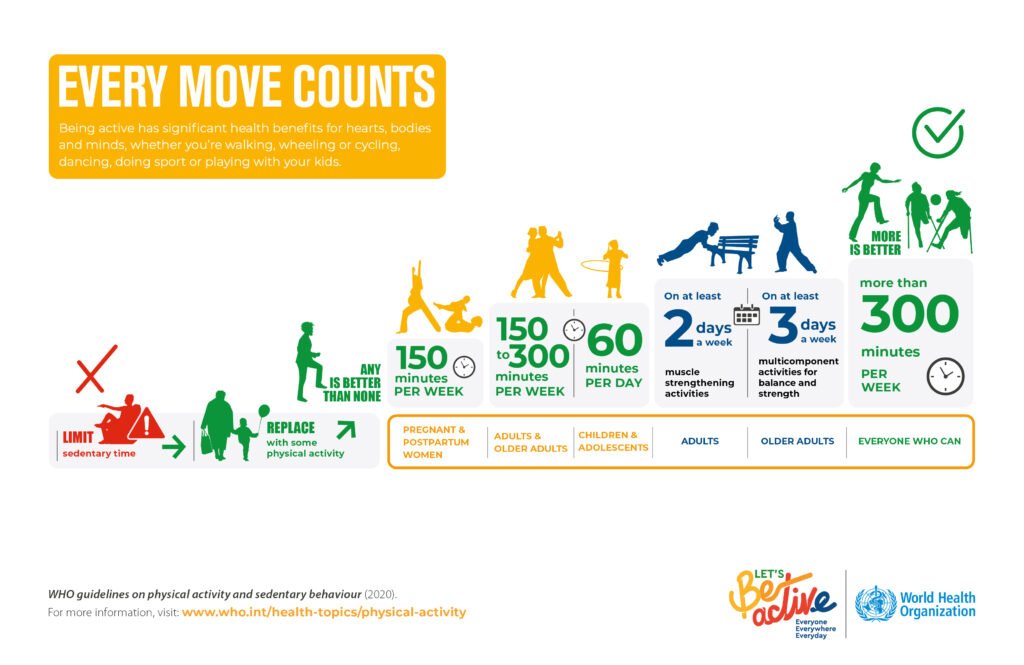
For most adults, the WHO recommends 150-300 minutes of moderate-intensity aerobic activity per week, or 75-150 minutes of vigorous-intensity activity, or an equivalent combination of both. That works out to roughly 20-45 minutes a day if spread evenly — though the guidelines don’t actually require daily sessions, just a weekly total.
On top of aerobic activity, adults should do muscle-strengthening activities involving all major muscle groups on 2 or more days per week.
Quick Reference: WHO Physical Activity Guidelines
| Activity Type | Weekly Target |
|---|---|
| Moderate-intensity aerobic | 150–300 minutes |
| Vigorous-intensity aerobic | 75–150 minutes |
| Combination of both | Equivalent mix (1 min vigorous ≈ 2 min moderate) |
| Muscle-strengthening | 2+ days per week, all major muscle groups |
| Sedentary time | Reduce where possible; some activity beats none |
What Counts as “Moderate” vs. “Vigorous”
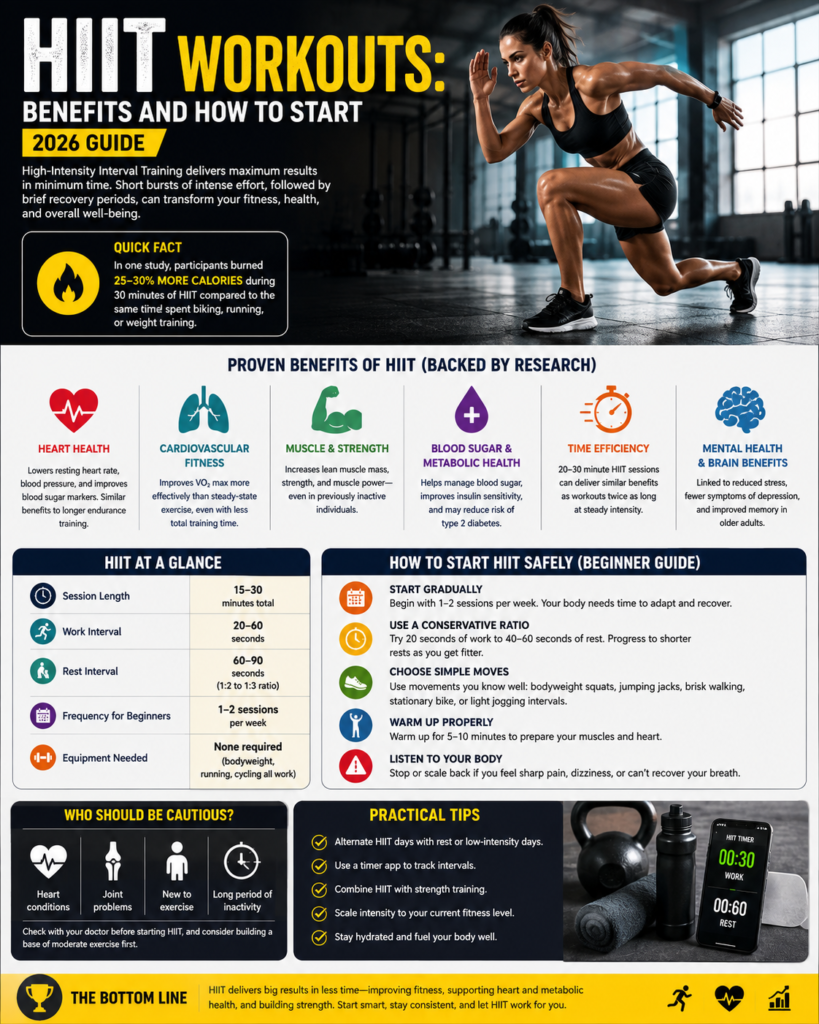
Moderate-intensity activity raises your heart rate and breathing noticeably but still allows conversation — brisk walking, casual cycling, or water aerobics are common examples. Vigorous-intensity activity makes talking in full sentences difficult — running, fast cycling, or high-intensity interval training fit here. The guidelines let you combine both: doing 1 minute of vigorous activity counts roughly the same as 2 minutes of moderate activity toward your weekly total.
Why the Range, Not Just a Minimum
The 2020 update to the WHO guidelines shifted from a hard floor to a range — 150-300 minutes, not just “150 minutes and you’re done.” This reflects research showing benefits continue to accumulate beyond the minimum, though they don’t scale infinitely. Adults who exceed 300 minutes of moderate activity (or 150 of vigorous) weekly gain further protection against chronic disease, though the additional benefit per extra minute gradually diminishes past that point.
“Some Activity Is Better Than None” Isn’t Just a Slogan
One of the more practically important messages in the WHO framework is explicit: even activity below the recommended thresholds provides real health benefit compared to being sedentary. This matters for anyone who feels like 150 minutes is an unreachable bar to even start with — the guidelines themselves reject an all-or-nothing framing. Starting with 10-15 minutes a few times a week and building from there is a legitimate approach, not a consolation prize.
Beyond Aerobic and Strength: What Else the Guidelines Cover
The 2020 WHO update also specifically addressed sedentary behavior for the first time — recommending adults reduce the amount of time spent sitting throughout the day, independent of whether they’re also meeting exercise targets. It also introduced specific recommendations for pregnant and postpartum women and people with chronic conditions or disabilities, reflecting an intentional move away from treating “exercise” as relevant only to the healthy, able-bodied general population.
Practical Tips
- Break the weekly total into whatever chunks fit your schedule — three 10-minute walks count the same as one 30-minute session toward the total.
- If 150 minutes feels overwhelming, start well below it; the research shows real benefit from partial adherence, not just full compliance.
- Combine moderate and vigorous activity if you’re short on time — mixing in some higher-intensity sessions can help you reach equivalent benefit faster.
- Don’t neglect the strength training component; aerobic activity alone doesn’t satisfy the muscle-strengthening recommendation, and both contribute independently to long-term health.
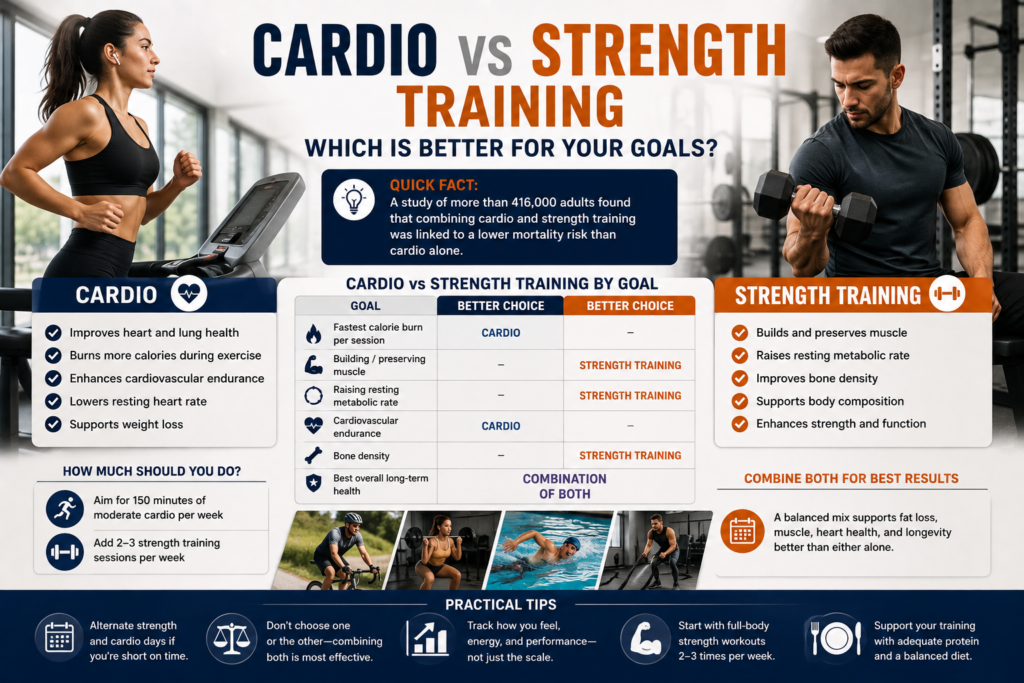
If you’re building out a complete routine, it’s worth pairing this with our guides on strength training for beginners and cardio vs strength training, since both dig deeper into the two components covered here.
When Should You See a Doctor?
Check with a doctor before starting a new, more intense exercise routine if you have an existing heart condition, joint problems, or haven’t been active in a long time. This is especially relevant if you’re aiming to substantially exceed the baseline guidelines rather than simply meet them.
Frequently Asked Questions
Do I need to exercise every day to meet the guidelines? No. The recommendation is a weekly total, not a daily requirement — spreading activity across 3-5 days is common and effective, though some activity most days tends to be easier to sustain than infrequent long sessions.
Is 150 minutes really enough, or should I aim higher? 150 minutes is the baseline associated with meaningful health benefits. Additional activity up to around 300 minutes provides further benefit, though gains per additional minute diminish somewhat beyond that range.
What if I can’t meet the recommended amount right now? The guidelines explicitly state that some activity is better than none — partial adherence still provides real benefit, and it’s a reasonable starting point rather than something to avoid until you can do the “full” amount.
Does strength training count toward the 150 minutes? No, they’re tracked separately. The aerobic minutes and the 2+ weekly strength sessions are both independently recommended, not interchangeable with each other.
The Bottom Line
The WHO guidelines boil down to a fairly approachable target: 150-300 minutes of moderate aerobic activity weekly, plus strength training twice a week — with real, documented benefit even below that threshold. The framework is designed to meet people where they are, not to gatekeep the benefits of movement behind a hard-to-reach number.
This article is for general informational purposes and is not a substitute for personalized medical or fitness advice. Consult a healthcare provider before significantly increasing your activity level, especially if you have an existing health condition.
References
- World Health Organization — Guidelines on Physical Activity and Sedentary Behaviour
- Centers for Disease Control and Prevention (CDC) — Adult Physical Activity Guidelines
- British Journal of Sports Medicine — Non-Occupational Physical Activity and Mortality Risk