
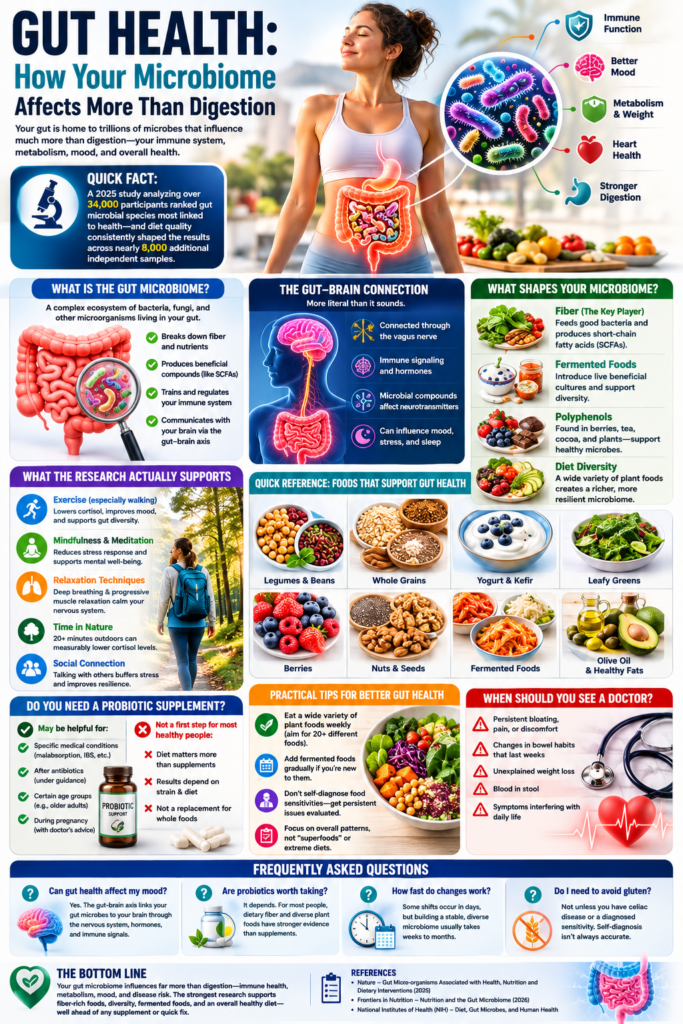
For a long time, “gut health” meant one thing: whether digestion felt fine. That framing is outdated. Research over the past few years has connected the trillions of microbes living in your gut to immune function, metabolism, and even mood — through a genuine, physical communication pathway between gut and brain, not just a figure of speech.
Quick Fact: A 2025 study analyzing over 34,000 participants developed a ranking of gut microbial species most strongly associated with health markers like BMI and disease risk — finding that diet quality reproducibly shifted which species thrived, across nearly 8,000 additional independent samples.
What Is the Gut Microbiome, Actually?
Your gut hosts a complex ecosystem of bacteria, fungi, and other microorganisms — collectively outnumbering your own human cells. This community isn’t passive. It breaks down fiber your body can’t digest on its own, produces compounds your cells use directly, trains and regulates your immune system, and communicates with your nervous system through what researchers call the gut-brain axis.
The Gut-Brain Connection Is More Literal Than It Sounds
“Trust your gut” turns out to have a biological basis. The gut and brain are connected through the vagus nerve, immune signaling, and microbial metabolites that can influence neurotransmitter activity. Current research is actively exploring how this axis relates to mood regulation and disorders of gut-brain interaction, including conditions like IBS — an area moving from lab bench toward real clinical application, though it’s still an evolving field rather than a fully settled one.
What Actually Shapes Your Microbiome
Fiber, more than almost anything else. When gut bacteria ferment fiber, they produce short-chain fatty acids (SCFAs) — compounds linked to reduced inflammation and better metabolic health. High-fiber intake consistently supports the growth of beneficial microbial species across the research.
Diet diversity and pattern. Plant-based dietary patterns tend to promote a wider range of beneficial, fiber-fermenting bacteria, while diets heavy in red and processed meat have been associated with less favorable microbial shifts in some research — though this is about overall pattern, not any single meal.
Fermented foods. Yogurt, kefir, sauerkraut, and kimchi introduce live microbial cultures and have shown measurable effects on gut microbial diversity in clinical research.
Polyphenols from fruit and plants. Compounds found in berries, tea, and cocoa have shown antimicrobial effects against certain harmful gut bacteria while sparing beneficial species like Bifidobacterium and Lactobacillus in lab studies.
Quick Reference: Foods That Support Gut Health
| Food Category | Examples | Primary Mechanism |
|---|---|---|
| High-fiber foods | Legumes, oats, vegetables | Feeds beneficial bacteria, produces SCFAs |
| Fermented foods | Yogurt, kefir, kimchi | Introduces live beneficial cultures |
| Polyphenol-rich foods | Berries, tea, cocoa | Selectively targets harmful bacteria |
| Diverse plant foods | Wide variety of vegetables, legumes, whole grains | Supports overall microbial diversity |
Do You Need a Probiotic Supplement?
This is genuinely mixed territory in the current research. Evidence for probiotics, prebiotics, and related supplements has grown over the past two decades, but effectiveness appears to depend heavily on the specific strain, the condition being addressed, and — notably — a person’s background diet, which researchers now recognize can meaningfully change how well a probiotic actually works. In other words, a probiotic isn’t a fixed solution independent of what else you’re eating. For most healthy people, getting fiber and diverse plant foods from actual food remains better supported than reaching for a supplement first.
A Word on Common Gut Health Myths
Not every digestive symptom traces back to a food “sensitivity” people assume. Recent controlled research on IBS found that some people who believe they react to gluten or wheat don’t actually respond to those specific ingredients when tested under blinded conditions — expectations and beliefs can meaningfully shape how symptoms are perceived, alongside other real factors like FODMAP content. This doesn’t dismiss real food sensitivities, but it’s a reminder that self-diagnosed triggers aren’t always the full picture.
Practical Tips
- Aim for variety, not just volume — 20+ different plant foods a week (counting vegetables, fruits, legumes, nuts, whole grains) supports more microbial diversity than eating a lot of the same few foods.
- Add fermented foods gradually if you’re new to them; sudden large amounts can cause temporary bloating.
- Don’t assume a digestive symptom means you need to eliminate a food group — get persistent issues evaluated rather than self-restricting based on guesses.
- Be skeptical of extreme claims for any single “superfood” or supplement — the research consistently points to overall dietary pattern, not one ingredient.
If you’re building a broader wellness routine, it’s worth pairing this with our guides on how much protein you need per day and stress management techniques, since both diet composition and stress are increasingly linked to gut health through the same gut-brain pathways.
If you’re ready to put this into practice, our guide on 10 proven ways to improve gut health naturally breaks down specific, science-backed changes you can start making today.
When Should You See a Doctor?
See a doctor for persistent digestive symptoms — ongoing bloating, pain, changes in bowel habits, or unexplained weight loss — rather than assuming they’re normal or self-treating indefinitely. These symptoms can have a range of causes, some requiring specific medical evaluation rather than dietary guesswork alone.
Frequently Asked Questions
Can gut health really affect my mood? Emerging research on the gut-brain axis suggests a real connection through the vagus nerve, immune signaling, and microbial metabolites, though this is an active and still-developing area of study rather than a fully settled one.
Are probiotic supplements worth taking? It depends on the strain and your specific situation. For general gut health, dietary fiber and diverse plant foods currently have broader supporting evidence than supplements for most healthy people.
Do I need to avoid gluten for better gut health? Not necessarily, unless you have celiac disease or a diagnosed sensitivity. Recent research suggests some people who believe they react to gluten may be responding to other factors, so self-diagnosis isn’t always accurate.
How quickly can diet changes affect the gut microbiome? Some microbial shifts have been observed within days of significant dietary change, though building a more diverse, stable microbiome tends to take sustained changes over weeks to months.
The Bottom Line
The gut microbiome has moved from a niche research topic to a genuine factor in immune function, metabolism, and possibly mood — connected to far more than just digestion. Fiber, dietary diversity, and fermented foods currently have the strongest, most consistent evidence behind them, well ahead of any single supplement or superfood claim.
This article is for general informational purposes and is not a substitute for personalized medical advice. Consult a healthcare provider for persistent digestive symptoms or before starting new supplements.
References
- Nature — Gut Micro-organisms Associated with Health, Nutrition and Dietary Interventions (2025)
- Frontiers in Nutrition — Nutrition and the Gut Microbiome (2026)
- National Institutes of Health (NIH) — Diet, Gut Microbes, and Human Health Research