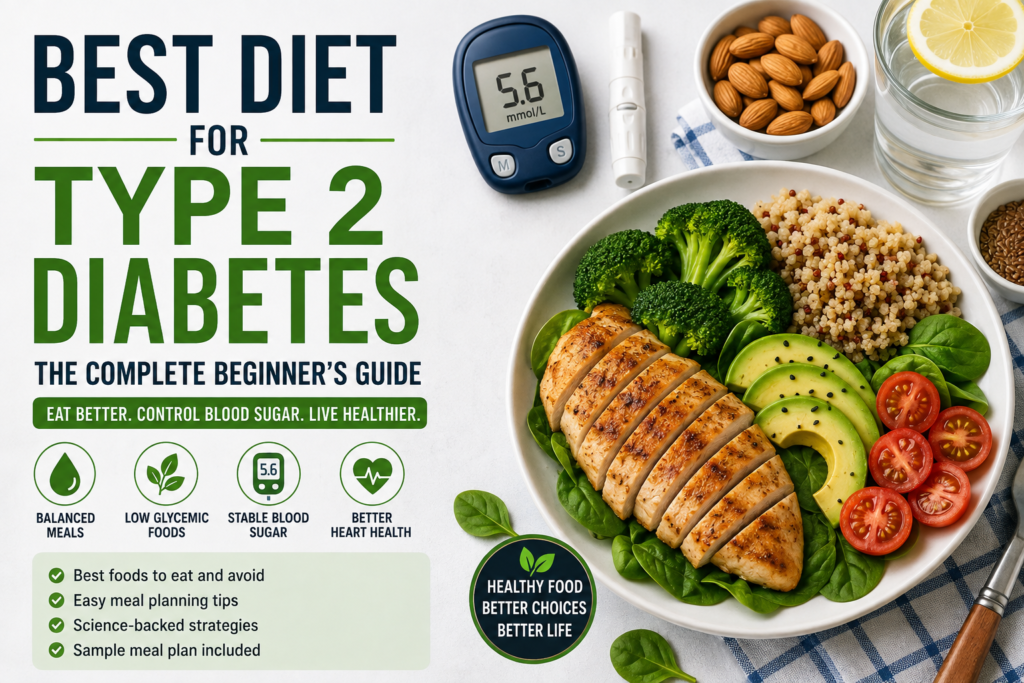
Best Diet for Type 2 Diabetes: The Complete Beginner’s Guide
Type 2 diabetes affects hundreds of millions of people worldwide, but the good news is that healthy eating can dramatically improve blood sugar control, support weight loss, reduce complications, and even help some people achieve diabetes remission.
A balanced diabetes-friendly diet isn’t about strict restrictions or eliminating your favorite foods forever. Instead, it’s about choosing nutritious foods that stabilize blood sugar while providing the energy your body needs. This complete guide explains exactly what to eat, what to avoid, and how to build healthy meals backed by scientific research.
Quick Fact: Losing just 5-10% of body weight can meaningfully improve blood sugar control for many people with Type 2 diabetes — you don’t need a complete lifestyle overhaul to see real benefits.
What Is Type 2 Diabetes?
Type 2 diabetes is a chronic condition where the body becomes resistant to insulin or doesn’t produce enough insulin to keep blood sugar levels within a healthy range. Over time, high blood sugar can damage the heart, kidneys, eyes, nerves, and blood vessels. Fortunately, diet is one of the most powerful tools for managing this condition.
Why the Best Diet for Type 2 Diabetes Matters
The foods you eat directly affect your blood sugar. Choosing healthy foods can help lower A1C levels, improve insulin sensitivity, reduce inflammation, support healthy weight loss, lower cholesterol, reduce blood pressure, and protect heart health. Research consistently shows that lifestyle changes can be just as important as medication for many people with Type 2 diabetes.
The Best Foods for Type 2 Diabetes
1. Non-Starchy Vegetables
Vegetables are rich in vitamins, minerals, antioxidants, and fiber while being naturally low in calories. Excellent choices include broccoli, spinach, kale, cauliflower, zucchini, bell peppers, cucumbers, and green beans. Try to fill half of your plate with vegetables at every meal.
2. High-Fiber Foods
Fiber slows digestion, preventing sudden spikes in blood sugar. Good sources include oats, lentils, chickpeas, beans, chia seeds, flaxseeds, pears, and apples. Adults should aim for approximately 25-38 grams of fiber each day.
3. Lean Protein
Protein helps keep you full and reduces blood sugar fluctuations. Healthy protein choices include chicken breast, turkey, eggs, fish, Greek yogurt, cottage cheese, tofu, and tempeh.
4. Healthy Fats
Healthy fats improve heart health and increase satiety. Choose olive oil, avocados, almonds, walnuts, pistachios, salmon, and sardines. Avoid trans fats and heavily processed vegetable oils whenever possible.
5. Whole Grains
Unlike refined grains, whole grains digest more slowly. Better options include brown rice, quinoa, barley, steel-cut oats, whole wheat bread, and whole grain pasta. Portion control is still important.
Foods to Avoid
Certain foods rapidly increase blood sugar. Limit or avoid sugary drinks, candy, pastries, white bread, white rice, sugary breakfast cereals, potato chips, fast food, fried foods, and processed meats. These foods often provide large amounts of calories with little nutritional value.
The Diabetes Plate Method
One of the easiest meal planning strategies is the Diabetes Plate Method:
Quick Reference: The Diabetes Plate Method
| Portion of Plate | What to Fill It With |
|---|---|
| Half plate | Non-starchy vegetables |
| Quarter plate | Lean protein |
| Quarter plate | Whole grains or healthy carbohydrates |
| Beverage | Water or unsweetened tea |
Sample One-Day Meal Plan
Breakfast: Greek yogurt, blueberries, chia seeds, a handful of almonds
Snack: Apple with peanut butter
Lunch: Grilled chicken breast, mixed salad, olive oil dressing, quinoa
Afternoon Snack: Carrot sticks with hummus
Dinner: Baked salmon, steamed broccoli, brown rice
Dessert: Fresh berries
Best Drinks for Diabetes
Choose water, sparkling water, unsweetened coffee, black coffee, green tea, or herbal tea. Limit soda, energy drinks, fruit juice, and sweetened coffee drinks.
Can You Eat Fruit?
Yes. Whole fruit contains fiber that slows sugar absorption. The best choices include berries, apples, pears, oranges, and kiwi. Eat whole fruit instead of fruit juice whenever possible.
Is Weight Loss Important?
For many people with Type 2 diabetes, losing just 5-10% of body weight can significantly improve blood sugar control. Healthy weight loss also lowers blood pressure, cholesterol, heart disease risk, and fatty liver risk.
Lifestyle Tips Beyond Diet
Healthy eating works best when combined with other healthy habits: walk at least 30 minutes daily, sleep 7-9 hours every night, manage stress, stay hydrated, monitor blood sugar regularly, and follow your doctor’s treatment plan.
Practical Tips
- Pair carbohydrates with protein or healthy fat to slow blood sugar spikes.
- Keep portions of starchy foods to about a quarter of your plate, not the majority.
- Read labels for hidden added sugars, especially in “low-fat” packaged foods.
- Stay consistent with meal timing to help keep blood sugar more stable day to day.
If you’re building a broader health routine alongside managing diabetes, it’s worth pairing this with our guides on how much protein you need per day and sleeping better naturally, since both protein intake and sleep quality directly affect blood sugar control.
Common Mistakes
Many beginners make these mistakes: skipping meals, drinking sugary beverages, eating oversized portions, avoiding all carbohydrates, ignoring fiber intake, and eating too many processed “diabetic” snacks. Focus on whole foods instead.
When Should You See a Doctor?
Work with a doctor or registered dietitian before making major dietary changes, especially if you’re on insulin or other blood-sugar-lowering medications, since diet changes can affect your medication needs. Seek prompt medical attention for symptoms like very high or very low blood sugar readings, unexplained weight loss, or wounds that won’t heal.
Frequently Asked Questions
Can Type 2 diabetes be reversed? Some people can achieve remission through significant weight loss, healthy eating, and regular exercise, especially when diagnosed early.
Are eggs safe? Yes. Most healthy adults with diabetes can enjoy eggs in moderation as part of a balanced diet.
Is rice allowed? Yes, but whole grains like brown rice or quinoa are usually better choices than white rice.
Can I eat bread? Whole grain bread is generally a healthier option than white bread. Watch portion sizes and pair it with protein or healthy fats.
If you’re pregnant or planning to be, it’s worth understanding gestational diabetes — its causes, risks, and how it’s managed.
Looking for meal ideas that fit this approach? Try our 6 diabetes-friendly dinner recipes built on low-glycemic, high-fiber ingredients.
If you’re not sure which type you’re managing, our guide on type 1 vs type 2 diabetes breaks down the key differences.
Final Thoughts
Following the best diet for Type 2 diabetes doesn't require perfection... — it requires consistent, healthy choices. Focus on whole foods, vegetables, lean proteins, healthy fats, and fiber while limiting processed foods and added sugars. Combined with regular physical activity and medical guidance, these habits can help improve blood sugar control, protect your long-term health, and enhance your quality of life.
This article is for general informational purposes and is not a substitute for personalized medical advice. Consult a doctor or registered dietitian before making significant changes to your diet or diabetes management plan.
References
National Institutes of Health (NIH) — Diabetes Diet and Nutrition Research
American Diabetes Association — Diabetes Nutrition Guidelines