Static vs dynamic stretching is a common source of confusion — many people default to the same slow, held stretches before and after every workout, without realizing the research actually points to using each type at very different times. Getting the timing right can improve performance and may reduce injury risk; getting it backward can quietly work against you.
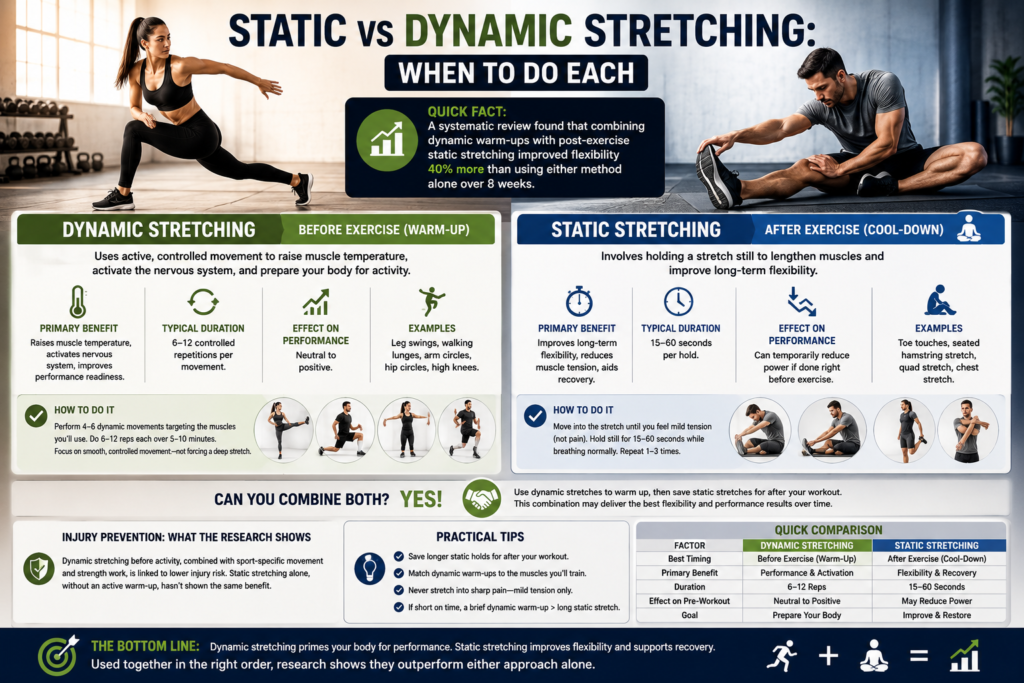
Quick Fact: A systematic review found that combining dynamic warm-ups with post-exercise static stretching improved flexibility 40% more than using either method alone over 8 weeks.
What’s the Difference?
Dynamic stretching uses active, controlled movement through a range of motion — think leg swings, walking lunges, arm circles, or hip circles. It’s designed to raise muscle temperature, activate the nervous system, and prepare your body for upcoming activity.
Static stretching involves moving into a stretch and holding it still, typically for 15-60 seconds, without bouncing or continued movement. Classic examples include reaching for your toes to stretch hamstrings or holding a standing quad stretch. It’s designed to lengthen muscles and improve long-term flexibility.
Why Timing Matters
Research has found that static stretching performed immediately before intense or explosive activity can temporarily reduce maximal strength, power, and performance. This doesn’t mean static stretching is bad — it means it’s better suited to a different part of your routine than many people assume.
Dynamic stretching, on the other hand, has been shown to improve outcomes like sprint speed and jump height when used as a warm-up, without the performance costs associated with pre-activity static holds.
Quick Reference: Static vs Dynamic Stretching
| Factor | Dynamic Stretching | Static Stretching |
|---|---|---|
| Best timing | Before exercise (warm-up) | After exercise (cool-down) |
| Primary benefit | Raises muscle temperature, activates nervous system | Improves long-term flexibility |
| Typical duration | 6–12 controlled reps per movement | 15–60 seconds per hold |
| Effect on pre-workout performance | Neutral to positive | Can temporarily reduce power if done immediately before |
| Examples | Leg swings, walking lunges, arm circles | Toe touches, seated hamstring stretch, quad pulls |
How to Use Dynamic Stretching as a Warm-Up
Perform 4-6 dynamic movements targeting the muscles you’re about to use, for about 6-12 controlled repetitions each, over roughly 5-10 minutes. Common examples include leg swings, walking lunges, hip circles, and trunk rotations. The goal is smooth, controlled movement through a comfortable range — not forcing a deep stretch.
How to Use Static Stretching After Exercise
Move into a stretch until you feel mild tension (not pain), then hold still for 15-60 seconds, breathing normally as the muscle gradually relaxes and lengthens. Muscles are warmer and more pliable after exercise, which makes this the more effective window for improving flexibility and helping muscles return to their resting length.
Can You Combine Both?
Yes — and research suggests this hybrid approach may be the most effective strategy overall. One approach: keep any pre-exercise static stretches brief (under 20 seconds) and immediately follow them with dynamic movements targeting the same muscles, which appears to eliminate the performance dip associated with longer static holds while still supporting flexibility gains over time.
Injury Prevention: What the Research Actually Shows
The relationship between stretching and injury prevention is more nuanced than “stretching prevents injury.” Dynamic stretching before activity, combined with sport-specific movement and strength work, has been associated with meaningfully lower injury risk in some research. Static stretching alone, without an active warm-up, hasn’t consistently shown the same injury-reduction effect — reinforcing that sequencing and combination matter more than either method in isolation.
Practical Tips
- Save longer static holds for after your workout or for dedicated flexibility sessions, not as your only pre-workout routine.
- Match your dynamic warm-up to the muscles you’re about to train — leg swings and lunges before a lower-body session, arm circles and trunk rotations before upper-body work.
- Don’t stretch into sharp pain at any point — mild tension is the target, not discomfort.
- If you’re short on time, a brief dynamic warm-up matters more than a long static one before training.
If you’re building a complete training routine, it’s worth pairing this with our guides on rest days and recovery and strength training for beginners, since warm-up, training, and recovery work together as a full system.
Frequently Asked Questions
Is static stretching bad for you? No — it’s simply better suited to after exercise or dedicated flexibility sessions rather than immediately before intense or explosive activity, where it can temporarily reduce power output.
How long should I hold a static stretch? Most guidance suggests 15-60 seconds per stretch, with 1-3 repetitions per muscle group, stopping at mild tension rather than pain.
Can dynamic stretching replace a full warm-up? Dynamic stretching is often the core of an effective warm-up, but combining it with a few minutes of light cardio can further help raise heart rate and body temperature before more intense activity.
Do I need to stretch every day? Not necessarily. Stretching around your workouts covers most people’s needs; dedicated flexibility sessions a few times a week can help if improving range of motion is a specific goal.
Should older adults approach stretching differently? The same general timing principles apply, though older adults or anyone returning after a long break from activity may benefit from a longer, more gradual dynamic warm-up and gentler static holds, given naturally reduced tissue elasticity with age.
The Bottom Line
Static vs dynamic stretching isn’t really a competition — it’s a matter of using the right tool at the right time. Dynamic stretching belongs in your warm-up, priming your body for performance; static stretching belongs after your workout, supporting long-term flexibility and recovery. Used together in the right order, research suggests they outperform either approach alone.
This article is for general informational purposes and is not a substitute for personalized medical or fitness advice. Consult a healthcare provider or qualified trainer if you have an existing injury or condition affecting flexibility or mobility.
References
- Cleveland Clinic — Dynamic Stretching vs Static Stretching
- Journal of Athletic Training — Stretching and Flexibility Research
- National Institutes of Health (NIH) — Exercise and Injury Prevention Research