Diabetes and exercise have a close, two-way relationship — exercise is one of the most powerful tools for managing blood sugar, sometimes rivaling medication in its effect, yet many people with diabetes feel unsure about how, when, or how hard to move. Here’s how physical activity actually affects blood sugar, and how to exercise safely with diabetes.
Quick Fact: A large meta-analysis of clinical trials found that aerobic exercise measurably improves 24-hour average blood glucose in people with type 2 diabetes, even without other changes.
Why Exercise Affects Blood Sugar So Directly
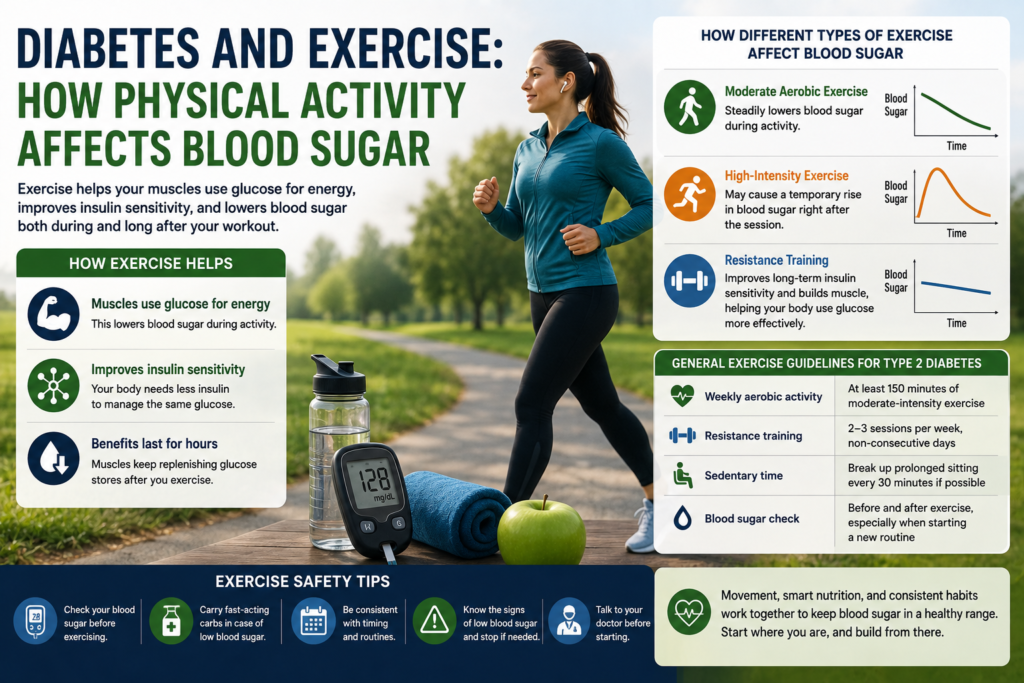
When you move, your muscles need extra energy and pull glucose from your bloodstream to fuel that activity — largely independent of insulin. This is part of why exercise can lower blood sugar both during activity and for hours afterward, as muscles continue replenishing their glucose stores. Regular exercise also improves insulin sensitivity over time, meaning your body needs less insulin to manage the same amount of glucose.
How Different Types of Exercise Affect Blood Sugar
Moderate aerobic exercise (brisk walking, cycling, swimming) tends to steadily lower blood sugar during the activity, with the effect strengthening the longer the session runs. This is generally considered the safest and most predictable type of exercise for blood sugar control.
High-intensity exercise (sprinting, heavy lifting, intense intervals) can sometimes cause a temporary rise in blood sugar right after the session. This happens because intense effort triggers stress hormones like adrenaline, which can push the liver to release extra glucose faster than muscles use it. This effect is usually short-lived and not a reason to avoid intense exercise, but it’s useful to know so an unexpected reading doesn’t cause alarm.
Resistance training improves long-term insulin sensitivity and builds muscle mass, which increases your body’s overall capacity to store and use glucose. Combining aerobic and resistance training tends to produce better blood sugar outcomes than either alone.
Quick Reference: General Exercise Guidelines for Type 2 Diabetes
| Recommendation | Detail |
|---|---|
| Weekly aerobic activity | At least 150 minutes of moderate-intensity exercise |
| Resistance training | 2–3 sessions per week, non-consecutive days |
| Sedentary time | Break up prolonged sitting every 30 minutes if possible |
| Blood sugar check | Before and after exercise, especially when starting a new routine |
These are general guidelines — individual recommendations should account for your current fitness level, medication, and any diabetes-related complications, which is why working with a doctor when starting a new routine matters.
Exercising Safely With Diabetes
Check your blood sugar before exercising, particularly if you use insulin or medications that can cause low blood sugar. Exercising with very low or very high blood sugar carries its own risks.
Keep a fast-acting carbohydrate on hand (like glucose tablets or juice) in case blood sugar drops during or after activity, especially with longer or more intense sessions.
Stay consistent with timing where possible, since regular patterns make it easier to anticipate how your blood sugar will respond and adjust medication or snacks accordingly.
Watch for signs of low blood sugar during exercise — shakiness, sudden fatigue, confusion, or sweating beyond what the activity would explain — and stop to check your levels if these occur.
Talk to your doctor before starting intense or unfamiliar exercise, particularly if you have diabetes-related complications affecting your eyes, kidneys, nerves, or heart, since some types of activity may need modification.
Practical Tips
- Start with moderate aerobic activity like walking if you’re new to exercise, and build intensity gradually.
- Log blood sugar readings around workouts for the first few weeks to learn your own patterns.
- Pair exercise with consistent meal timing, since the two interact closely with blood sugar stability.
- Don’t skip warm-up and cool-down periods — they help ease the transition for both your cardiovascular system and blood sugar response.
If you’re building a broader exercise and nutrition routine, it’s worth pairing this with our guides on strength training for beginners and the best diet for Type 2 diabetes, since diet, exercise, and blood sugar management work together.
When Should You See a Doctor?
Talk to a doctor before starting a new exercise program if you have existing diabetes complications, take insulin or medications that can cause low blood sugar, or haven’t been active in a long time. Seek prompt medical attention if you experience symptoms of severe low blood sugar during exercise, such as confusion, loss of coordination, or fainting.
Frequently Asked Questions
Can exercise alone control blood sugar without medication? For some people with prediabetes or early type 2 diabetes, consistent exercise combined with dietary changes can meaningfully improve blood sugar control. Others still need medication alongside lifestyle changes — this varies by individual and should be guided by a doctor.
Is it safe to exercise if my blood sugar is high before starting? It depends on how high and whether ketones are present, particularly for people with type 1 diabetes. Very high readings before exercise generally warrant checking with a doctor about safe thresholds for your situation.
How soon after exercise does blood sugar typically drop? Blood sugar can start dropping during exercise and continue for several hours afterward, sometimes up to 24 hours, as muscles replenish glucose stores — which is why post-exercise monitoring matters, not just during the activity.
What’s the best time of day to exercise for blood sugar control? There’s no single best time for everyone; the most important factor is consistency. Some people find exercising after meals helps blunt post-meal blood sugar spikes specifically.
The Bottom Line
Exercise remains one of the most effective, accessible tools for blood sugar management — often producing measurable improvements within weeks of consistent activity. Understanding how different types of exercise affect your blood sugar, and monitoring your own patterns, helps you use physical activity safely and effectively as part of a broader diabetes management plan.
This article is for general informational purposes and is not a substitute for personalized medical advice. Consult a healthcare provider before starting a new exercise program, especially if you take insulin or have diabetes-related complications.
References
- American College of Sports Medicine — Exercise Guidelines for Type 2 Diabetes
- American Diabetes Association — Physical Activity and Diabetes
- National Institutes of Health (NIH) — Exercise and Blood Glucose Research