When people talk about type 1 vs type 2 diabetes, they’re often surprised to learn these are fundamentally different diseases… with different causes, different onsets, and different treatment approaches — even though both result in high blood sugar. Here’s what actually separates them.
Quick Fact: Type 1 diabetes accounts for only about 5-10% of all diabetes cases — the large majority of people with diabetes have type 2.
How Blood Sugar Regulation Normally Works
When you eat, your body breaks food down into glucose, which enters your bloodstream. Your pancreas then releases insulin, a hormone that acts like a key, allowing glucose to move out of the blood and into your cells for energy. Both types of diabetes disrupt this process — just through very different mechanisms.
What Is Type 1 Diabetes?
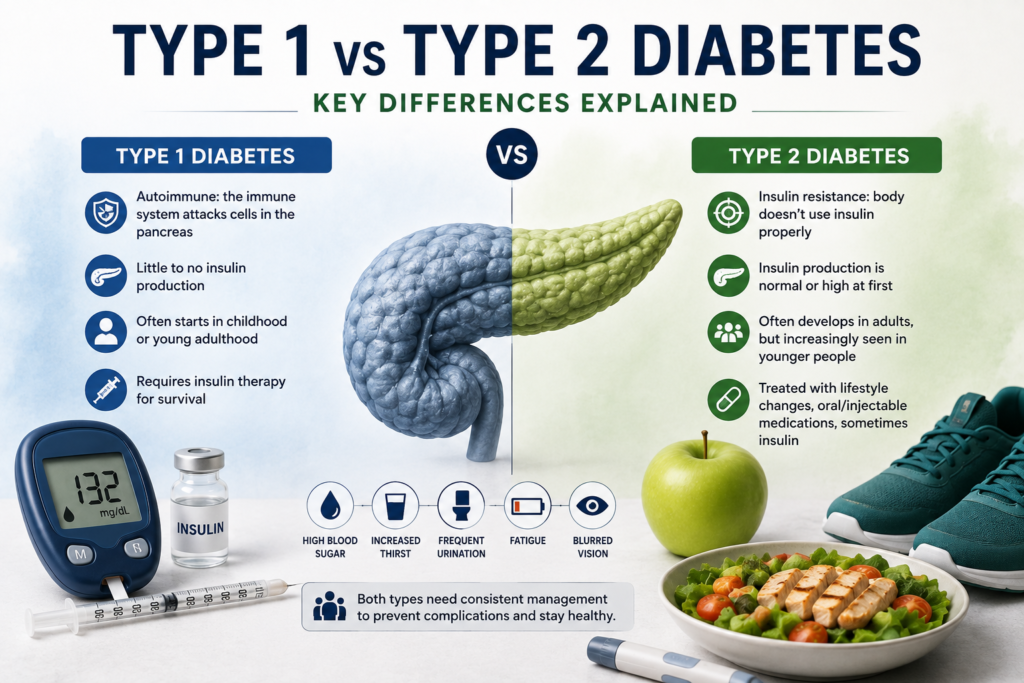
Type 1 diabetes is an autoimmune condition in which the immune system mistakenly attacks and destroys the insulin-producing cells in the pancreas. The result is that the body produces little to no insulin at all. It typically develops in childhood or early adulthood, though it can occur at any age, and symptoms often appear suddenly and severely, sometimes over just a few weeks.
What Is Type 2 Diabetes?
Type 2 diabetes develops when the body becomes resistant to insulin — the pancreas still produces insulin, sometimes even in above-average amounts, but the body’s cells don’t respond to it effectively. Over time, the pancreas may also struggle to keep up with the increased demand. Type 2 is far more common than type 1, develops gradually (often over years), and is strongly influenced by a combination of genetics and lifestyle factors like body weight, activity level, and diet.
Quick Reference: Type 1 vs Type 2 at a Glance
| Factor | Type 1 Diabetes | Type 2 Diabetes |
|---|---|---|
| Cause | Autoimmune destruction of insulin-producing cells | Insulin resistance, gradual insulin decline |
| Onset | Often sudden, over weeks | Gradual, often over years |
| Typical age | Childhood/young adulthood (can occur later) | Traditionally older adults, increasingly younger |
| Insulin production | Little to none | Normal or reduced, but not used effectively |
| Primary treatment | Lifelong insulin therapy | Lifestyle changes, oral/injectable medication, sometimes insulin |
| Prevalence | ~5–10% of diabetes cases | ~90–95% of diabetes cases |
Shared Symptoms
Despite their different causes, type 1 and type 2 diabetes often share similar symptoms once blood sugar rises significantly: increased thirst, frequent urination, increased hunger, fatigue, blurred vision, and unexplained weight loss. The key difference is often the speed of onset — type 1 symptoms tend to appear rapidly and noticeably, while type 2 symptoms can develop so slowly that many people don’t notice them for years, or don’t experience clear symptoms at all before diagnosis.
How They’re Diagnosed Differently
Type 2 diabetes is typically diagnosed through blood tests measuring fasting glucose, A1C, or post-meal glucose. Type 1 diabetes may involve these same tests, but doctors often also check for specific autoimmune antibodies — such as anti-islet cell or anti-insulin antibodies — to confirm the autoimmune process driving the condition, since this affects treatment decisions.
Treatment Approaches
Type 1 treatment centers on insulin, since the body can no longer produce it. This typically means multiple daily injections or an insulin pump, combined with carbohydrate counting to match insulin doses to food intake.
Type 2 treatment usually starts with lifestyle changes — improved diet, increased physical activity, and weight management — often combined with oral or injectable medications. Some people with type 2 diabetes eventually need insulin as well, particularly if the condition progresses, but it isn’t universal the way it is with type 1.
Practical Tips
- If you have a family history of either type, ask your doctor about your personal risk and appropriate screening frequency.
- Don’t assume type 2 diabetes symptoms will be obvious — routine screening matters more than waiting to feel unwell.
- If newly diagnosed, understanding which type you have shapes every part of your management plan, so don’t hesitate to ask your doctor to clarify or confirm.
- Track your numbers consistently regardless of type — the patterns matter more than any single reading.
If you’re managing type 2 diabetes specifically, it’s worth pairing this with our guides on the best diet for Type 2 diabetes and normal blood sugar levels, since both build directly on the concepts here.
When Should You See a Doctor?
Seek prompt medical attention if you or your child experience rapid-onset symptoms like extreme thirst, frequent urination, unexplained weight loss, or fatigue, since these can signal type 1 diabetes and require urgent evaluation. For type 2 risk factors — family history, excess weight, sedentary lifestyle — routine screening with a doctor is the better path than waiting for symptoms to appear.
Frequently Asked Questions
Can type 2 diabetes turn into type 1? No. They’re different diseases with different underlying causes. However, some people are initially misdiagnosed and later found to have a slower-developing form of autoimmune diabetes, which is why accurate testing matters.
Is type 1 diabetes caused by eating too much sugar? No. Type 1 is an autoimmune condition unrelated to diet or lifestyle. Type 2 has stronger lifestyle links, though genetics and other factors play a significant role too.
Can type 1 diabetes develop in adults? Yes. While it’s often associated with childhood onset, type 1 diabetes can develop at any age, including well into adulthood.
Is one type more serious than the other? Both are serious, lifelong conditions that require consistent management. Type 1 carries immediate risks without insulin treatment, while type 2 carries long-term complication risks if blood sugar remains poorly controlled over time.
Understanding your numbers matters long-term — our guide on diabetes complications covers the warning signs worth knowing.
The Bottom Line
Type 1 and type 2 diabetes share a name and a core problem — high blood sugar — but almost everything else about them differs: their causes, how quickly they develop, and how they’re treated. Understanding which type you or a loved one is managing is the foundation for building an effective, appropriate care plan.
This article is for general informational purposes and is not a substitute for personalized medical advice. Consult a healthcare provider for diagnosis and an individualized diabetes management plan.
References
- American Diabetes Association — Type 1 and Type 2 Diabetes
- CDC — Diabetes Basics
- National Institutes of Health (NIH) — Diabetes Research