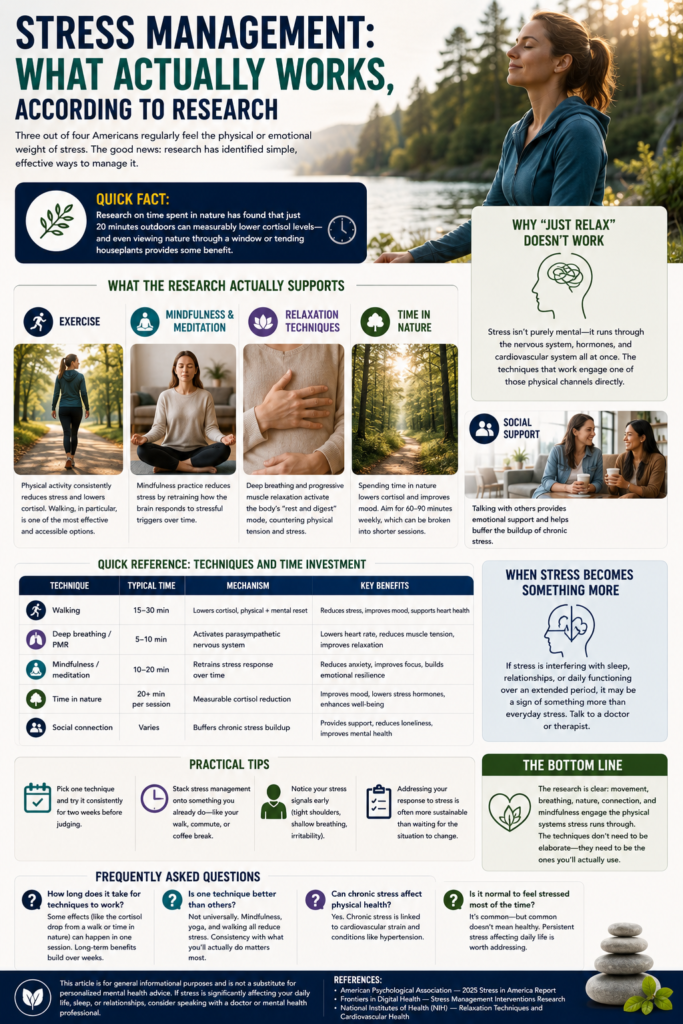
Stress management techniques don’t have to mean an hour of meditation or a complete lifestyle overhaul. Three out of four Americans regularly feel the physical or emotional weight of stress, according to the APA’s 2025 Stress in America report — and the research on what actually helps is more specific than the usual “just relax” advice.
Quick Fact: Research on time spent in nature has found that just 20 minutes outdoors can measurably lower cortisol levels — and even viewing nature through a window or tending houseplants provides some benefit.
Why “Just Relax” Doesn’t Work as Advice
Stress isn’t purely mental — it runs through the nervous system, hormones, and cardiovascular system all at once. That’s part of why willpower alone rarely resolves it. The techniques that actually show up in the research work by engaging one of those physical channels directly, not just by telling your brain to calm down.
What the Research Actually Supports
Exercise. Physical activity remains one of the most consistently effective stress interventions across studies, working through both physiological (lower cortisol, improved cardiovascular function) and psychological pathways. Walking specifically has repeatedly shown up in trials as effective for reducing self-reported stress, which matters because it’s the lowest-barrier option on this list.
Mindfulness and meditation. Multiple reviews find mindfulness practice reduces stress through a combination of neurobiological and psychological mechanisms — essentially retraining how the brain responds to stressful triggers rather than just distracting from them.
Relaxation techniques. Progressive muscle relaxation and diaphragmatic (deep belly) breathing work by activating the parasympathetic nervous system — your body’s “rest and digest” mode — directly countering the physical tension stress creates. A 2025 systematic review found these techniques specifically improved quality of life in people managing cardiovascular disease and hypertension, populations where stress and physical health are tightly linked.
Time in nature. This is one of the more evidence-backed “low effort” interventions. Research suggests 60-90 minutes weekly, which can be broken into shorter sessions rather than one long block.
Social support. Talking with others, even briefly, has repeatedly shown protective effects against the buildup of chronic stress — one of the more overlooked techniques compared to breathing exercises and meditation apps.
Quick Reference: Techniques and Time Investment
| Technique | Typical Time | Mechanism |
|---|---|---|
| Walking | 15–30 min | Lowers cortisol, physical + mental reset |
| Deep breathing / PMR | 5–10 min | Activates parasympathetic nervous system |
| Mindfulness/meditation | 10–20 min | Retrains stress response over time |
| Time in nature | 20+ min per session | Measurable cortisol reduction |
| Social connection | Varies | Buffers chronic stress buildup |
Building a Realistic Routine
None of this requires an hour of meditation daily. A short walk, five minutes of deep breathing before a stressful meeting, or texting a friend during a hard week all count. The research on personalized response is worth noting too — trials comparing mindfulness, yoga, and walking found all three effective, but which one works best tends to vary by individual, which is really just permission to pick the one you’ll actually do.
When Stress Becomes Something More
Everyday stress and a mental health condition like an anxiety disorder aren’t the same thing, though they can overlap. If stress is interfering with sleep, relationships, or daily functioning over an extended period — not just a hard week, but a hard few months — that’s a signal worth bringing to a doctor or therapist rather than managing solely with self-help techniques.
Practical Tips
- Pick one technique and try it consistently for two weeks before judging whether it works for you.
- Stack stress management onto something you already do — a walk you’re already taking, a commute, a coffee break — rather than adding an entirely new block of time.
- Notice your own stress signals early (tight shoulders, shallow breathing, irritability) rather than waiting until it’s overwhelming to intervene.
- If work is a major stressor, research suggests addressing your response to it is often more sustainable than waiting for the external situation to change — though raising real workload concerns with a supervisor is also a valid step.
If you’re building a broader wellness routine, it’s worth pairing this with our guides on sleeping better naturally and strength training for beginners, since sleep and exercise both directly support stress resilience.
Frequently Asked Questions
How long does it take for stress management techniques to work? Some effects, like the cortisol drop from time in nature or a short walk, can happen within one session. Longer-term resilience from practices like meditation tends to build over weeks of consistent use.
Is one technique clearly better than the others? Not universally — research on personalized trials found mindfulness, yoga, and walking all significantly reduced stress, with individual response varying. Consistency with a technique you’ll stick with tends to matter more than which one you pick.
Can chronic stress actually affect physical health? Yes. Chronic stress is linked to cardiovascular strain and is a significant factor in conditions like hypertension, which is part of why relaxation techniques are studied specifically in cardiovascular patients.
Is it normal to feel stressed most of the time? It’s common — roughly three-quarters of American adults report regular stress symptoms — but common doesn’t mean it should be ignored. Persistent stress affecting daily life is worth addressing rather than accepting as the norm.
Processing feelings on paper is another evidence-backed tool worth trying — our guide on journaling for mental health covers what decades of research actually show.
The Bottom Line
Stress management research keeps pointing to the same handful of tools — movement, breathing, nature, connection, and mindfulness — not because they’re trendy, but because they engage the actual physical systems stress runs through. The techniques don’t need to be elaborate; they need to be the ones you’ll actually use.
This article is for general informational purposes and is not a substitute for personalized mental health advice. If stress is significantly affecting your daily life, sleep, or relationships, consider speaking with a doctor or mental health professional.
References
- American Psychological Association — 2025 Stress in America Report
- Frontiers in Digital Health — Stress Management Interventions Research
- National Institutes of Health (NIH) — Relaxation Techniques and Cardiovascular Health