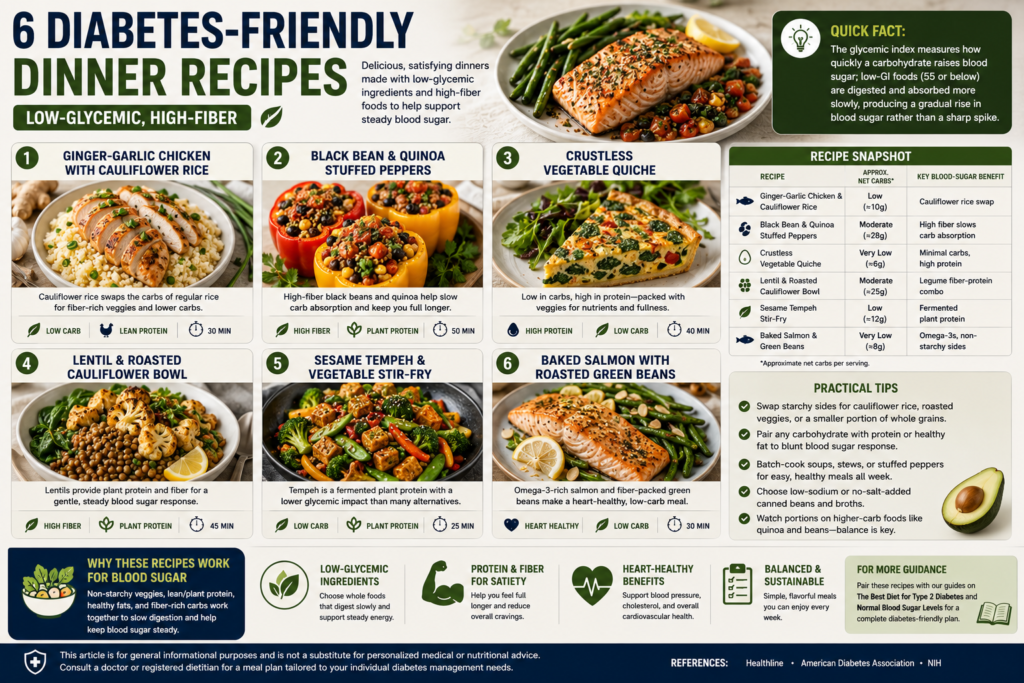
Diabetes-friendly doesn’t have to mean bland or repetitive. These six dinner recipes are built around low-glycemic, high-fiber ingredients — the combination research consistently links to steadier blood sugar — without sacrificing real flavor.
More useful than the recipes themselves is the pattern underneath them. Once you see the structure, you can build a diabetes-friendly dinner from whatever is in your kitchen, which is covered further down.
Quick Fact: The glycemic index measures how quickly a carbohydrate raises blood sugar; low-GI foods (typically 55 or below) are digested and absorbed more slowly, producing a gradual rise in blood sugar rather than a sharp spike.
Why These Recipes Work for Blood Sugar
Each recipe here leans on the same core principles: non-starchy vegetables as the base, lean protein or plant protein for satiety, fiber-rich carbohydrates in controlled portions, and healthy fats to help slow digestion further. This combination doesn’t just support blood sugar stability — it also improves how full and satisfied a meal feels, which matters for anyone managing portions long-term.
1. Ginger-Garlic Chicken with Cauliflower Rice
Ingredients (serves 2):
- 2 boneless chicken breasts or thighs
- 1 small head cauliflower, riced (or pre-riced cauliflower)
- 2 cloves garlic, 1 tbsp fresh ginger, minced
- 1 tbsp olive oil, chives to garnish
Instructions: Season and cook chicken in olive oil until done. Sauté cauliflower rice with garlic and ginger for 5-7 minutes until tender. Serve chicken over the cauliflower rice, garnished with chives.
Why it fits: Cauliflower rice offers a fraction of the carbs of regular rice while still providing volume and fiber.
2. Black Bean and Quinoa Stuffed Peppers
Ingredients (serves 4):
- 4 bell peppers, halved and seeded
- 1 cup cooked quinoa, 1 can black beans, drained
- 1 cup diced tomatoes, corn kernels, cumin, chili powder
- Shredded cheese (optional, modest amount)
Instructions: Mix quinoa, beans, tomatoes, corn, and spices. Stuff into pepper halves, top lightly with cheese if using, and bake at 375°F (190°C) for 25 minutes until peppers are tender.
Why it fits: Black beans pair fiber with protein, which slows digestion and helps blood sugar rise gradually rather than spiking.
3. Crustless Vegetable Quiche
Ingredients (serves 4):
- 6 eggs, 1/2 cup milk
- 1 cup spinach, 1/2 cup diced bell pepper, 1/4 cup diced onion
- 1/4 cup shredded cheese, salt and pepper
Instructions: Whisk eggs and milk, stir in vegetables and cheese, and pour into a greased pie dish. Bake at 350°F (175°C) for 30-35 minutes until set.
Why it fits: Naturally low in carbohydrates with roughly 20g of protein per serving, making it a filling option without a starchy base.
4. Lentil and Roasted Cauliflower Bowl
Ingredients (serves 2):
- 1 cup cooked lentils
- 1 small head cauliflower, cut into florets
- 2 cups spinach or mixed greens
- 1 tbsp olive oil, lemon juice, cumin
Instructions: Toss cauliflower with olive oil and cumin, roast at 425°F (220°C) for 20-25 minutes until browned. Serve over lentils and greens with a squeeze of lemon.
Why it fits: Lentils are especially high in fiber relative to their carbohydrate content, which supports a gentler blood sugar response than white rice or potatoes.
5. Sesame Tempeh and Vegetable Stir-Fry
Ingredients (serves 2):
- 8 oz tempeh, cubed
- 2 cups mixed vegetables (broccoli, snap peas, carrots)
- 1 tbsp tamari or low-sodium soy sauce, 1 tsp sesame oil, fresh ginger
Instructions: Sear tempeh in sesame oil until golden. Add vegetables and stir-fry until crisp-tender, then finish with tamari and ginger.
Why it fits: Tempeh provides fermented plant protein with a lower glycemic impact than many starchy protein alternatives.
6. Baked Salmon with Roasted Green Beans
Ingredients (serves 2):
- 2 salmon fillets
- 2 cups green beans, trimmed
- 1 tbsp olive oil, lemon, garlic, almonds (optional)
Instructions: Toss green beans with olive oil and garlic, roast at 400°F (200°C) for 15 minutes. Add salmon to the pan for the final 12-15 minutes until it flakes easily. Finish with lemon and toasted almonds if desired.
Why it fits: A minimal-carb dinner built around omega-3-rich fish and fiber-forward vegetables rather than starchy sides.
Quick Reference: Recipe Snapshot
| Recipe | Approx. Net Carbs | Key Blood-Sugar Benefit |
|---|---|---|
| Ginger-Garlic Chicken & Cauliflower Rice | Low | Cauliflower rice swap |
| Black Bean & Quinoa Stuffed Peppers | Moderate | High fiber slows carb absorption |
| Crustless Vegetable Quiche | Very low | Minimal carbs, high protein |
| Lentil & Roasted Cauliflower Bowl | Moderate | Legume fiber-protein combo |
| Sesame Tempeh Stir-Fry | Low | Fermented plant protein |
| Baked Salmon & Green Beans | Very low | Omega-3s, non-starchy sides |
How to Build Any Diabetes-Friendly Dinner
Once you understand the structure, you don’t need a recipe. Every dinner on this list follows the same three-part template:
Half the plate: non-starchy vegetables. Broccoli, spinach, peppers, zucchini, green beans, cauliflower. These add volume and fiber with minimal impact on blood sugar.
A quarter: lean protein. Chicken, fish, tofu, eggs, or legumes. Protein slows gastric emptying, which blunts the glucose rise from whatever carbohydrate is on the plate.
A quarter: high-fiber carbohydrate. Quinoa, barley, lentils, sweet potato, or whole grain pasta — not white rice, white bread, or regular pasta.
The order you eat matters too. Research on meal sequencing has found that eating vegetables and protein before carbohydrates produces a lower post-meal glucose rise than eating the same meal in reverse order. Same food, same calories, different response.
Quick Reference: Swaps That Lower Glycemic Impact
| Instead of | Use | Why |
|---|---|---|
| White rice | Cauliflower rice or barley | Far fewer carbs, more fiber |
| Regular pasta | Lentil or whole grain pasta | Higher fiber and protein |
| White potato | Sweet potato (portioned) | Lower glycemic index |
| Breadcrumb coating | Almond flour or ground nuts | Minimal carbohydrate |
| Bottled teriyaki/BBQ sauce | Tamari with ginger and garlic | Removes hidden added sugar |
| Fruit juice with dinner | Water with lemon or sparkling water | No rapid glucose load |
What Actually Happens When You Switch
The most common report from people who move to this style of eating isn’t about numbers — it’s about the evening.
Meals built on refined carbohydrates tend to produce a sharp rise followed by a drop, which many people experience as fatigue an hour or two after dinner, sometimes with renewed hunger before bed. Meals structured around fiber and protein tend to flatten that curve.
The second common observation: portion sizes feel larger. Filling half the plate with non-starchy vegetables means more food by volume for a smaller glycemic load — which is why this approach tends to be sustainable in a way that pure restriction isn’t.
One realistic caveat worth setting: individual glucose responses to the same meal vary considerably between people. These recipes follow well-established principles, but if you monitor your blood sugar, your own readings are more informative than any general guideline.
Common Mistakes
Removing carbohydrates entirely. The goal is choosing better carbohydrates and controlling portions, not eliminating them. Overly restrictive approaches tend to collapse and are rarely necessary.
Assuming “sugar-free” means blood-sugar-friendly. Many sugar-free products are still high in refined starch, which raises glucose similarly.
Eating carbohydrates first. Starting the meal with bread or rice produces a higher glucose rise than starting with vegetables and protein — the same meal, ordered differently.
Forgetting that fat slows everything down. A meal high in fat can delay the glucose rise for hours, sometimes producing a late spike that seems disconnected from dinner. This matters most for anyone timing medication around meals.
Overlooking sauces and dressings. Barbecue sauce, teriyaki, sweet chili, and many bottled dressings carry substantial added sugar in small volumes.
Ignoring portion size on “healthy” carbs. Quinoa and sweet potato are better choices than white rice, but they still contain meaningful carbohydrate. Better doesn’t mean unlimited.
Practical Tips
- Swap starchy sides (rice, potatoes, pasta) for cauliflower rice, roasted non-starchy vegetables, or a smaller portion of a whole grain.
- Pair any carbohydrate with protein or fat in the same meal to blunt the blood sugar response.
- Eat vegetables and protein before the carbohydrate portion of the meal, not alongside or after.
- Batch-cook the lentil bowl or stuffed peppers — both reheat well for lunches through the week.
- Watch portions on naturally higher-carb ingredients like quinoa and beans rather than avoiding them entirely; they still offer valuable fiber and nutrients.
- Check labels on sauces and marinades, where added sugar hides in small volumes.
If you’re managing diabetes more broadly, it’s worth pairing these recipes with our guides on the best diet for Type 2 diabetes and normal blood sugar levels, since portion strategy and target ranges both shape how these recipes fit your specific plan.
When Should You See a Doctor?
Talk to a doctor or registered dietitian before making significant dietary changes if you take insulin or medications that can cause low blood sugar, since altering carbohydrate intake may require a medication adjustment. Also worth raising: consistently high or low readings after meals despite following general guidance, since individual carbohydrate targets vary considerably and should be set for your specific situation.
Frequently Asked Questions
Can I eat carbohydrates at all with diabetes? Yes. The focus is on the type and portion of carbohydrate — whole, fiber-rich sources in reasonable amounts, paired with protein or fat, rather than eliminating carbs entirely.
How many carbs should a diabetes-friendly dinner have? This varies significantly by individual, medication, and activity level. Many general diabetes meal plans target roughly 30-45g of carbohydrates per meal, but your specific target should come from your doctor or dietitian.
Does the order I eat my food really affect blood sugar? Research on meal sequencing suggests it does — eating vegetables and protein before carbohydrates has been associated with a lower post-meal glucose rise compared to eating the same meal in the opposite order.
Are these recipes suitable for prediabetes too? Yes, the same low-glycemic, high-fiber principles that support blood sugar in diabetes are also commonly recommended for prediabetes management.
Can I make these recipes ahead for the week? Most of them hold up well refrigerated for 3-4 days, particularly the stuffed peppers, quiche, and lentil bowl, making them solid options for batch cooking.
The Bottom Line
Diabetes-friendly cooking doesn’t mean giving up flavor or variety — it means building meals around fiber, lean or plant protein, and non-starchy vegetables, with carbohydrates chosen and portioned thoughtfully. Learn the plate template and the eating order, and you stop needing recipes at all: these six become examples of a pattern rather than a list to follow.
This article is for general informational purposes and is not a substitute for personalized medical or nutritional advice. Consult a doctor or registered dietitian for a meal plan tailored to your individual diabetes management needs.
References
- American Diabetes Association — Meal Planning for Diabetes
- Healthline — Diabetes-Friendly Dinner Recipes
- National Institutes of Health (NIH) — Glycemic Index Research