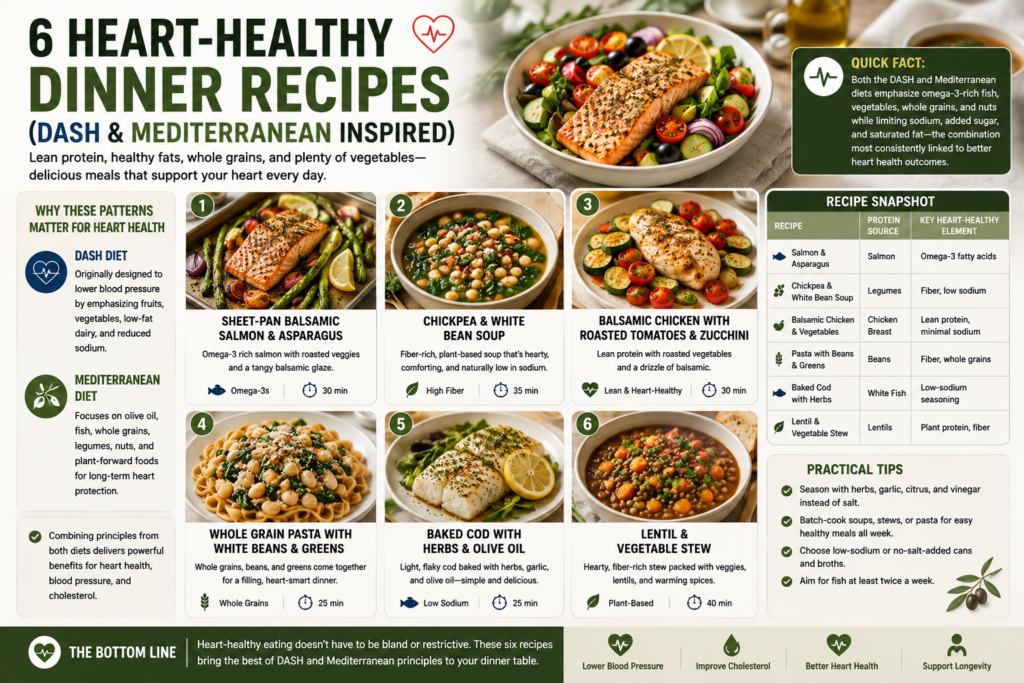
Looking for heart-healthy dinner recipes that don’t feel like a compromise? A 2023 scientific statement from the American Heart Association identified the DASH and Mediterranean diets as two of the eating patterns most closely aligned with heart-healthy recommendations, backed by decades of research.. Here are six dinner recipes built around their core principles — lean protein, healthy fats, whole grains, and plenty of vegetables — without sacrificing flavor.
Quick Fact: Both the DASH and Mediterranean diets emphasize omega-3-rich fish, vegetables, whole grains, and nuts while limiting sodium, added sugar, and saturated fat — the combination most consistently linked to better heart health outcomes.
Why These Two Eating Patterns Matter for Heart Health
The DASH diet (Dietary Approaches to Stop Hypertension) was originally developed specifically to lower blood pressure through a structured approach emphasizing fruits, vegetables, low-fat dairy, and reduced sodium. The Mediterranean diet shares many of the same foundations but places extra emphasis on olive oil and oily fish for their omega-3 content. Research increasingly suggests combining principles from both delivers strong benefits for heart health, blood pressure, and cholesterol.
1. Sheet-Pan Balsamic Salmon and Asparagus
Ingredients (serves 2):
- 2 salmon fillets
- 1 bunch asparagus, trimmed
- 1/2 red onion, sliced
- 2 tbsp balsamic vinegar, 1 tbsp olive oil
- 1 tsp Dijon mustard, 1 clove garlic, minced
- Lemon wedges to finish
Instructions: Preheat oven to 400°F (200°C). Whisk balsamic, olive oil, Dijon, and garlic, then toss with asparagus and onion on a lined baking sheet. Nestle salmon among the vegetables, brush with the remaining glaze, and roast 15-18 minutes until salmon flakes easily. Finish with a squeeze of lemon.
Why it fits: Salmon delivers heart-healthy omega-3s, a hallmark of the Mediterranean approach.
2. Chickpea and White Bean Soup
Ingredients (serves 4):
- 1 can chickpeas, 1 can white beans (drained and rinsed)
- 1 onion, diced, 2 cloves garlic, minced
- 4 cups low-sodium vegetable broth
- 2 cups chopped kale or spinach
- 1 tbsp olive oil, herbs and pepper to taste
Instructions: Sauté onion and garlic in olive oil until soft. Add broth, chickpeas, and beans, and simmer 15 minutes. Stir in greens until wilted, and season with herbs and pepper rather than added salt.
Why it fits: High in fiber and plant protein while naturally low in sodium — a DASH diet staple.
3. Balsamic Chicken with Roasted Tomatoes and Zucchini
Ingredients (serves 2):
- 2 boneless chicken breasts
- 1 cup cherry tomatoes, 1 zucchini, sliced
- 2 tbsp balsamic vinegar, 1 tbsp olive oil
- Garlic powder, oregano, pepper to taste
Instructions: Toss tomatoes and zucchini with olive oil and seasoning on a baking sheet. Season chicken and place alongside vegetables. Roast at 400°F (200°C) for 20-25 minutes until chicken reaches a safe internal temperature. Drizzle with balsamic vinegar before serving.
Why it fits: Lean protein paired generously with vegetables, minimal added sodium.
4. Whole Grain Pasta with White Beans and Greens
Ingredients (serves 3):
- 8 oz whole wheat or whole grain pasta
- 1 can white beans, drained
- 3 cups spinach or kale
- 2 tbsp olive oil, 2 cloves garlic, red pepper flakes
- Parmesan to finish (optional, modest amount)
Instructions: Cook pasta according to package directions. Sauté garlic in olive oil, add beans and greens until wilted, then toss with the cooked pasta and a splash of pasta water. Finish with a light grating of Parmesan.
Why it fits: Whole grains provide fiber the Mediterranean pattern emphasizes, while beans add plant protein.
5. Baked Cod with Herbs and Olive Oil
Ingredients (serves 2):
- 2 cod fillets
- 2 tbsp olive oil, juice of 1 lemon
- Fresh parsley, dill, or thyme
- Garlic, salt-free seasoning blend
Instructions: Preheat oven to 400°F (200°C). Place cod on a lined baking sheet, drizzle with olive oil and lemon juice, and top with herbs and garlic. Bake 12-15 minutes until the fish flakes easily.
Why it fits: A simple, low-sodium way to include white fish alongside the diet’s emphasis on seafood.
6. Lentil and Vegetable Stew
Ingredients (serves 4):
- 1 cup dry lentils, rinsed
- 1 carrot, 1 celery stalk, diced, 1 onion, diced
- 4 cups low-sodium vegetable broth
- 1 tsp cumin, 1 tsp smoked paprika, olive oil
Instructions: Sauté onion, carrot, and celery in olive oil until softened. Add lentils, broth, and spices, then simmer 25-30 minutes until lentils are tender.
Why it fits: A budget-friendly, fiber-rich, plant-based option that fits both eating patterns comfortably.
Quick Reference: Recipe Snapshot
| Recipe | Protein Source | Key Heart-Healthy Element |
|---|---|---|
| Sheet-Pan Salmon & Asparagus | Salmon | Omega-3 fatty acids |
| Chickpea and White Bean Soup | Legumes | Fiber, low sodium |
| Balsamic Chicken & Vegetables | Chicken breast | Lean protein, minimal sodium |
| Whole Grain Pasta with Beans | Beans | Fiber, whole grains |
| Baked Cod with Herbs | White fish | Low-sodium seasoning |
| Lentil and Vegetable Stew | Lentils | Plant protein, fiber |
Practical Tips
- Season with herbs, garlic, citrus, and vinegar instead of salt — it’s one of the simplest ways to lower sodium without sacrificing flavor.
- Batch-cook the soup, stew, or pasta dishes; all three reheat well for lunches through the week.
- Choose low-sodium or no-salt-added canned beans and broth whenever possible — regular versions can add significant hidden sodium.
- Aim for fish at least twice a week if following a Mediterranean-style pattern, rotating between salmon, cod, and other options.
If you’re managing your heart health more broadly, it’s worth pairing these recipes with our guides on foods that naturally lower blood pressure and how to improve cholesterol naturally, since diet is one part of a broader heart-health approach.
Frequently Asked Questions
Do I have to choose between DASH and Mediterranean? No. The two patterns overlap heavily, and many heart-healthy eating plans now blend both — emphasizing vegetables, whole grains, and lean protein while limiting sodium and saturated fat.
Can these recipes work for weight loss too? Yes. Both DASH and Mediterranean-style eating patterns are commonly recommended for weight management alongside heart health, since they emphasize whole foods and fiber, which support fullness.
How much sodium should I actually aim for? General guidance suggests under 2,300 mg per day for most adults, with lower targets often recommended for people managing high blood pressure specifically — check with your doctor for a personalized target.
Are these recipes suitable if I have high cholesterol? The emphasis on fish, olive oil, legumes, and fiber in these recipes aligns with common dietary recommendations for improving cholesterol, though your specific plan should come from your doctor or a registered dietitian.
The Bottom Line
Heart-healthy eating doesn’t have to mean bland or restrictive meals. These six recipes lean on real, well-researched dietary patterns — DASH and Mediterranean — built around vegetables, lean protein, healthy fats, and minimal added sodium, proving that eating for your heart and eating well aren’t mutually exclusive.
References
- American Heart Association — Heart-Healthy Eating Patterns
- British Heart Foundation — DASH Diet Guide
- Cleveland Clinic — DASH Diet: Meal Plans and Recipes